Te Puia
Te Puia
Just 5 minutes from Rotorua, Te Puia combines the Southern Hemisphere's most active geyser, a Maori arts institute founded in 1926, and a centre dedicated to kiwis.
Five minutes' drive south of Rotorua's city centre, Te Puia spreads across 60 hectares and brings together one of New Zealand's most active geothermal fields and an institute devoted to Maori arts. The site is explored only in small guided groups led by Maori hosts, who refer to visitors as manuhiri.
Why visit Te Puia
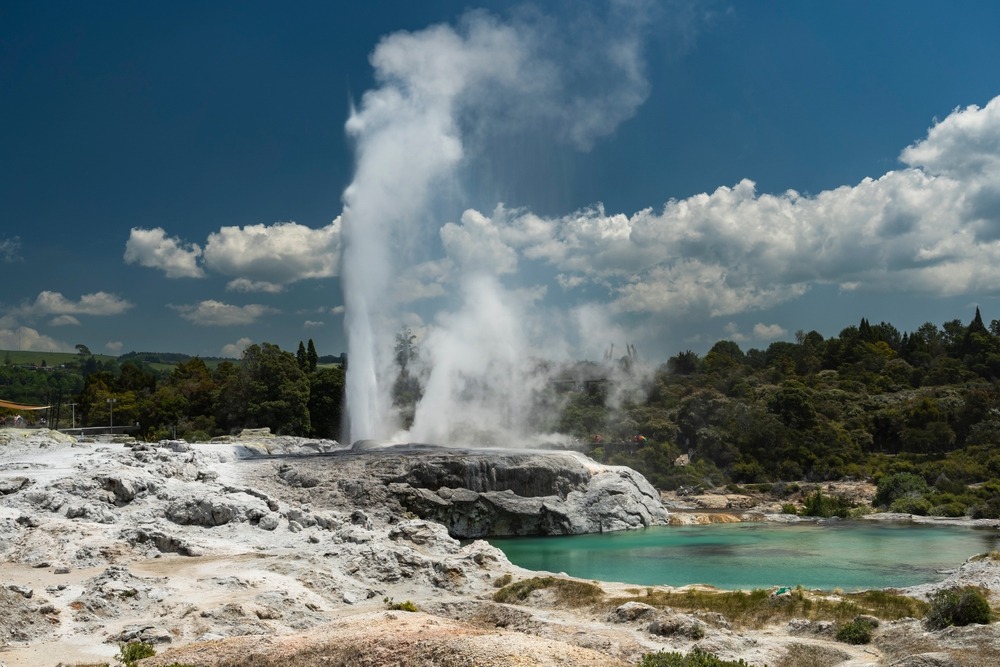
- Pohutu, the Southern Hemisphere's largest active geyser, shooting water and steam up to 30 metres high.
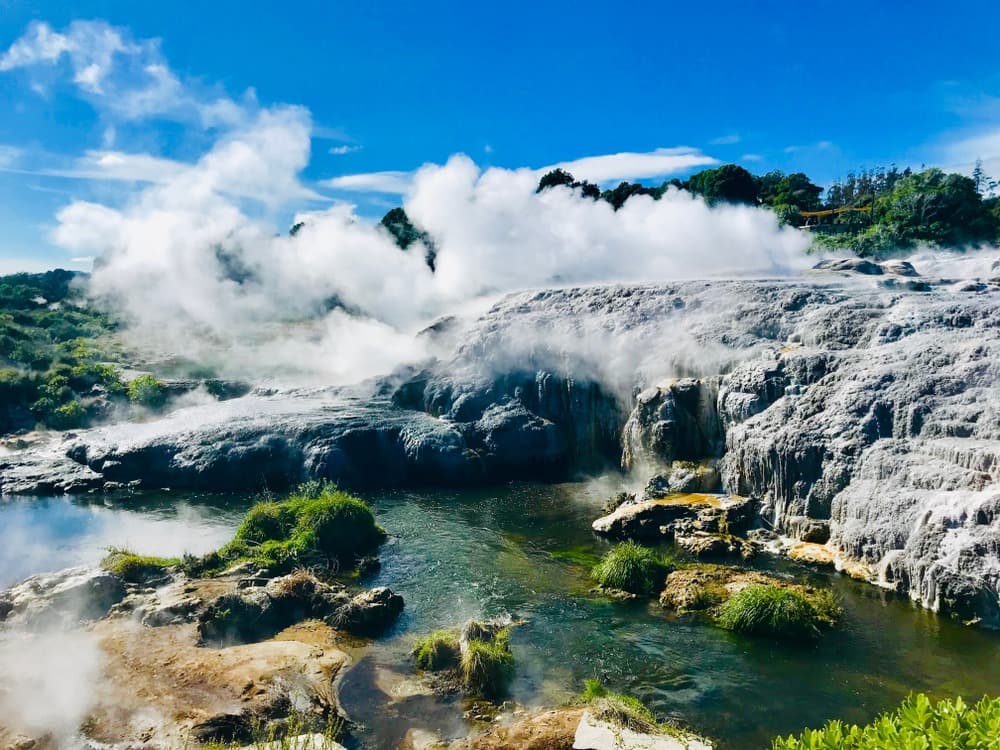
- The Te Whakarewarewa geothermal valley, with its bubbling pools and steam vents.
- The New Zealand Maori Arts and Crafts Institute, a craft school founded in 1926.
- A conservation centre where you can observe the kiwi, a nocturnal endemic bird.
- Guided visits led exclusively by Maori guides, with access to the marae and wharenui.
History of the site
Te Puia sits on the site of a fortified Maori village occupied since the 13th century. The Te Whakarewarewa valley, with its permanent hot springs and steam, long served for food preparation, bathing, and heating homes.
In 1926, on the initiative of Sir Apirana Ngata, a leading figure in the Maori cultural renaissance and the first Maori to serve in the New Zealand Parliament as a minister, the New Zealand Maori Arts and Crafts Institute was established. The goal: to pass on to new generations the skills threatened by a century of colonial upheaval. Nearly a century later, the school continues to train sculptors and weavers, and remains one of the site's pillars.
What to see and do
The geothermal valley
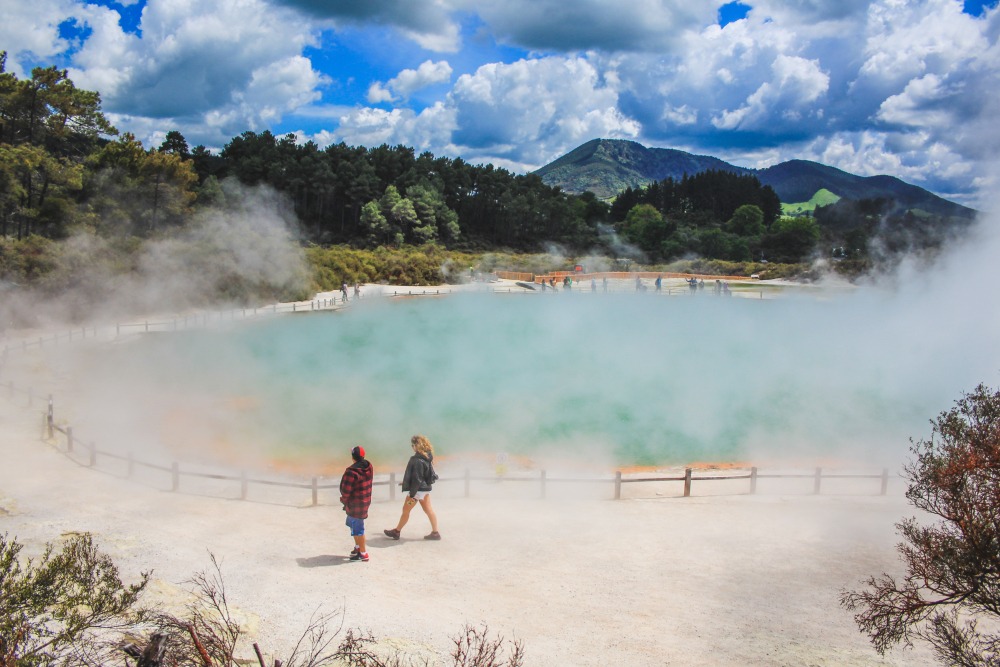
The park contains over 65 geysers and several hundred alkaline springs. Pohutu is its centrepiece: its eruptions, frequent throughout the day, can reach 30 metres and last from minutes to over an hour. It regularly becomes active just after its neighbour, the Prince of Wales Feathers, whose oblique jets herald the main eruption. Around it, walkways wind between mud pools, mineral terraces, and fumaroles.
The New Zealand Maori Arts and Crafts Institute
The institute's workshops are open to the public. You can watch students working wood, bone, and pounamu (jade) carvings, as well as flax weaving. Among the pieces produced are poupou (sculptured pillars adorning ceremonial houses), kete (woven baskets), and mere (short greenstone clubs). The Āhua Gallery, at the tour's end, displays and sells works created by the apprentices.
The marae and Te Rā guided tour
The Te Rā guided tour leads to the traditionally carved marae and wharenui, the meeting house. The guide explains welcoming protocols, the role of carvings and weavings in Maori cosmology, and presents a reconstruction of the pre-colonial village.
The kiwi conservation centre
Because the kiwi is a nocturnal bird, the centre is kept dark during the day to respect its biological rhythm. Visitors can observe it through large windows without disturbing its behaviour. This is one of the rare opportunities to see this bird, rarely spotted in the wild.
Evening experiences
In the evening, two formats extend your visit: Te Pō Indigenous Experience, combining ceremonial welcome, kapa haka performance (chants and dances), a meal cooked using geothermal steam, and a torch-lit guided walk through the valley; and Geyser by Night, focused on watching Pohutu erupt under lighting.
Practical information
- Duration: allow 2 to 3 hours for the Te Rā guided tour, longer if you add an evening experience.
- Format: visits only with a guide, in small groups, led by Maori guides.
- Rates: paid entry, with several options (basic tour, cultural combo, evening experience). Tickets are booked online, recommended during peak season.
- What to bring: closed-toe shoes (some paths are slippery), weather-appropriate clothing. The sulphur smell is strong near the springs.
- Photography: permitted across almost the entire site, except during certain ceremonial moments indicated by your guide.
- On site: restaurant serving Maori and New Zealand cuisine, craft shop.
When to visit
Te Puia is open year-round. The Australasian summer (December to February) offers the longest days and makes it easy to combine a daytime visit with an evening experience, but it's also peak tourist season: booking is essential. Autumn (March–May) and spring (September–November) are comfortable seasons with fewer crowds. In winter, the contrast between the cool air and geyser steam makes the geothermal phenomena particularly spectacular.
How to get there
Te Puia is about 5 minutes' drive south of central Rotorua, on Hemo Road. From Auckland, allow around 3 hours' drive via State Highway 1 then 5. Rotorua has a regional airport and long-distance bus connections to Auckland, Wellington, and Taupo. On site, several hotels offer shuttle services; the site is also served by tour buses departing from the city centre.
Nearby attractions
Rotorua hosts much of the country's geothermal activity. After Te Puia, several sites extend the experience:
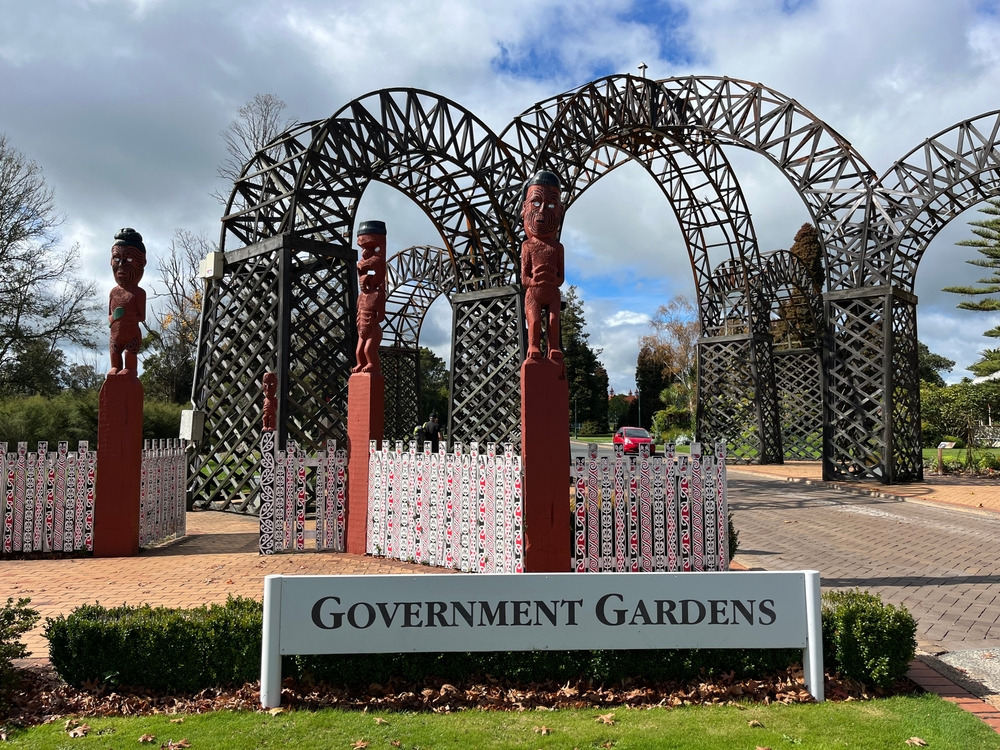
- Government Gardens, a Victorian park and historic thermal pools in central Rotorua.
- National Kiwi Hatchery, a centre dedicated to kiwi breeding and protection.
- Te Papa Tongarewa in Wellington, to deepen your understanding of Maori culture and the country's history.
- Cathedral Cove, on the Coromandel Peninsula, accessible from Auckland.
FAQ
Frequently asked questions
No. Since the site's redesign, the entire site is explored only with a Maori guide, in small groups. This ensures deeper cultural transmission and better respect for the place.
Allow 2 to 3 hours for the standard guided tour. If you add the kiwi centre, the arts institute, and an evening experience, you could easily spend half a day to a full day here.
Access to the base of the geyser is via the paid Te Puia site. However, you can glimpse Pohutu from afar at certain public viewpoints around the Te Whakarewarewa valley.
Yes. The trails are well-developed, guides adapt their explanations, and kiwi observation and craft demonstrations usually capture younger visitors' attention. Keep an eye on them near the hot springs.
Plan your trip
Te Puia fits naturally into an itinerary combining the North Island and its geothermal sites. To build your stay around Rotorua and Maori culture, explore our New Zealand travel ideas.
Nearby
Interested in this visit?
We can include it in your personalised itinerary.