Museum of New Zealand Te Papa Tongarewa
Museum of New Zealand Te Papa Tongarewa
On Wellington's waterfront, Te Papa Tongarewa houses over 2 million objects: art, Māori culture, and the history and nature of New Zealand.
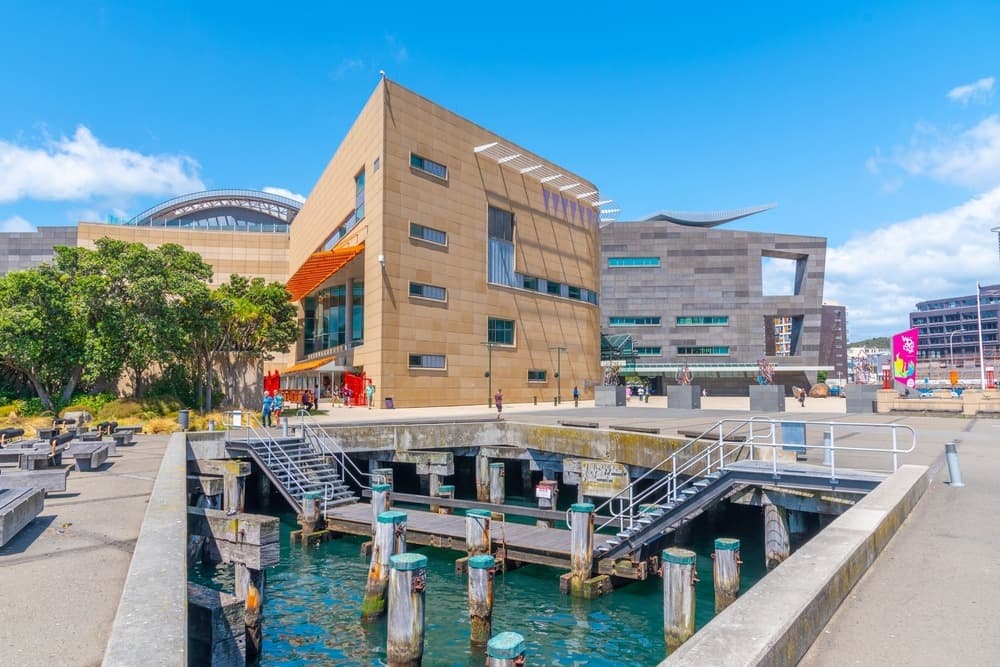
The Museum of New Zealand Te Papa Tongarewa, located on the waterfront of Wellington, is the country's largest museum. Its six floors and 36,000 m² contain more than two million objects related to New Zealand's history, Māori culture, art, and nature. Its name means in Māori "the container of the treasures of this land."
Why Visit Te Papa
Te Papa brings together in one place everything essential to understanding New Zealand: Māori culture, European colonisation, island biodiversity, and contemporary artistic creation. Its governance is bicultural, shared between the Mana Whenua (indigenous peoples) and the Tangata Tiriti (treaty peoples), in accordance with the Treaty of Waitangi. This dual perspective permeates the museum's design and sets Te Papa apart from conventional national museums.
Admission is free for New Zealand citizens and children under 16, making it a destination for families and school groups as well as travellers. In 2013, the museum announced its intention to split its content into two spaces—one dedicated to the past, the other oriented toward the future—a direction that continues to shape its programming.
History of the Institution
The museum's origins trace back to 1865, with the creation of the Colonial Museum under geologist James Hector's direction. The institution became the National Museum in 1907, then relocated in 1936 to a new building on Buckle Street, shared with the National Art Gallery. In 1972, the Dominion Museum was renamed the National Museum.
The decisive moment came in 1992, when parliamentary legislation officially merged the national museum and art gallery: Te Papa Tongarewa was born. The current building opened its doors on February 14, 1998, on Wellington's waterfront. The response was immediate, with over one million visitors in five months. In 2004, the exhibition "Toi Te Papa: Art of a Nation" established the dedicated space for New Zealand art. The institution is today supported by the Ministry for Culture and Heritage.
Architecture and Space Organisation
The main building rises across six floors spanning 36,000 m², making it New Zealand's largest museum. Its design incorporates state-of-the-art earthquake-resistant technology, essential in a city exposed to seismic activity. Natural materials, Māori motifs, and contemporary architecture combine in an open layout overlooking the harbour.
A second site, located on Tory Street, is reserved for scientific research and conservation. It houses the museum's internal archives since 1865, a significant portion of its reserves, and the laboratories of its scientific teams.
What to See Inside
The collections cover art, history, the Pacific, Māori culture, and natural sciences. Among the must-see pieces and exhibitions:
- The giant squid, weighing approximately 500 kg, unique in the world in its current state of preservation.
- Toi Art, the permanent art exhibition spread across two floors, providing access to over 400,000 works and presenting striking installations such as Black Phoenix and Nga Morehu.
- Māori collections: weapons, sculptures, ornaments, and objects related to Captain Cook's period, colonisation, and the Treaty of Waitangi.
- Gallipoli: The Scale of Our War, an exhibition created in partnership with Weta Workshop (the studio behind The Lord of the Rings), which traces the experiences of eight New Zealanders during the Battle of Gallipoli through monumental sculptures.
- Natural history collections: 250,000 herbarium specimens, fossils, taxidermied animals, and reconstructions of indigenous environments.
The Te Aka Mātua library, on the 4th floor, preserves a documentary collection focused on New Zealand, art, photography, and the environment. Access is reserved for accredited researchers (status to be confirmed with the museum before your visit).
Practical Information
Museum admission is free for New Zealand citizens and children under 16. Adult international visitors pay an admission fee for the main galleries; certain temporary exhibitions are paid for by all visitors. Admission rates and conditions are subject to change: check the current pricing on the official website before your visit.
The museum is open daily, with extended evening hours on Thursday and closure on December 25 annually. Plan at least half a day to explore the collections, and a full day if you're interested in multiple themes. Multilingual audio guides are available, including a version in New Zealand Sign Language (NZSL) presented by deaf presenters. Free Wi-Fi, family facilities, and accessible facilities for people with disabilities are available on-site.
When to Visit
Te Papa is open year-round, making it an excellent option for a rainy day in Wellington. Attendance peaks during New Zealand school holidays (particularly December-January) and weekend midday hours. For a quieter visit, arrive in the morning on weekdays, or take advantage of Thursday evening hours when you can spread your visit across less crowded times.
How to Get There
The museum is located on Cable Street, within easy walking distance of Wellington's city centre and waterfront. Numerous bus lines serve the area, as do hop-on hop-off tourist shuttles. Bike and scooter parking are available outside. By car, from SH1, follow signs toward Cable Street; parking is available nearby. From Wellington Airport, access is convenient by taxi, shuttle, or bus.
What to See Nearby
Te Papa fits naturally into a broader itinerary across New Zealand. From Wellington, you can continue to the Marlborough Sounds by crossing the Cook Strait. On the South Island, the Canterbury Museum in Christchurch usefully complements the perspective offered by Te Papa, while Cape Foulwind provides a natural counterpoint on the west coast.
Frequently Asked Questions
Frequently asked questions
Preparing Your Trip
Te Papa fits naturally into an itinerary combining Wellington, the North Island, and the South Island. To build a complete tour, consult our tailor-made trips to New Zealand.
Interested in this visit?
We can include it in your personalised itinerary.