Golden Bay
Golden Bay
At the northwestern tip of the South Island, Golden Bay lines golden beaches, sacred springs and national parks. The complete guide to Mohua Bay.
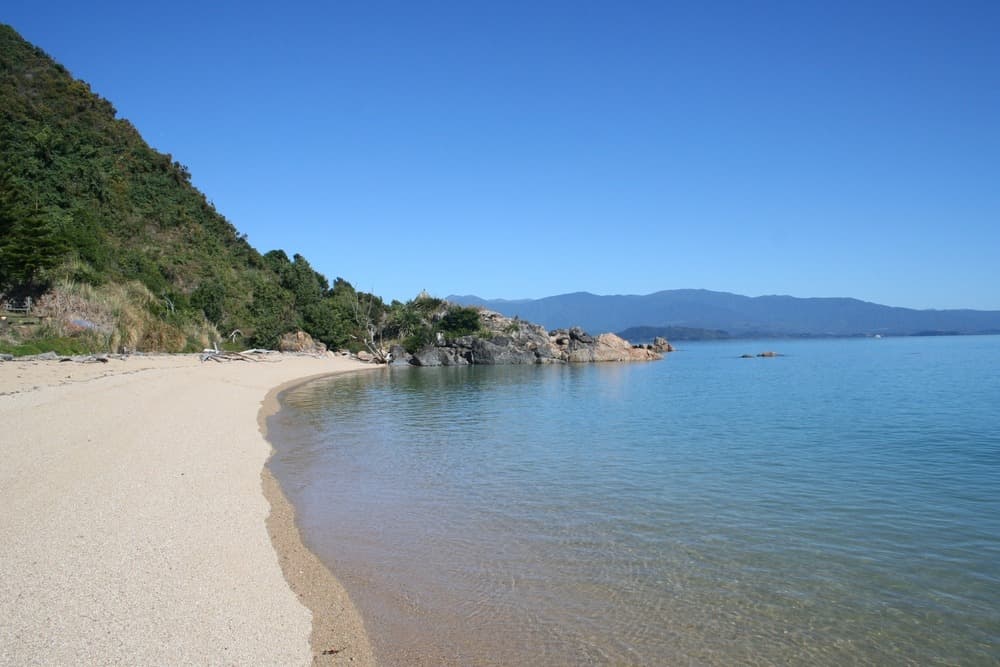
At the northwestern tip of the South Island in New Zealand, Golden Bay unfolds as a hidden gem, where golden beaches, verdant hills and peaceful lagoons compose a natural tableau of rare beauty. Isolated from the rest of the country by the winding Tākaka Hill pass, the bay retains its charm intact, far from the hustle and bustle, attracting those who seek authenticity and serenity. Its unique light, relaxed pace of life and creative spirit have long made it an inspiring experience for artists, travelers and lovers of unspoiled nature.
The history of Golden Bay
Once known as Murderers Bay, the bay owes this name to the bloody clash of 1642 between Abel Tasman's men and the Māori, during which four sailors lost their lives. The Māori, however, called it Mohua, in reference to a bird once common in the region.
Over time, the bay changed names several times: Blind Bay under James Cook in 1770, Massacre Bay according to Dumont d'Urville in 1827, then Coal Bay after coal was discovered in 1842. It was finally the discovery of gold at Collingwood in the 1850s that established the current name of Golden Bay, officially recognized in 2014 as Golden Bay / Mohua.
Long before these episodes, archaeological evidence attests to the presence of Māori communities as early as 1450, including the Waitaha, Ngāi Tara and Ngāti Wairangi, replaced by the Ngāti Tūmatakōkiri. Tasman noted the presence of about twenty waka and approximately 500 inhabitants. After the defeat of the Ngāti Tūmatakōkiri in the 19th century, the region came under the control of Ngāti Apa ki te Rā Tō.
European arrival began in 1842 with the Lovell family at Motupipi. Coal and gold were exploited, leading to the development of villages such as Collingwood. Sawmills and mines, notably at Pūponga, flourished until the 20th century, while the Onekaka iron works (1924–1935) did not survive the Great Depression.
Beyond its human history, Golden Bay was long a resting area for southern right whales, humpback whales and sometimes pygmy blue whales. Today, only the southern part is inhabited around Tākaka and Collingwood, while the northern and western coasts remain nearly deserted. This has preserved the wild nature that gives the Tasman region its reputation.
A natural sanctuary in the north of the South Island
Located in the Tasman district of New Zealand, Golden Bay / Mohua is a vast, shallow bay of the Tasman Sea, nestled between Separation Point and Farewell Spit, a 34 km sand spit formed by marine currents that protects it from offshore winds. Parabolic in shape, it opens onto Cook Strait and receives the waters of the Aorere and Tākaka rivers.
While its southern coasts welcome the villages of Tākaka and Collingwood, its northern and western parts have remained largely wild. The Golden Bay is bordered by two emblematic national parks: Abel Tasman to the east, renowned for its golden beaches and coastal trails, and Kahurangi to the west, the country's second largest park, which is home to the famous Heaphy Track.
A sanctuary for biodiversity
Golden Bay stands out for its exceptional biodiversity. At Farewell Spit, designated an international nature reserve, thousands of migratory birds find refuge, such as Australasian gannets, bar-tailed godwits and oystercatchers. On isolated beaches like Wharariki Beach, it is common to spot seals and sea lions.
The forests and valleys of the region are home to endemic flora, and certain sites, such as the Te Waikoropupū Springs, one of the purest springs in the world, are considered sacred by the Māori. These waters of exceptional clarity offer a unique spectacle of colors and reflections.
Spectacular and varied landscapes
Golden Bay reveals some of New Zealand's most impressive panoramas:
- Wharariki Beach and its rock arches, wind-swept dunes and colony of young sea lions
- Cape Farewell, the northernmost point of the South Island, with its cliffs plunging into the Tasman Sea
- Whanganui Inlet, a preserved estuary of marshes and forests, ideal for birdwatching
- The waterfalls of Salisbury Falls or Wainui Falls, accessible via short, family-friendly trails.
The expanses of golden sand at Tata Beach or Pohara Beach complete this setting. They invite swimming, kayaking or simply contemplation, sometimes even with your feet in the water from beachfront accommodations.
What can you do at Golden Bay?
Golden Bay is a playground for all desires:
- Hiking: from the legendary Heaphy Track to more accessible loops like the Takaka Hill Walkway or the Abel Tasman Coast Track
- Underground exploration: the Ngarua caves (stalactites, moa skeletons) or Rawhiti Cave, as well as Harwoods Hole (176 m deep)
- Outdoor activities: rock climbing on the cliffs of Paynes Ford and Pohara Sea Cliffs, kayaking from Tata Beach, horse riding or salmon fishing at Anatoki Salmon
- Wildlife watching: sea lion colonies, dolphins, migratory birds.
Cultural life and community in Takaka and throughout Golden Bay in New Zealand
Golden Bay stands out for its vibrant cultural life and strong community spirit. Tākaka, the artistic heart of the region, brings together galleries, studios, bohemian cafés and a Saturday market renowned for its convivial atmosphere and artistic creations. Collingwood, quieter, is the starting point for excursions to Farewell Spit.
The local cultural scene also expresses itself through numerous events. Music and art festivals, such as:
- The Mussel Inn Music Festival or the Golden Bay Harvest Festival that liven up the year
- The Te Matatini Festival which showcases Māori dance and music.
Moreover, heritage is also in the spotlight with:
- The Langford Store, historic shop-post office open since 1928
- The industrial remnants of Onekaka and Pūponga
- The Lord of the Rings filming locations in Kahurangi Park.
The Wakatu Museum completes this immersion with a dive into local and Māori history.
Furthermore, Golden Bay is also renowned for its community spirit and sustainable way of life. Shared gardens, ecological projects and permaculture farms testify to strong environmental commitment. The Golden Bay Community Centre exemplifies this spirit of solidarity, hosting workshops, events and celebrations.
When to go?
The best timing for a trip to Golden Bay directly influences the experience:
- Summer (December to February): this is the sunniest season, ideal for swimming, kayaking and hiking along golden beaches. However, it is also the busiest period, with significant tourist traffic and higher rates.
- Spring (September to November) and autumn (March to May): these intermediate seasons appeal with their calmer atmosphere and generally more accessible accommodation prices. Temperatures remain mild, offering perfect conditions for exploring trails and admiring landscapes without summer crowds.
Thus, while summer guarantees a warm and lively climate, spring and autumn allow for a more serene and authentic discovery of the region.
Reaching Golden Bay is an integral part of the experience. From Nelson or Motueka, it takes about 2 hours and 30 minutes by car via State Highway 60, crossing the winding Tākaka Hill. This marble pass, dotted with hairpin turns and spectacular panoramas, may seem challenging, but it already offers a foretaste of the adventure. Stops at lookout points allow you to fully appreciate the journey.
For those wanting to save time, Golden Bay Air offers regular regional flights from Wellington or Nelson to Tākaka Airport. These six-seater planes offer a memorable flight over forests and coastlines, with the option to book a package that includes car rental.
Want to discover this destination?
Our local advisors design your tailor-made trip.