Whitianga
Whitianga
On the Coromandel Peninsula, Whitianga combines beaches, Māori heritage, hot springs and a working marina. Our complete guide to planning your Mercury Bay stopover.
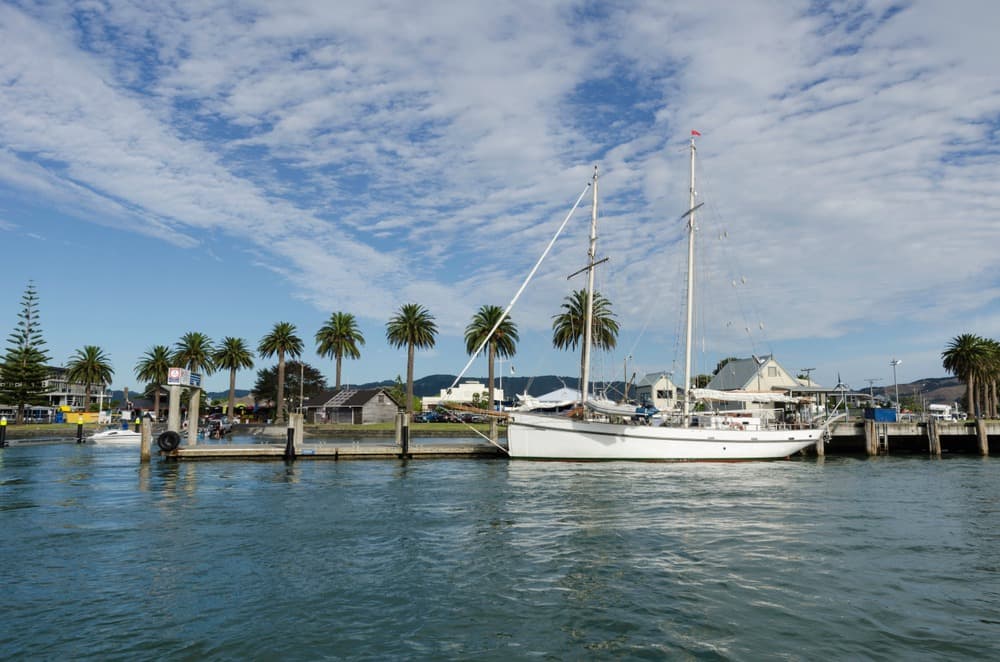
Whitianga is where the salt-tinged air immediately slows your pace, where the gentle knock of masts provides a constant rhythm, and where you find room to breathe a little deeper. Here, mornings unfold without hurry, evenings end facing the sea, and the hours between are filled with pauses that linger. A small town sure of itself and turned toward the ocean, Whitianga is the perfect place to catch your breath and savour the surrounding landscapes and activities, season after season. A coastal destination where gentle rhythms meet open air.
Where is Whitianga on the Coromandel Peninsula?
Situated on the north-east coast of New Zealand's North Island, in the Waikato region, Whitianga is the principal town of Mercury Bay and the second-largest settlement on the Coromandel Peninsula after Thames. Positioned on the eastern side of the peninsula, it stretches along Buffalo Beach, an east-facing sandy beach extending some 5 km. The largest hub on Coromandel's eastern coast, Whitianga serves as the natural gateway to Mercury Bay.
The History of Whitianga, New Zealand
At Whitianga, local history weaves together Polynesian navigation and early European surveys, endowing this seaside setting with singular heritage depth. Continuously occupied for over a thousand years, the site is believed to have been settled by the iwi of explorer Kupe around 950 AD, giving rise to the original name Te Whitianga o Kupe ("Kupe's place of crossing").
On the Ferry Landing shoreline, Whitianga's pā (traditionally attributed by Ngāti Hei to chief Hei Turepe) benefited from protective cliffs on three sides and a ditch some 6.7 metres deep on the fourth, now integrated into the trail leading to Back Bay where shellfish were harvested.
When James Cook anchors here in November 1769, he observes an already-abandoned pā, holes carved in rock for posts, and traces of burned palisades. He names the harbour "River of Mangroves", still nicknamed The River today.
The first European settlement develops opposite between 1836 and 1881, and the stone wharf built in 1838 (the oldest surviving in the country) then served a sawmill and shipyard, before being restored in 2015 and now hosting the ferry on the eastern side. A kauri export port in the 19th and early 20th centuries, Whitianga also saw the rise and fall of other infrastructure (hotel wharf, SS Fingal service, weekly lines from Auckland until the 1940s), followed by marina authorization in 1992, which turned the page on industry.
Moreover, it bears noting that following a 1928 controversy over a name change to "Mercury Bay", the town's nomenclature was definitively settled on 21 June 2019: Whitianga became the official name. The town centre remains at the southern end of the long beach bordering the bay.
Whitianga Today
Whitianga long thrived to the rhythm of kauri timber: a major forest port, it also attracted gold prospectors, gum diggers and cultivators of phormium (New Zealand flax). Today, the setting has changed without losing its character: small fisheries, surrounding farms and especially tourism drive the economy. The atmosphere remains convivial, buoyed by lively cafés, seafood restaurants and galleries dedicated to Coromandel craftsmanship. Accommodation remains plentiful for much of the year, except around the Christmas holidays, when early booking is essential.
Must-See Attractions and Activities
Whitianga reveals itself at the pace of the sea and a simple daily life, balancing wellness, nature and accessible getaways. Here are some attractions and pursuits not to miss during your stay in this New Zealand town.
The Lost Spring and Hot Water Beach
In central Whitianga, The Lost Spring thermal complex invites you to let go in mineral pools cradled by greenery, with spa and dining to extend the moment. Around thirty minutes away, Hot Water Beach lets you dig your own hot water pool at low tide (shovels are available to rent, and swimming is only permitted between the flags when the beach is supervised).
Cathedral Cove and Te Whanganui-e-Hei Marine Reserve
Cathedral Cove is best explored on foot when trails are open, or by sea via kayak or boat in calm weather. Glass-bottom boat cruises depart from Whitianga's wharf, skirting the Te Whanganui-a-Hei marine reserve, sometimes with snorkelling stops to observe fish and rocky seabeds.
Viewpoints and Walks
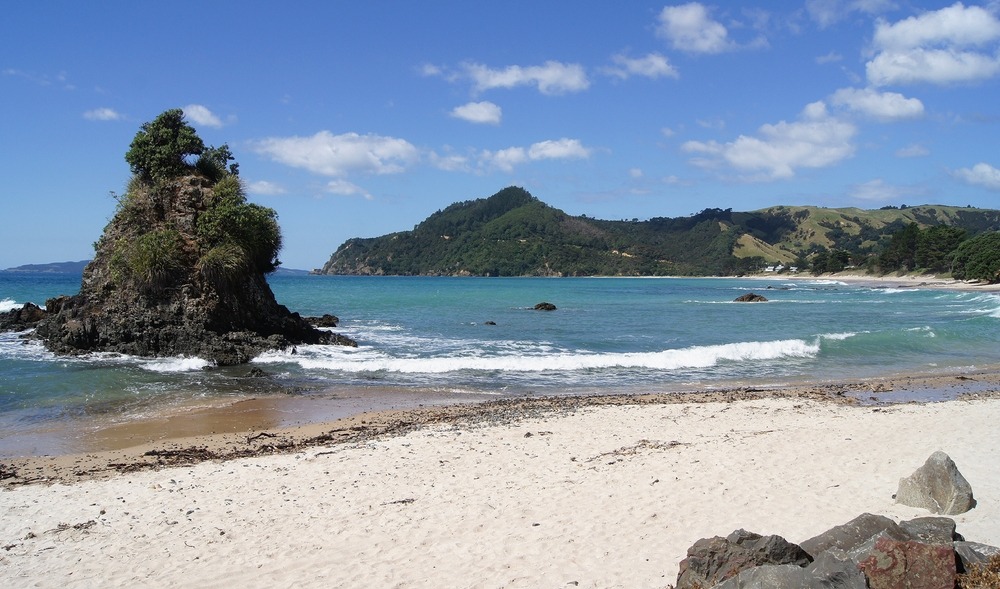
A small ferry runs continuously between the town centre and Ferry Landing. From there, a short climb leads to Shakespeare Cliff lookout for panoramic views across Mercury Bay and Cooks Beach. On the beaches, you'll find sunrise over Buffalo Beach, tranquil swimming at Cooks Beach, and wilder terrain at Lonely Bay.
Museum and Culture
The Mercury Bay Museum, housed in a former dairy factory, chronicles Polynesian navigation, James Cook's passage, fishing and kauri. Throughout town, a heritage trail marked by plaques and murals painted during Tuia 250 offers an open-air reading of local history.
Family Entertainment
Without theme parks, Whitianga focuses on the practical: Mercury Bay Twin Cinemas for films and festivals, a skate park and basketball court at Whakau Whitianga Toy reserve, and Mercury Bay Library for younger children. The Fun Zone Adventure & Family Park offers archery, paintball, laser tag and clay target shooting. The waterfront promenade stretching to Brophy's Beach holds a surprise for children—the Fairy House hidden in a tree—while the Moewai Road Bike Park offers trails for all levels. Several public play areas round out these amenities near the waterfront.
Events and Atmosphere
From Christmas to New Year, the town buzzes with fairs, galas and markets. Summer and autumn highlight the arts scene (the Whitianga Art Group's annual exhibition in January, Mercury Bay Art Escape in March). Bars regularly feature live music, and the September Whitianga Scallop Festival celebrates seafood cuisine. Numerous deep-sea fishing charters (marlin) operate in Pacific waters.
Whitianga is easily accessed via State Highway 25, the scenic loop around the Coromandel, and via SH 25A, a more direct route between inland and the eastern coast.
From Auckland, allow approximately:
- 2.5 to 3 hours driving depending on route choice and traffic (coastal route or via Kopu Hills)
- 2.5 hours from Tauranga, with numerous viewpoints and stops possible en route.
The town lies 40 km north of Tairua (roughly 40 minutes' drive) and 14 km south of Kuaotunu. Before departing, it's wise to check weather conditions and any potential road closures on Coromandel's network.
By bus, InterCity and Go Kiwi Shuttle services connect Whitianga to Thames, Auckland and other Coromandel Peninsula and North Island locations, with tickets available online or via the i-SITE network.
By air, Whitianga Aerodrome welcomes regular flights operated notably by Barrier Air (from Auckland/Ardmore) and Sunair (from Great Barrier and Tauranga).
Accommodation in Whitianga
Want to discover this destination?
Our local advisors design your tailor-made trip.