North or South: Which island to prioritize on a New Zealand trip
Planning a trip to New Zealand and torn between the North Island or South Island? That's completely normal! The land of kiwis is a vast territory dotted with glaciers, paradisiacal beaches.
Planning a trip to New Zealand and torn between the North Island or South Island? That's completely normal! The land of kiwis is a vast territory dotted with glaciers, paradisiacal beaches, but also canyons, fjords and volcanoes, making it often difficult to choose between the two islands… Follow us as we reveal the strengths of the North and South and their unique characteristics - to help you choose the itinerary best suited to your desires and schedule.
The must-sees of the North Island
Covering 113,700 km², the North Island is smaller than the South Island (150,000 km²). Paradoxically, it is the one that concentrates the most inhabitants - with nearly 75% of the country's total population living on its territory!
Essential cities
Auckland
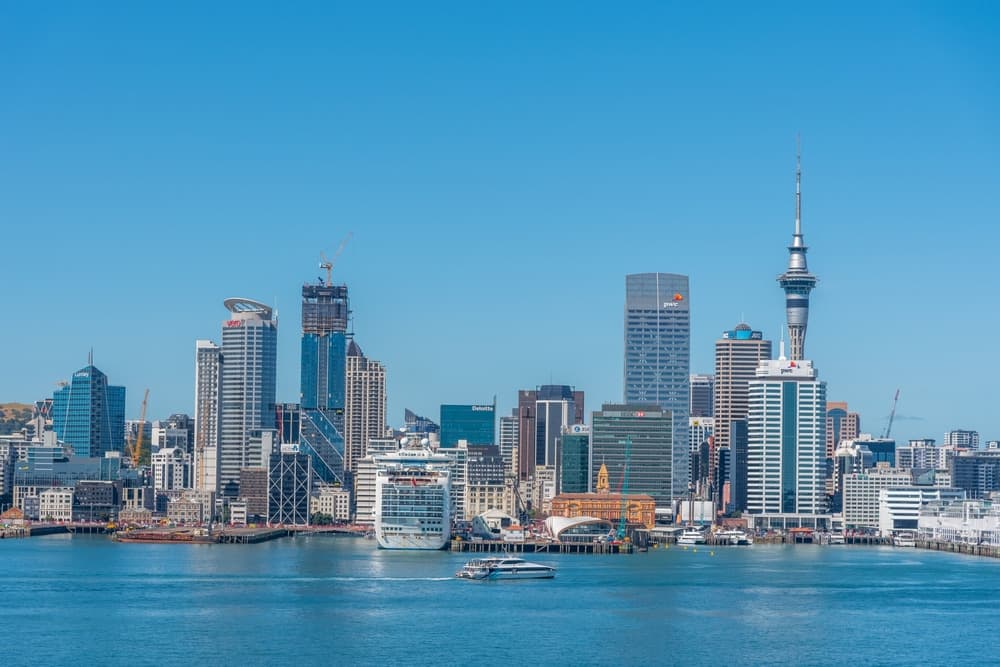
The country's largest metropolis, Auckland is a very cosmopolitan city considered the "economic lung" of the country. Famous for its Sky Tower standing 328 meters high, it is located near the Waitakere Hills, between two natural harbors…
This ideal location makes it a prime spot for water activities - and has earned it the nickname City of Sails. During your stopover, spend time in the Ponsonby neighborhood (beloved by locals) and the Viaduct, prized for its bars and vibrant atmosphere!
Wellington
The country's capital, this charming coastal city located at the southern tip of the island, is home to Te Papa Tongarewa - New Zealand's national museum. A chance to learn more about the history and geography of the land of kiwis, as well as have fun through numerous interactive installations. Among Wellington's other must-see sites, don't miss the Zealandia wildlife sanctuary and Mount Victoria.
The landscapes
● The coastline and beaches: the North Island is blessed with stunning beaches and numerous bays. Among the iconic spots? Cathedral Cove, Bay of Islands, Gisborne and black sand beaches (like Piha beach), ideal for swimming and water activities - surfing, diving, etc.
● The volcanic zone of Taupo: formed from a volcanic eruption, this lake is a highly prized site for locals. You can enjoy water sports, hike (in the surrounding caldera areas) and swim in its natural hot springs! Nearby is one of the country's most spectacular national parks: Tongariro National Park and its volcanoes.
● Geothermal activity in Rotorua: geysers, sulfur lakes, and bubbling mud pools coexist in this region, offering a rare and colorful spectacle.
● Kauri forest in the Northland region. You'll be amazed by the imposing size of these conifers, some of which reach the respectable age of 2,000 years! Less imposing but always magnificent, tree ferns can reach 20 meters high for certain species. The silver fern is one of the country's symbols, found on the jersey of the national rugby team, the All Blacks.

National parks and volcanoes
Among New Zealand's 13 national parks, the North Island has three, dotted with lush forests, snow-capped peaks or active volcanoes, earning it the nickname "smoking island."
Tongariro National Park: inscribed on the UNESCO World Heritage List, this park is one of the most visited in the country. Why? It is home to three active volcanoes on its lands - Ruapehu, Tongariro and Ngauruhoe. More than geological formations, these have immense spiritual importance in Maori culture.
Egmont National Park: located on the west coast of the North Island, Egmont Park is dominated by Taranaki Maunga - a 2,518-meter-high volcano, reminiscent of Mount Fuji. At its base blooms a superb rainforest.
Whanganui National Park: endowed with lush valleys and hills, this site is also crossed by the namesake river. You can enjoy hiking, kayaking and canoeing, and observe many endemic bird species.
The iconic great walks of the North Island
The North Island is home to several Great Walks, those famous emblematic treks of New Zealand, which traverse the country's most striking landscapes…
Tongariro Northern Circuit: this 43 km loop crosses the eponymous park with a shared section with the country's most famous day hike: Tongariro Alpine Crossing. You can admire the Red Crater and the magnificent Emerald Lakes. The route is demanding, with nearly 1,600 meters of elevation gain, but also long sections exposed to sun and uneven terrain.
Whanganui Journey: also classified as a Great Walk, this hike has the unique quality of being done by kayak or canoe! The river trail extends over 145 km of river and officially ends at Pipiriki. It's a particularly original excursion!
Maori culture
Maori culture, of Polynesian origin, arrived in New Zealand around the 13th century. It is based on a strong connection to nature (whenua), to ancestors and to a structured tribal system (iwi). More than 80% of native New Zealanders live on the North Island - historically more fertile and warmer.
Each village has a marae (sacred gathering place) pillar of this Polynesian culture. You can visit one during a New Zealand trip and participate in a Maori evening where you enjoy a show and traditional meal, the hangi. The city of Rotorua is one of the best sites to discover this culture.
Lord of the Rings filming locations in the North
New Zealand has 150 natural locations that served as filming sets for the Lord of the Rings saga! During your trip to the north, you can admire:
Scenes from the saga | Where were they filmed in the North? |
Hobbiton Movie Set | Matamata |
Mount Doom (The Mountain of Destiny) Tawhai Falls | Tongariro National Park |
Isildur cuts off Sauron's finger | Tongariro National Park |
The Paths of the Dead scene | Putangirua Pinnacles Reserve, east of Wellington |
The hobbits hide from the Nazgûl under tree roots | Mount Victoria Park (Wellington) |

The must-sees of the South Island
The South Island is renowned for the beauty of its landscapes - as beautiful as those of the North Island but far wilder and more grandiose. Indeed, this part of New Zealand is a less urban territory, dotted with vast expanses where nature has managed to preserve its rights… The distances between towns and villages are also more spaced out than in the north.
Essential cities
Queenstown
Considered a major tourism hub, this city is situated between the Remarkables mountain range and the shores of Lake Wakatipu. Walks, outdoor activities, adventure sports, boat trips: Queenstown offers numerous outdoor activity options. In winter, the Coronet Peak and Remarkables ski fields delight skiers!
Dunedin
Known for housing the country's only true castle (Larnach Castle), Dunedin is also the country's fourth-largest city. The city features several Victorian-style monuments as well as beautiful gardens. It is located near the Otago Peninsula, renowned for its beaches and wildlife.
Christchurch
The South Island's largest city sits between the Banks Peninsula hills and the Canterbury Plains. Eclectic and modern, it is dotted with gardens and the Avon River flowing through it brings a soothing touch. Along with Auckland, it serves as the country's main entry point for travelers.
The landscapes
Renowned for its wilderness, the South Island consists of vast open spaces and is brimming with natural treasures, by the hundreds! Here is a non-exhaustive list of its most beautiful spots to discover!
Pancake Rocks: located at Punakaiki, these rock formations result from a unique limestone mass, sculpted 30 million years ago by erosion.
Farewell Spit: located north of Golden Bay, this narrow 26 km sand spit is an internationally important wetland, designated a Ramsar site. You can observe a great number of birds.
Kawarau Gorge: located in Otago, these gorges are a popular spot for bungee jumping, kayaking (and other whitewater sports)...
The Fox and Franz Josef glaciers: located approximately 25 km apart, in the heart of Westland Tai Poutini National Park, both glaciers can be explored with a guide.
Milford Sound: the country's most famous fjord and the most accessible thanks to a particularly scenic road.
Aoraki Mount Cook: the country's highest peak (3,724m) eternally snow-capped and towering over the Hooker and Tasman glacier valleys.

National parks
The South Island hosts 9 of the country's 13 national parks, each with its own characteristics and signature attractions.
Abel Tasman National Park: located in the Motueka region (north of the island), this park is home to many paradisiacal beaches, ideal for swimming, boat trips or kayaking. Its other asset? The park is home to sea lions!
Aoraki/Mount Cook National Park: the park takes its name from its highest peak - Aoraki/Mount Cook, which stands at 3,724 meters altitude. It is known for its eternal snows, but also for its glaciers.
Fiordland National Park: inscribed on the UNESCO World Heritage List, it is the country's largest protected area with 1,200,000 hectares! Steep mountains, impenetrable valleys, enchanted forests, hundreds of waterfalls and of course the famous Milford and Doubtful fjords.
Arthur's Pass National Park: crossed by rivers, forests, gorges, waterfalls and glaciers, the park delights hikers. Arthur's Pass village is the starting point for many trails through southern beech forests.
To learn more… Don't hesitate to discover the six other parks on the South Island: ● Kahurangi National Park, ● Nelson Lakes National Park, ● Paparoa National Park, ● Westland Tai Poutini National Park, ● Mount Aspiring National Park. |
The iconic great walks of the South Island
● Kepler Track, Routeburn Track and Milford Track: these 3 treks located in Fiordland Park require between 3 and 4 days of hiking each to complete. On the agenda: glaciers, waterfalls and dense forests.
● Heaphy Track: located in Kahurangi National Park, this trail crosses primeval forest over approximately 80 km, between sea and mountains, in the Tasman region. This great walk with eclectic scenery requires between 4 and 6 days of hiking, but can also be done by bike.
● Abel Tasman Coast: located in the eponymous park, this trail is home to numerous natural attractions. Among them: Cleopatra's Pool (a natural swimming hole), Falls River Gorge and Tonga Island Marine Reserve, where you can spot fur seals (kekeno in Maori)!
Preserved and abundant wildlife
Sparsely inhabited and very wild, southern New Zealand is home to preserved and therefore richer wildlife than in the north. During a trip, you'll have the chance to spot:
● Kiwis: very few exist in the wild today, most are concentrated in Okarito Forest, on the west coast,
● Marine mammals: dolphins, whales, fur seals, sea lions
● Penguins (near Otago Peninsula),
● A wealth of endemic birds.
Lord of the Rings filming locations in the South
During your stopover in the country's south, you can also discover magnificent locations that served as sets for the adaptation of J.R.R. Tolkien's work:
Scenes from the saga | Where were they filmed in the South? |
The river at the entrance to the Kingdom of Gondor | Kawarau Gorge |
Place where Arwen summons the river water | Skippers Canyon (Queenstown) |
Edoras (the capital of Rohan) | Mount Sunday |
Fangorn Forest | Snowdon Forest |
Setting for the second and third installments of The Hobbit. | Lake Pukaki (near Mount Cook) |

What is the climate like in New Zealand?
New Zealand features southern hemisphere seasons (reversed from ours). It generally enjoys a temperate oceanic climate, but there are nonetheless climatic differences between the North Island and South Island.
The North Island, closer to the equator, enjoys a milder and warmer climate. The area north of Auckland has a humid subtropical climate. Average temperatures range from 20 to 24°C in summer and 8 to 12°C in winter.
The South Island, more mountainous, is generally cooler, with harsh winters in alpine zones and a drier climate in the east. Temperatures range from 17 to 22°C in summer and can drop between -5 and 8°C in winter, depending on the region.
How to travel between the North Island and South Island?
Taking the ferry
Cook Strait separates the North Island from the South Island. It is possible to make the journey by ferry between Wellington and Picton. The crossing takes approximately 3 hours and 30 minutes to cover 90 km.
Two maritime companies operate this connection:
Interislander (public company, founded in 1962)
Bluebridge (in service since 2002)
Regardless of the operator, the crossing can be made as a foot passenger or with a vehicle. Most rental car companies allow vehicle passage between the two islands via ferry. In this case, additional fees apply to the ticket.
You should also arrive at least one hour before departure for vehicle check-in. If traveling with a motorhome, remember to turn off the gas supply. During peak season, ferries fill up quickly. It is therefore advisable to book in advance, particularly if traveling with a vehicle.
Taking the plane
The two main airlines operating domestic flights are Air New Zealand and Jetstar. Note: a domestic flight purchased at the same time as your international ticket is often cheaper than if purchased separately once there.
Discover both islands during a single trip… Choosing between the North Island and South Island during a New Zealand trip can be a difficult decision to make! Still torn? Discover our " New Zealand Freedom - Essentials of Both Islands in 18 Days" circuit! Created by our local agency, this trip allows you to discover the two main islands, without worrying about logistics and the transition between the two! |
North Island or South Island in New Zealand: their key advantages at a glance
Still torn between the North Island and South Island? Here's the essentials to remember to help you make your choice!
The essentials | North Island | South Island |
Climate | Mild in winter, subtropical north of Auckland | Cooler in winter, alpine climate depending on zones. Hot region in summer in the island's center. |
Its advantages | Volcanoes, beaches, Maori culture, geothermal activities | Wide open spaces, wildlife, fjords, glaciers |
Traveler type | Traveler who enjoys immersing themselves in local culture | Nature and wildlife lovers |
FAQ - All your questions answered
No, Wellington is the country's administrative capital. However, Auckland, also located on the North Island, is by far the country's largest city with 1.5 million inhabitants, representing about a quarter of New Zealand's population. It is sometimes said to represent the economic capital.
The South Island is not necessarily the place to prioritize for hiking in New Zealand. The choice between the two islands depends on the type of landscapes you wish to discover first: very wild regions in the south or rather volcanic panoramas in the north? Among the iconic Great Walks, note Kepler, Routeburn, Milford, Heaphy and Abel Tasman Coast Track on the South Island. Tongariro Northern Circuit, Lake Waikaremoana and Whanganui Journey on the North Island.
From a tourism perspective, the South Island is not more expensive to visit than the North Island. While the cost of living is roughly the same, airline tickets to get there from France are on average 150€ more expensive - because the island is less well served than the north. Ultimately, these differences balance out, and both islands have roughly similar costs.
Frequently asked questions
To visit the must-sees of the North Island (Auckland, Rotorua, Lake Taupo and Tongariro National Park), it is recommended to plan a minimum of 7 to 10 days. If you wish to add Wellington and the Bay of Islands, plan for 12 to 14 days instead.
The South Island is vast and the distances between its iconic sites (Queenstown, Fiordland, west coast with Fox and Franz Josef glaciers, Christchurch) are significant. Plan a minimum of 10 to 14 days to appreciate its main sites.
The best time to visit New Zealand is the southern hemisphere summer, from December to February, with pleasant temperatures on both islands. Spring (September-November) and autumn (March-May) are also good periods, with fewer tourists. The North Island can be visited year-round thanks to its mild climate, while the South Island is ideal in summer for high-altitude hiking.
French citizens do not need a tourist visa for New Zealand for stays up to 90 days. However, since 2019, an electronic travel authorization (NZeTA) has been mandatory before boarding. It can be obtained online for approximately 17 NZD and is generally granted quickly.
Yes, camping in a motorhome or tent is one of the most popular ways to travel in New Zealand. The Department of Conservation (DOC) manages hundreds of campsites throughout both islands, particularly near national parks. Most motorhome rental companies allow vehicle passage via ferry between Wellington and Picton.