South Island (Île du Sud / Te Waipounamu)
South Island (Île du Sud / Te Waipounamu)
From Milford Sound to the Southern Alps, from Tekapo to Stewart Island: the complete guide to New Zealand's South Island for planning your road trip.
Between glacial fjords, snow-capped peaks, wild beaches and temperate rainforests, the South Island or Te Waipounamu of New Zealand unfolds an incredible diversity of landscapes. Less populated than its northern neighbour, it attracts travellers seeking untouched nature, adventure and tranquility. Whether you're passionate about stunning scenery, an experienced hiker, or simply curious to experience something authentic, you'll find unparalleled terrain for adventure here.
The Origin of the South Island Name
New Zealand's South Island, today officially designated by the dual name South Island / Te Waipounamu, has had several names throughout history that reflect the different perspectives of indigenous peoples and European colonisers.
The Māori name Te Waipounamu is generally translated as "the waters of the greenstone", referring to the presence of pounamu, nephrite or a type of jade, precious to Māori people both for its spiritual value and practical uses. It may also derive from Te Wahi Pounamu, meaning "the place of greenstone". This close link between the territory and sacred stone sometimes earns it the nickname of "Jade Island".
Previously, in the 19th century, some maps called it "Middle Island" or "New Munster", while the present-day Stewart Island was then called "South Island" or "New Leinster". Although the name South Island has been used in English for a long time, it was not until 2013 that authorities officially recognised the bilingual form South Island / Te Waipounamu. It should be noted that in 1907, a government directive had already imposed the exclusive use of South Island to designate the main southern island.
History
Before the arrival of Europeans, Te Waipounamu was sparsely populated. Three major iwi groups, Kāi Mamoe and the Waitaha, shared the territories, with major settlements such as Kaiapori, located near present-day Christchurch.
During the Musket Wars, tribes from the North Island, such as Ngati Kuia, Rangitane, Ngati Tama and, later, Ngati Toarangatira, migrated to the Te Tau Ihu region (corresponding to present-day Tasman, Nelson and Marlborough) as a result of conquest campaigns led by chief Te Rauparaha.
British settlement followed rapidly, encouraged by the availability of cheap land. European settlers soon became the majority, profoundly altering the island's demographic structure. Although most of the conflicts and wars in New Zealand took place on the North Island, the South Island was nevertheless marked by a significant clash: the Wairau Incident in 1843. The island subsequently experienced a period of prosperity with the Otago gold rush in the 1860s, which also attracted a large immigrant population of Chinese origin. However, this boom was only temporary: over the following decades, demographic and economic growth shifted to the North Island, now the economic heart of the country.
A Vast Island from the Southern Alps of New Zealand
New Zealand's South Island is the largest of the country's major islands (approximately 150,437–150,737 km²), representing more than half of the nation's total land area. It is bordered to the north by the Cook Strait, to the south by the Foveaux Strait, to the west by the Tasman Sea and to the east by the Pacific Ocean. Its landscape is dominated by the majestic Southern Alps mountain range, which runs north to south and culminates at Mount Cook. This mountainous backbone separates the rugged western coast landscape, covered with temperate rainforests and glaciers, from the extensive fertile plains of Canterbury to the east.
Spectacular and Contrasting Landscapes
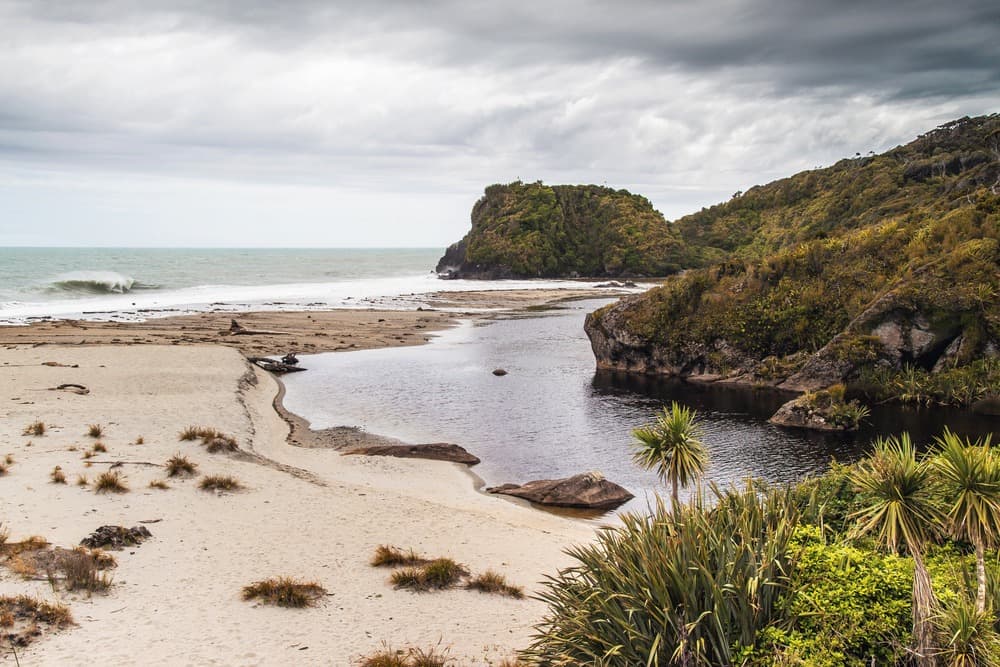
The South Island is renowned for the diversity of its panoramas, where deep fjords, snow-capped peaks, turquoise lakes, wild beaches and wine-growing hills succeed one another. Iconic places such as Fox and Franz Josef glaciers, Lake Pukaki, Lake Tekapo and Fiordland National Park (with the famous Milford Sound) testify to these natural wonders. This raw beauty also extends to agricultural regions such as the Canterbury Plains, or wine regions such as Marlborough, which contribute to the island's varied identity.
Unique Fauna in the World
This still relatively undeveloped territory is also home to exceptional fauna. Here you can encounter many endemic species such as the kea, the world's only mountain parrot, or the kiwi, a nocturnal and elusive bird that has become a national symbol. The east coast, particularly around Kaikoura or Akaroa, is a privileged place for observing dolphins, seals and humpback whales, while the south-east is home to sea lion colonies. Birdwatching enthusiasts will also discover rare species such as the red-faced cormorant, the Malherbe's parakeet or the rock wren.
What Are the Main Towns of the South Island?
The South Island is home to several important cities such as:
- Christchurch: recognised for its British-inspired architecture, its ability to reinvent itself after earthquakes and its proximity to the Banks Peninsula.
- Dunedin: founded by Scottish settlers, it appeals with its university atmosphere, wild coastline and exceptional fauna of the Otago Peninsula.
- Queenstown: surrounded by mountains and bordered by Lake Wakatipu, it is New Zealand's capital for extreme sports.
- Nelson: Appreciated for its generous sunshine and proximity to natural parks.
Other towns such as Invercargill, Wanaka, Kaikoura, Picton, Te Anau and Blenheim are equally essential stops for a stay on the South Island.
What Are the Must-See Sites and Itineraries?
Among the most spectacular natural sites, we can mention:
- Milford Sound and Fiordland National Park
- Mount Cook and the Southern Alps
- Abel Tasman National Park and its turquoise waters
- The West Coast, with its glaciers accessible on foot or by helicopter flight
- The Marlborough Sounds region and the Queen Charlotte Track
- The Catlins and Moeraki Boulders
- The filming locations for "The Lord of the Rings" and "The Chronicles of Narnia".
What to Do on the South Island of New Zealand?
The South Island is an ideal playground for outdoor enthusiasts. In Queenstown, a starting point for many hikes, it is possible to enjoy extreme sports such as:
- Bungy jumping
- Rafting
- Canyoning
- Paragliding
- Luging
The Great Walks such as the Milford, Routeburn and Kepler tracks offer numerous hiking trails in the heart of nature. You can also enjoy kayaking, skiing, mountain biking and mountaineering for an exploration of the island in complete freedom.
When to Visit the South Island of New Zealand?
The climate on the South Island is cooler than in the north. The west coast is very humid, the east is drier. The climate becomes alpine at altitude, with frequent snow in winter. The high tourist season runs from November to March, ideal for trips to the island, hiking or swimming.
Via Christchurch Airport
The majority of travellers arrive on the South Island by plane, via the airports of Christchurch, Queenstown or Dunedin. Christchurch Airport is the best served, with flights from Australia, the Pacific, Dubai, Singapore and Canton. Queenstown and Dunedin also handle air connections, mainly from Australia.
By Ferry Between New Zealand's Islands
For those arriving from the North Island, ferries operated by Bluebridge and Interislander connect Wellington to Picton, crossing the magnificent Marlborough Sounds.
By Vehicle Rental
Once there, it is highly recommended to rent a car or van to explore the island at your own pace, as public transport is limited outside major cities. Roads are generally in good condition, but some can be winding or snow-covered in winter.
FAQ
How Long Does the Ferry Crossing to the South Island Take?
The ferry crossing between Wellington (North Island) and Picton (South Island) takes approximately 3 to 3.5 hours.
What Is the Price of a Ferry Crossing from Wellington to Picton?
The average price of a one-way ticket for a single passenger between Wellington and Picton on the Interislander ferry is approximately $75 NZD, and can reach on average $222 NZD if you board with a vehicle.
Want to discover this destination?
Our local advisors design your tailor-made trip.