Lake Brunner
Lake Brunner
The largest lake on the West Coast of New Zealand's South Island, Lake Brunner combines renowned trout fishing, pristine forests and direct access by the TranzAlpine train.
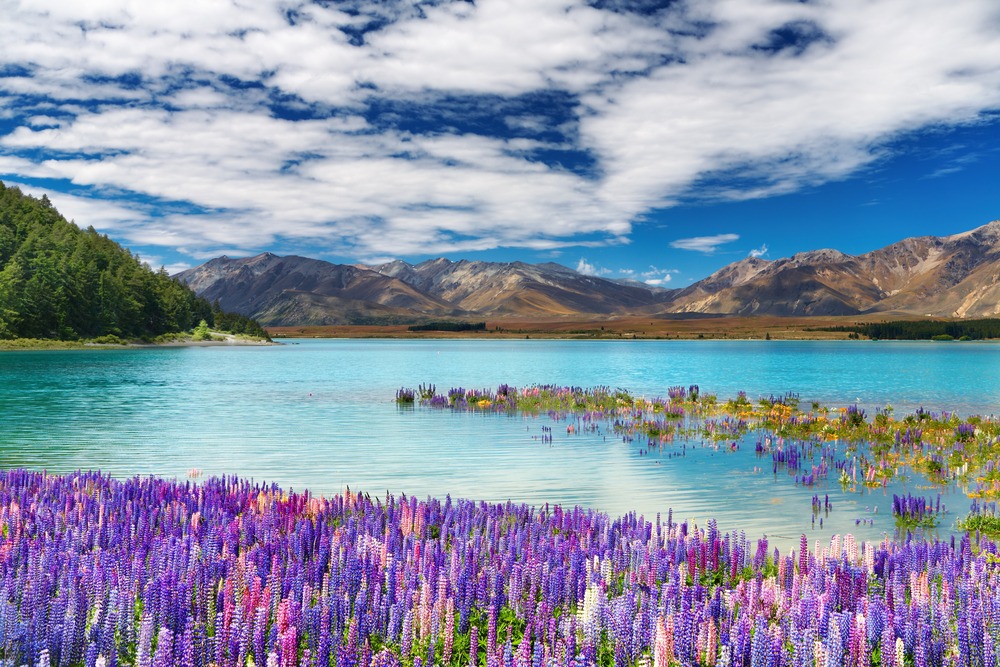
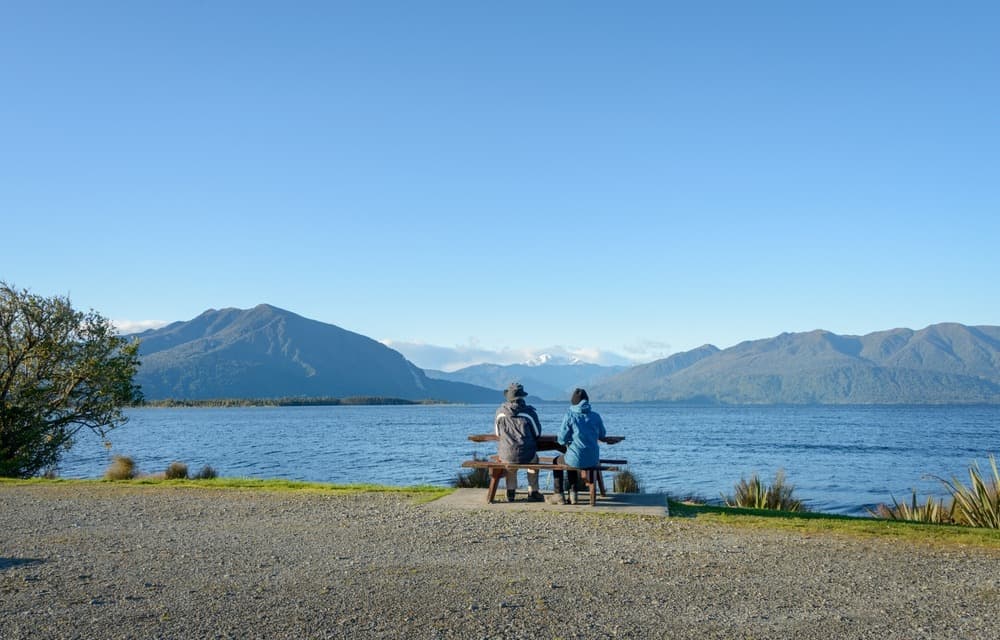
Lake Brunner, or Moana Kōtuku in Māori, is the largest body of water on the West Coast of New Zealand's South Island. With an area of approximately 40 km² and a maximum depth of 109 metres, this glacial lake borders the village of Moana, around thirty kilometres east of Greymouth. Trout fishing, hiking, kayaking and birdwatching structure the experience on site, within a preserved forest setting.
Why visit Lake Brunner
Lake Brunner attracts visitors for three main reasons. First, its fishing reputation: the density of wild brown trout, some reaching 1.5 to 2 kg, makes it one of the country's best fly-fishing spots. Next, the ecological richness of the site, where temperate rainforests and wetlands are home to endemic wildlife, notably the white heron (kōtuku) that gave the lake its Māori name. Finally, direct access via the scenic TranzAlpine train between Christchurch and Greymouth, which stops at Moana.
Nicknamed locally the "Westland Riviera", the lake remains off the beaten track of South Island tourism, making it a useful stop for those wishing to slow down between Arthur's Pass National Park and the West Coast.
History and Māori legends
Before European arrival, Lake Brunner was a halt on the route between the East and West coasts of the South Island. Māori people fished for eels and mussels, hunted birds, worked pounamu (greenstone jade) and occupied several fortified settlements, notably on Takakataka Island. The site is today recognised under the Ngāi Tahu Claims Settlement Act of 1998.
The Māori name Kōtukuwhakaoka means "sea of herons" or "lake of the white heron", with kōtuku referring to the white heron. Local tradition recounts that a chief of the same name was killed by two taniwha, supernatural creatures living in the lake; his son avenged him and the slain taniwha transformed into islands. Another legend speaks of the mythical couple Kōtuka and Māwhera, whose names respectively designate Lake Brunner and the Grey River (Māwheranui).
The first European to reach the lake was Thomas Brunner in 1848, during a 550-day expedition accompanied by Māori guide Kehu. Other explorers followed: Harper in 1857, Rochfort in 1859 and Howitt in 1863. The gold rush of 1865 attracted 800 seekers to the north-eastern shore; disappointed at finding nothing, they looted a store before departing. The Poerua Mining Company attempted gold extraction again in 1912, without success.
Geography and ecosystem
The lake basin formed approximately 11,000 years ago, when an arm of the Taramakau Glacier carved the valley between Mount Te Kinga and the Hohonu range, leaving moraines that retained the waters. The lake, elongated along a north-north-easterly axis, measures 9 km long by 7 to 10 km wide, at 76 metres altitude. It drains mainly via the Arnold River, a tributary of the Grey River. Three waterways feed it: the Crooked River to the east, which forms an active delta, the Orangipuku River between Mount Te Kinga and the Hohonu range, and the Eastern Hohonu River.
The shores are bordered by well-preserved primary forest, dominated by kahikatea (Dacrycarpus dacrydioides), totara, rimu, manoao and southern beech at higher elevations. The waters are home to freshwater mussels Echyridella menziesii and the crustacean Boeckella delicata, unique to the South Island. Brown and rainbow trout, introduced in the late 19th century, dominate fish fauna. Iveagh Bay is the best birdwatching vantage point: white-faced herons, cormorants, mallards and spotless ducks, black swans, coots and paradise ducks are regularly observed there.
What to do
Trout fishing
The lake is one of New Zealand's most renowned fly-fishing destinations. Wild brown trout are so abundant that local legend claims they would die of old age. Fishing is year-round, from boat or shore, and the shallow southern zones suit sight fishing amongst the aquatic vegetation. Guides, permits and boat rentals are available at Moana, which has a boat ramp.
Water activities
Kayaking, paddleboarding, swimming, water skiing and jet boating are all possible on the lake. Much of the shoreline remains inaccessible by road, making boat or kayak the best way to explore remote areas.
Hiking and mountain biking
Over a dozen marked trails crisscross the lake's surrounds, ranging from 20 minutes to 8 hours of walking. Many follow old European logging tracks. The Rakaitane track traverses a Dacrycarpus dacrydioides forest with views over the water. For cyclists, a 130 km loop circles the lake and hosts the annual "Around Brunner Cycle Ride" race.
When to visit
Fly-fishing is practiced year-round, with good results even in cloudy weather, frequent on the West Coast. The austral summer (December to February) remains the most comfortable period for swimming and water activities, with long daylight hours. Autumn (March-April) offers good hiking conditions and fewer mosquitoes. Birdwatching is worthwhile throughout the year in Iveagh Bay, but spring (September-November) marks the return of migratory species. Since the West Coast is one of the country's wettest regions, pack rain gear regardless of season.
How to get there
Lake Brunner is 37 km east of Greymouth. From Greymouth, follow State Highway 7 to Stillwater, then turn towards Moana. A free car park with toilet facilities provides access to a flat track leading to the water's edge in about ten minutes.
From Christchurch, allow approximately 3 hours 30 minutes by the Great Alpine Highway (SH73), via Arthur's Pass. The alternative rail option is the TranzAlpine, which connects Christchurch to Greymouth in around 5 hours and makes several daily stops at Moana station. It is one of New Zealand's most popular train journeys, and a comfortable way to access the lake without a car.
Nearby
Lake Brunner fits well into an itinerary connecting both coasts of the South Island. To the east, Arthur's Pass National Park offers alpine scenery and numerous high-altitude hikes. On the same Great Alpine Highway, Kura Tawhiti (Castle Hill) draws visitors for its spectacular limestone formations. Bruinen Gorge, a Lord of the Rings filming location, completes this route for film enthusiasts.
Frequently asked questions
Frequently asked questions
Plan your trip
Lake Brunner fits naturally into an itinerary crossing the South Island, between Christchurch and the West Coast. To build a bespoke itinerary including this stop, consult our New Zealand journeys.
Interested in this visit?
We can include it in your personalised itinerary.