Lake Wakatipu
Lake Wakatipu
New Zealand's longest lake, Wakatipu stretches 80 km at the foot of the Southern Alps, between Queenstown, Glenorchy and Kingston.
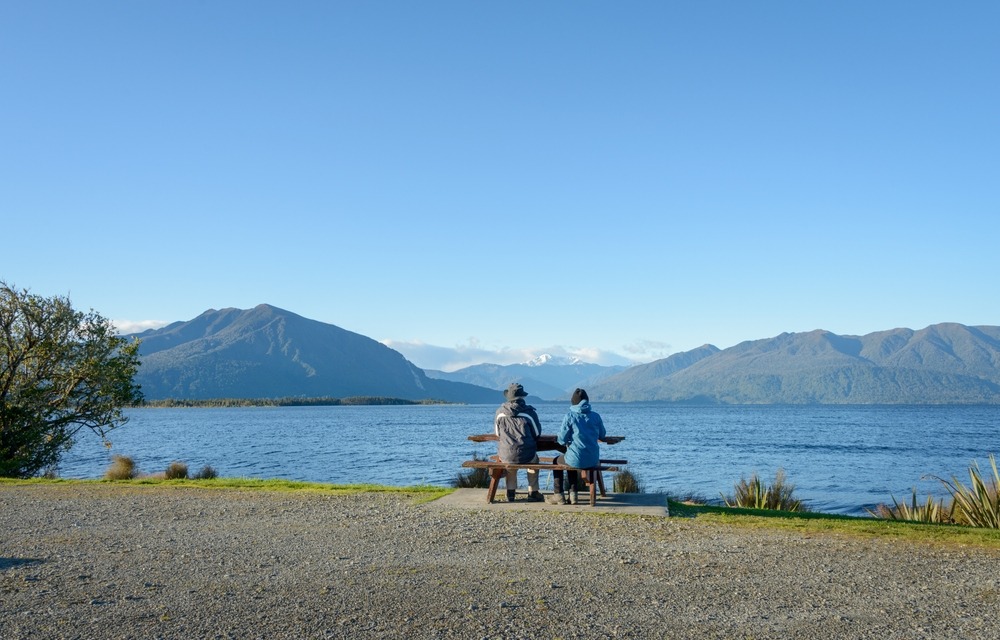
Lake Wakatipu stretches over 80 kilometres at the foot of the Southern Alps, forming New Zealand's longest lake. Its inverted S shape, deep blue waters and the peaks of the Remarkables that border it make it one of the South Island's most iconic landscapes. Queenstown, Glenorchy and Kingston occupy its shores, each offering a different point of access to this vast glacial body of water.
Why visit Lake Wakatipu?
Located at 310 metres altitude at the foot of the Southern Alps (Kā Tiritiri o te Moana), Lake Wakatipu is the country's third largest lake with approximately 293 km², behind Lakes Taupo and Te Anau. Its maximum depth of close to 380 metres and its singular shape—an inverted S, Z or N depending on interpretation—testify to its glacial origin: a valley carved and then blocked by a moraine some 15,000 years ago.
The lake exhibits a remarkable hydrological phenomenon: its water level rises and falls by 10 to 20 centimetres every 25 to 27 minutes. Hydrologists refer to this as a seiche of period, a stationary oscillation caused by the combination of relief, winds and atmospheric pressure. Māori tradition interprets it as the heartbeat of the giant Matau, asleep beneath the waters.
Around the lake, the Remarkables range to the east and the Southern Alps to the north-west create a mountainous backdrop that makes it an anchor point for exploring the entire Otago region.
History and legends of Lake Wakatipu
The current basin formed approximately 15,000 years ago, at the end of the last glaciation. The first documented European exploration dates to August 1859, when Scottish surveyor Donald Hay traversed its shores. The gold rush that followed rapidly transformed the region: the village that would become Queenstown was then called Camptown. The lake served as the principal transport route before roads were opened.
This sole outlet, the Kawarau River, was not always sufficient to absorb the inflows from four tributary rivers (Dart, Rees, Greenstone, Von). Significant flooding was recorded in 1878, 1995 and 1999, the latter submerging part of Queenstown's city centre.
The Māori name of the lake probably derives from Whakatipu Wai-maori, whose translation remains debated. Two traditional narratives explain its shape. The first recounts how the hero Matakauri rescues Manata, daughter of the chief, held captive by the taniwha Matau. To prevent the giant's return, Matakauri sets fire to its bed of ferns; the monster's fat fuels such an intense blaze that it carves the present valley. Glenorchy corresponds to the giant's head, Queenstown to its knees and Kingston to its feet. A second tradition attributes the lake's carving to Te Raikaihaitu, a great explorer chief, who worked the hard rock using a sacred spade and karakia (ritual incantations).
What to see and do
Navigate the lake
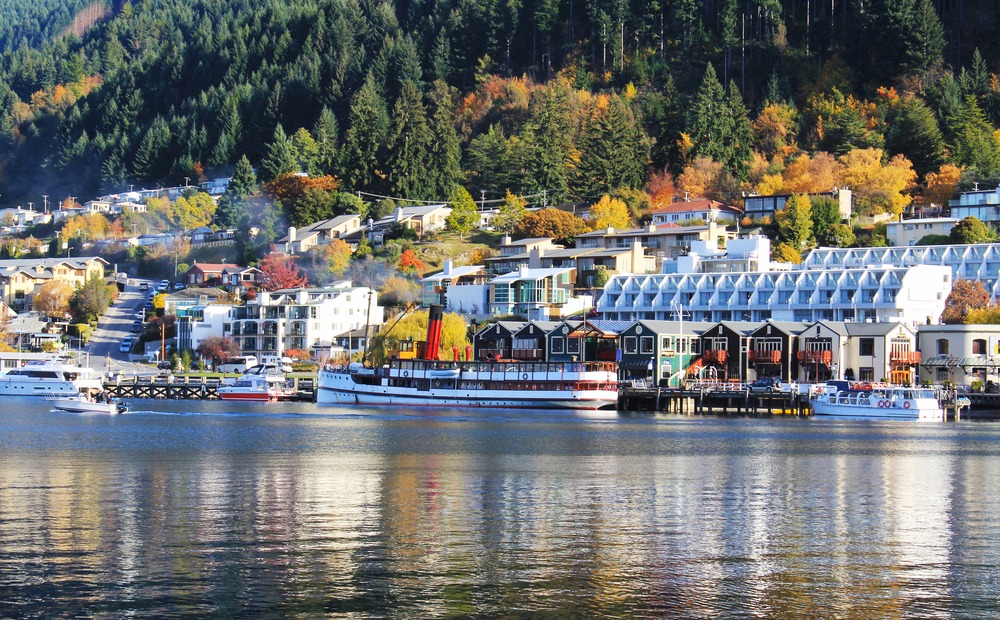
The TSS Earnslaw, a century-old steam ship with a white hull, kauri wood decks and a red funnel, has offered cruises from Queenstown for more than a century. The Spirit of Queenstown crossing reaches Mt Nicholas High Country Farm, passing through the turquoise waters of Bob's Cove.
Water sports and outdoor activities
Jet boating remains the region's signature activity: departing from the lake, then sharp turns and 360° spins on the Kawarau and Shotover rivers. For a slower pace, kayaking and paddleboarding allow you to explore wooded coves. Fishing is practised near the mouths of the Greenstone and Lochy rivers, where brown and rainbow trout are abundant.
Wildlife and ecosystem
The cold waters from glacial melt are home to the New Zealand longfin eel (Anguilla dieffenbachii), an emblematic indigenous species: the largest known specimen is said to have been caught here in 1886. On the shores and in the surrounding forests, you can observe the iridescent tūī, the kea (endemic alpine parrot) and the black-billed Buller's gull.
Lakeside villages
Four main settlements border the lake: Queenstown, the region's tourism capital; Glenorchy to the north, gateway to the major hikes of Mt Aspiring National Park; Kinloch on the opposite shore; and Kingston at the southern end, a former terminus of the historic railway.
Practical information
- Free access to the lake and its shores year-round
- Allow half a day for a cruise, a full day to combine navigation and hiking
- The complete drive around takes 3 to 4 hours without extended stops
- Water is cold in all seasons; swimming possible but brief in summer
When to visit Lake Wakatipu
The lake is worth visiting year-round, with each season offering a different face. From December to February (southern summer), mild temperatures favour hiking, water sports and cruises. From March to May, autumn colours the banks with golden hues, with more moderate crowds. From June to August, winter attracts skiers to the Remarkables and Coronet Peak resorts, and the lake is sometimes draped in mist at sunrise. Spring (September-November) marks the return of hiking trails and snow-capped peaks in the background.
How to get there
Queenstown has an international airport served from Auckland, Christchurch and several Australian cities. From the city centre, the lake's shores are accessible on foot. The scenic Glenorchy-Queenstown Road runs along the north-western shore for approximately 45 km to Glenorchy, one of the South Island's most beautiful drives. Kingston is reached via State Highway 6 heading south (approximately 45 minutes from Queenstown). Boats and lake shuttles also provide connections between Queenstown and the opposite shore.
Nearby attractions
- Queenstown: New Zealand's adventure tourism capital and starting point for all excursions
- Bob's Cove: turquoise cove accessible via an easy trail from the northern shore
- The Remarkables: mountain range offering hiking in summer and skiing in winter
- Glenorchy and Dart Valley: landscapes used in several major film productions
- Arrowtown: former gold prospectors' village with well-preserved heritage
FAQ
Frequently asked questions
Allow 3 to 4 hours for the complete loop, without extended stops. With photo breaks and a halt in Glenorchy, plan for a full day instead.
Yes, its waters fed by glacial melt display great purity and remarkable transparency. The temperature remains cool year-round.
Swimming is possible, especially in summer from the developed beaches of Queenstown Bay or Sunshine Bay. The water remains cold even in January-February, which typically makes swims brief.
This phenomenon, called a seiche of period, results in a variation of 10 to 20 centimetres every 25 to 27 minutes. It stems from stationary oscillations linked to relief, winds and atmospheric pressure. Māori tradition interprets it as the heartbeat of the giant Matau.
Queenstown offers the widest range of activities and accommodation. Glenorchy suits travellers seeking a quieter setting and direct access to major hikes in the north of the lake.
Preparing your trip
Lake Wakatipu suits all lengths of stay, from an extended weekend to a full South Island itinerary. To incorporate this stop into a tailor-made journey, explore our suggestions for travel in New Zealand.
Interested in this visit?
We can include it in your personalised itinerary.