Dunedin
Dunedin
Between the Otago Peninsula, royal albatrosses, yellow-eyed penguins and Victorian architecture, Dunedin is the singular highlight of a South Island road trip.
Situated on the south-east coast of the South Island, Dunedin is a city with a distinctive identity. A blend of European influences and Māori culture, it captivates with its Victorian architectural heritage as much as with the richness of its wildlife and beautiful coastal landscapes. At once dynamic, student-spirited and ocean-focused, Dunedin is an essential stop for discovering New Zealand from a different perspective.
Where is Dunedin in South Island?
Dunedin (or Ōtepoti in Māori) is a port city in New Zealand, located in the Otago region, on the south-east coast of the South Island. It stretches across a vast territory of more than 3,300 km², making it one of the largest cities in the country by area.
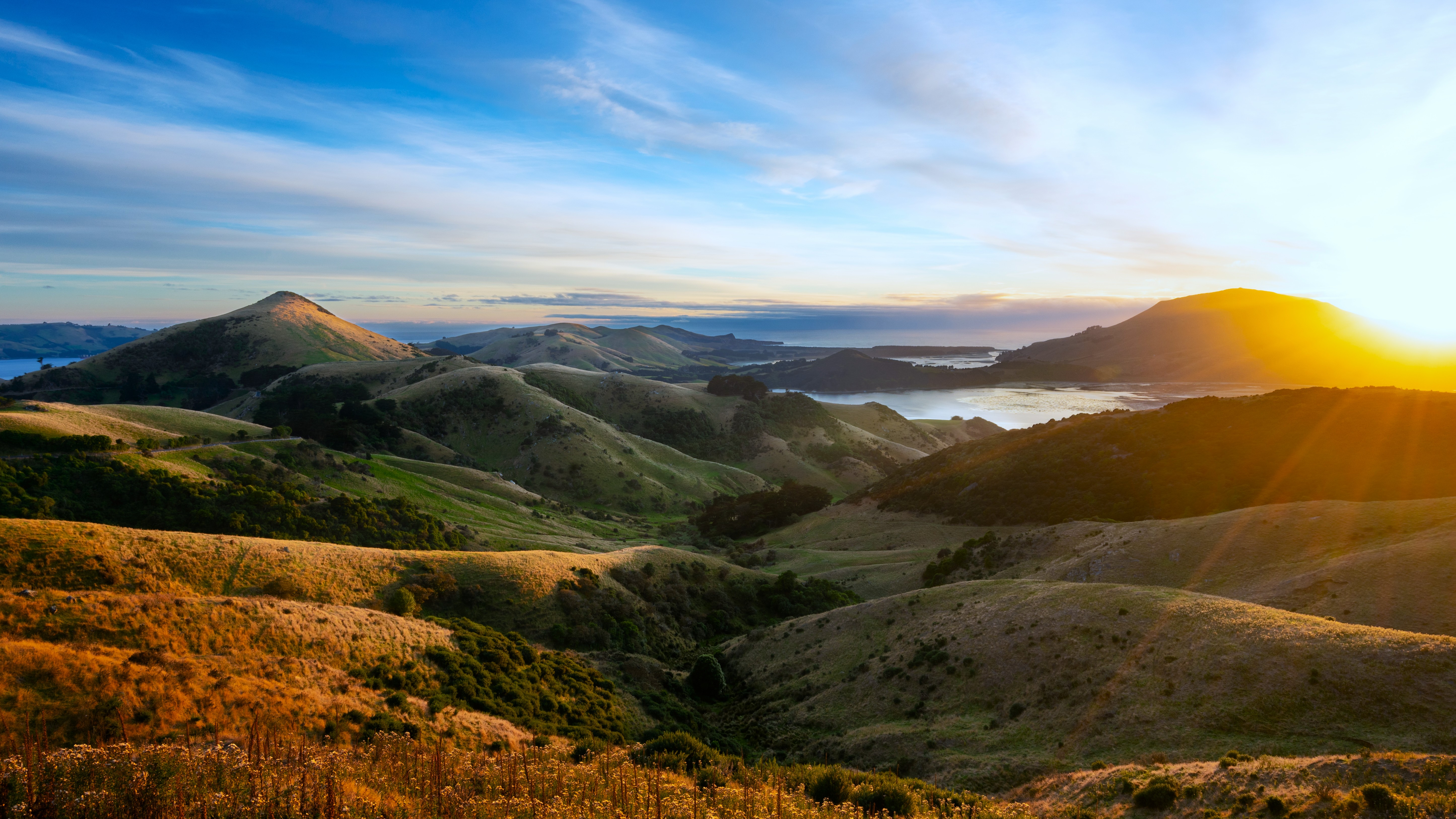
Nestled at the head of the natural Otago Harbour, which stretches for 23 km, Dunedin is surrounded by steep hills, remnants of an extinct volcano. The city lies approximately 360 kilometres north of Christchurch and 790 kilometres from Wellington, the capital. Its coastal location, combined with a mountainous hinterland, gives it spectacular geography between sea and sheer cliffs.
What is Dunedin's history?
The Dunedin region has been inhabited for over 800 years. The earliest traces of Māori occupation date back to 1280-1320 AD, shortly after the Māori arrival in New Zealand. These early inhabitants lived mainly along the coast, subsisting on seals and moa.
First European contact occurred in the 1790s with the arrival of seal hunters, followed by whalers. Otago Harbour became an important whaling centre from the 1830s onwards. However, the Māori villages of Puketai and Ōtepoti were abandoned around 1826, following the musket wars and a devastating measles epidemic.
In 1848, the Free Church of Scotland officially founded the city of Dunedin with the arrival of Scottish settlers aboard two ships. The name was chosen as a tribute to Edinburgh, whose Gaelic name is Dùn Èideann. The urban plan, designed by surveyor Charles Kettle, placed the Octagon at the heart of the city, with a green belt (town belt) demarcating its boundaries. Captain William Cargill played a decisive role in this founding.
The discovery of gold in 1861 in the Otago province transformed the city dramatically. The population grew from 1,712 to nearly 15,000 in less than a decade, and continued to rise, making it New Zealand's largest city between 1865 and 1900. This period of prosperity enabled the construction of iconic buildings such as Dunedin Railway Station (1904), the early First Church and Knox Church, St. Joseph's Cathedral, Otago Museum and the original Otago University (1869), the country's first.
During the same period, the city welcomed numerous Chinese immigrants, mainly from Guangdong and Guangxi, as well as Jewish, Lebanese and Irish communities, who enriched its cultural diversity. Dunedin became an active centre of education, commerce, finance and industry.
From the twentieth century onwards, as the country's economic centre shifted towards the North Island, Dunedin experienced more modest growth. It nonetheless managed to preserve and enhance its rich Victorian and Edwardian architectural heritage, notably through the adaptive reuse of historic buildings: Dunedin Railway Station, Speight's Brewery, estates such as Olveston or Larnach Castle.
After the Second World War, the city expanded westwards and southwards with the construction of new suburbs, the opening of Mōmona Airport (1962) and Moana Pool Olympic swimming facility (1964). Growth remained limited, however, as Auckland tripled its population.
From the 2000s onwards, Otago University played a leading role in the economy and cultural life. Dunedin also attracted international students, making the population more cosmopolitan. The city continued to diversify with the opening of the Chinese Garden (2008), the inauguration of Forsyth Barr Stadium (2011), and the development of events, cultural tourism and living heritage.
Why is Dunedin so renowned?
Dunedin is a city of singular charm, deeply marked by its Scottish roots. Nicknamed "the Edinburgh of the South", it preserves a rich Victorian and Edwardian architectural heritage inherited from the gold rush era. The city also prides itself on being home to Otago University, the country's oldest, which infuses the city with a youthful and dynamic atmosphere. A UNESCO City of Literature, Dunedin shines through its creativity, its emblematic music scene (the Dunedin Sound) and its cultural vibrancy.
What to see and do in Dunedin?
Explore the city centre between history and modernity
Dunedin's city centre blends historic buildings, street art, trendy cafés and animated bookshops. At the heart of the city, the Octagon forms an octagonal plaza around which the St. Paul's Cathedral, library, theatre and town hall are arranged. From here, George Street departs as the main shopping thoroughfare, lined with boutiques, tea rooms, traditional pubs and more.
Museums, galleries and cultural venues
Dunedin also appeals to culture enthusiasts:
- Otago Museum blends natural history, Pacific cultures and an indoor tropical forest.
- Toitū Otago Settlers Museum traces the lives of early European settlers.
- The Public Art Gallery, the country's first art gallery, showcases New Zealand and international works.
- The open-air street art gallery is accessible via the Dunedin Street Art Trail (1.5 hours on foot).
Spectacular nature at the city's doorstep
Just minutes from the city centre, the Otago Peninsula offers a concentration of biodiversity:
- The Royal Albatross Centre allows you to observe royal albatrosses in their natural habitat at Taiaroa Head.
- Penguin Place protects yellow-eyed penguins (hoiho), among the world's rarest.
- Guided tours with Monarch Cruises or Elm Wildlife Tours allow you to encounter fur seals, sea lions and little blue penguins.
- Orokonui Eco Sanctuary, to the north, protects numerous endemic species in a forest environment accessible via marked trails.
Beaches, cliffs and hiking
Outdoor enthusiasts will be thoroughly satisfied with:
- Tunnel Beach and Murdering Beach, with their rock-carved tunnels and sandstone arch, offer impressive panoramic views.
- St Clair Beach, popular with surfers, also invites swimming in summer.
- Baldwin Street, the steepest street in the world with a 35% gradient, is a fun challenge for visitors.
- Signal Hill, at 400 metres altitude, offers a superb viewpoint over Dunedin.
- Walks leading to Lovers Leap, the Pyramids in Okia Reserve or Sinclair Wetlands (home to over 60 bird species).
Gardens and green spaces
For a nature break within the city:
- Dunedin Botanical Garden, ranked among the country's finest
- The Chinese Garden, a haven of serenity in the heart of the city
- Parks such as Unity Park, Logan Park or Bayfield Park, offering pleasant spaces for relaxation.
Where to eat and discover local cuisine in Dunedin?
The atmosphere in Dunedin is relaxed yet lively, and local gastronomy reflects this dynamism: Otago lamb, fresh fish, Bluff oysters, regional wines… all served in convivial or refined restaurants, often housed in historic buildings.
Among the must-tries:
- Speight's Brewery for a classic guided tour
- Cadbury Chocolate Factory, legendary among sweet-tooths
- Emerson's Brewery, ideal for tasting craft beers on-site
- Otago Farmers Market, held every Saturday morning at Dunedin Railway Station, perfect for discovering local produce.
Lastly, don't miss catching a rugby or cricket match, genuine local passions.
When to visit Dunedin NZ?
Dunedin enjoys a temperate oceanic climate characterised by mild summers and cool winters. In January, temperatures typically range between 11.6°C and 18.9°C, while in July they hover between 3.0°C and 10.4°C.
Each season offers a different experience:
- Summer (December to February) is ideal for enjoying the beaches and exploring coastal wildlife, particularly albatrosses raising their chicks during this period
- Autumn adorns the parks with flamboyant colours
- Winter, though cool, allows easy access to the South Island ski resorts
- Spring is perfect for strolling through botanical gardens or hiking along the coastline.
Whether for its remarkable architecture, vibrant cultural scene or spectacular nature, Dunedin is enjoyable to visit year-round.
Dunedin is accessible by air, with regular flights from Auckland, Wellington and Christchurch. From France, expect approximately 35 hours of travel time from Paris. The city is served by Dunedin Airport (IATA code: DUD), located approximately 30 km from the city centre. A scenic high road also connects Christchurch to Dunedin, ideal for a road trip.
Accommodation in Dunedin

Want to discover this destination?
Our local advisors design your tailor-made trip.