Wellington and Wairarapa
A windswept cultural capital anchored by cafés and the Te Papa museum, extended eastward by the Martinborough vineyards and dramatic Cape Palliser coastline, just 90 minutes away.
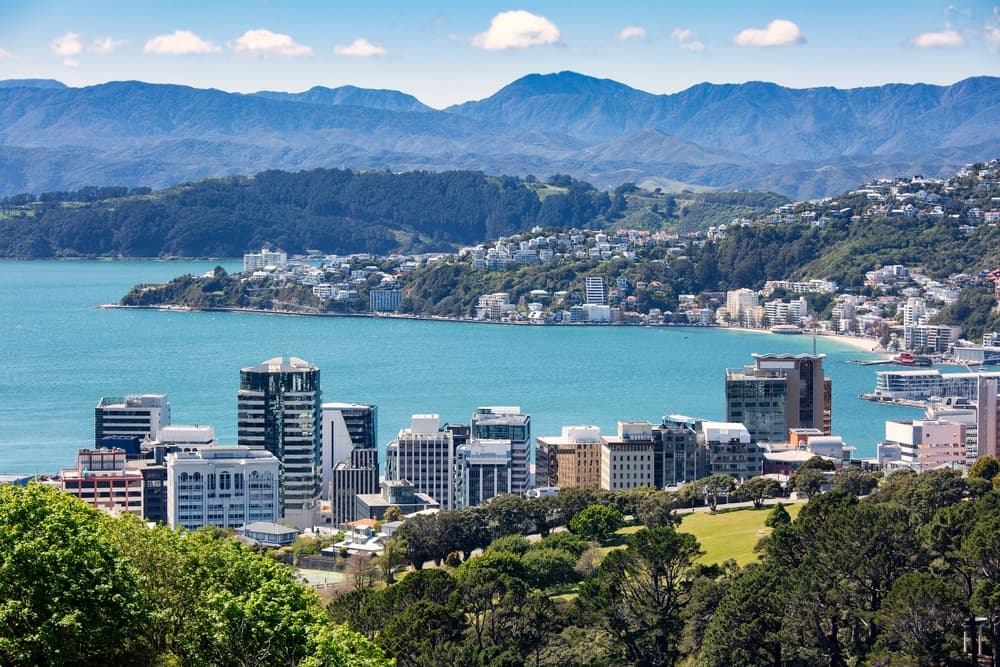
Wellington holds a singular position in New Zealand, clinging to the hills that descend steeply toward Lambton Harbour at the southern tip of the North Island. The city concentrates the country's political institutions—Parliament and its distinctive hive-shaped annexe, the Beehive—alongside Te Papa Tongarewa, the free national museum that charts the geological and Māori history of the nation. Our English-speaking local agency is based here, which allows us to time ferry departures to Picton and adjust itineraries around the wind, which dominates the Cook Strait.
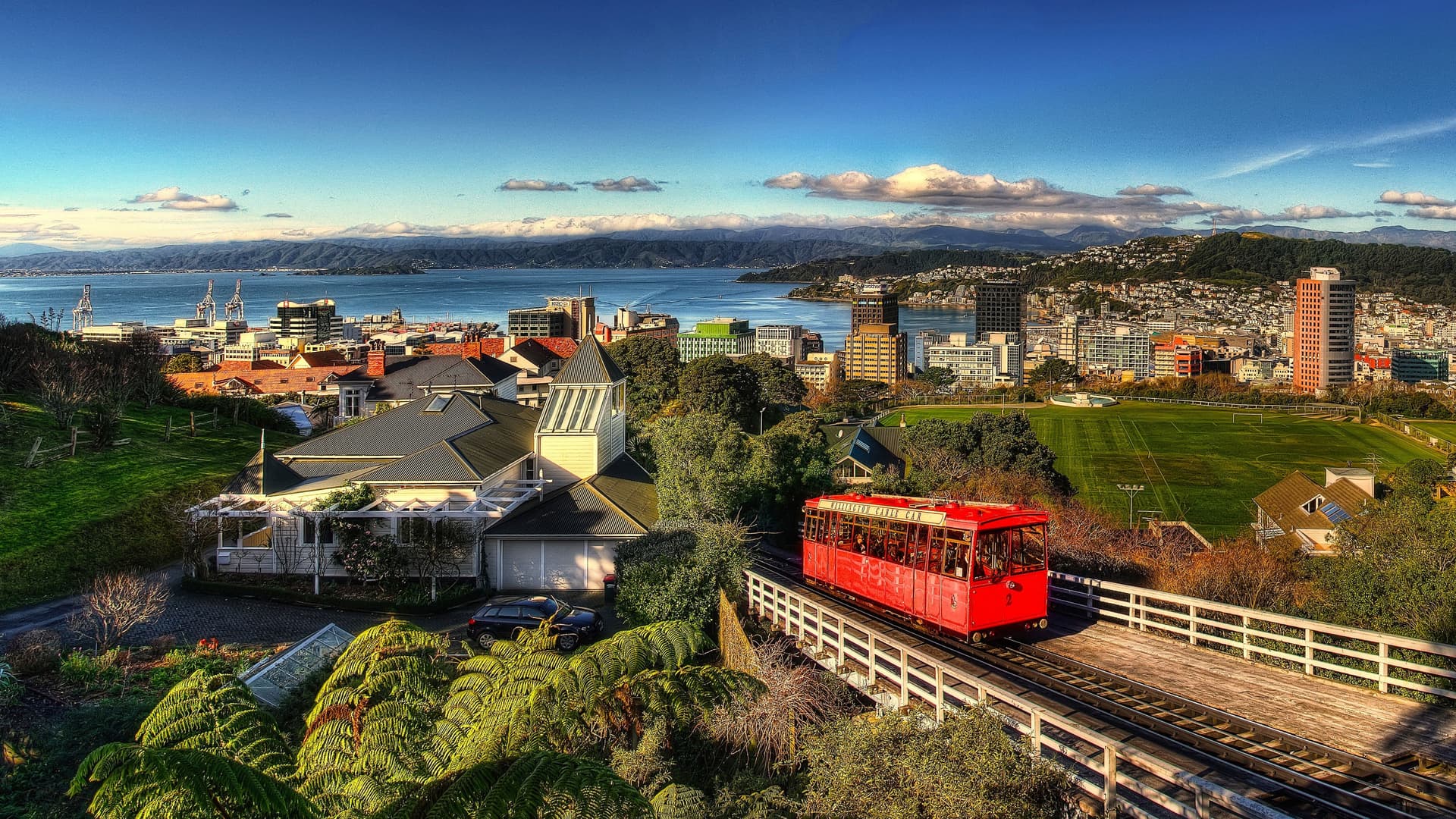
The city's topography shapes its character. Built on an active fault line, Wellington is compact and vertical: you can climb Mount Victoria (196 m) in twenty minutes on foot from the city centre for views across the harbour and Miramar Peninsula, where Peter Jackson established the Weta studios. A red cable car connects Lambton Quay to the Botanic Garden in five minutes. Gastronomically, the city claims more cafés per capita than New York, and coffee roasting has become a recognized craft since the 1990s, driven by roasteries like Havana and Flight Coffee. Cuba Street, a former bohemian quarter, concentrates independent bookshops, natural wine bars, and Malaysian and Ethiopian restaurants.
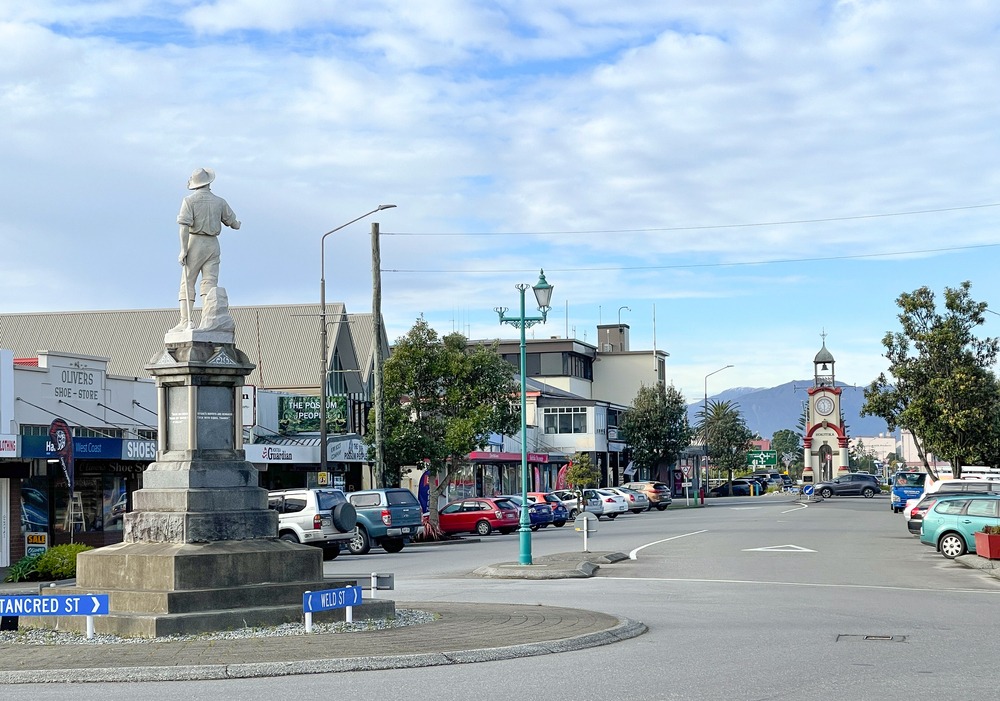
East of the capital, the Rimutaka Range separates Wellington from the Wairarapa Plain. The road crests at 555 metres, then descends to Featherston and Greytown, two Victorian towns with preserved wooden façades. Martinborough, further south, established itself from the 1980s onward as a recognized appellation for Pinot Noir, on soils of ancient gravels deposited by the Ruamahanga River. Around thirty estates, often family-run, can be explored by bicycle from the village's central square, laid out in a Union Jack pattern.
The southern coast of the Wairarapa, around Cape Palliser, shifts dramatically. The gravel road traces sandstone cliffs, passes the fishing village of Ngawi with its bulldozers lined up on the beach (used to launch boats), and leads to a colony of New Zealand fur seals—the largest on the North Island. A red and white lighthouse stands atop 253 steps. Inland, the Putangirua Pinnacles, columnar erosion formations of gravel and clay, served as a filming location for The Return of the King.
The region's climate is marked by the Cook Strait winds, which funnel between the two islands. Wellington records an average of 173 days per year with gusts above 60 km/h, earning its nickname Windy Welly. The Wairarapa, sheltered by the Rimutaka Range, enjoys a drier and warmer microclimate ideal for viticulture: roughly 700 mm of annual rainfall compared with 1,250 mm in Wellington. This difference is felt immediately upon exiting the road tunnel.
For the traveller, the region serves two functions: a logistics hub before crossing to the South Island, and a cultural stopover that balances itineraries often dominated by nature. The city is also home to the Te Atiawa Māori community, and Pipitea marae, near the railway station, hosts public ceremonies certain weekends.
Highlights
Te Papa Tongarewa, the national museum. Six floors of free exhibitions on tectonics, endemic fauna, and Māori treaties. Plan for a minimum of three hours, longer if you visit the Gallipoli exhibition featuring giant figurines from Weta studio.
Martinborough vineyards by bicycle. A loop of 15 to 20 km links around a dozen Pinot Noir estates surrounding the village. Ata Rangi, Escarpment, and Palliser Estate wineries offer tastings by appointment, generally between 11am and 4pm.
Cape Palliser and its seal colony. Two hours' drive southeast of Wellington, the colony numbers several hundred individuals visible year-round within metres of the trail. The lighthouse offers views across the Cook Strait estuary.
Wellington–Picton ferry crossing. 3.5 hours of navigation between the capital and the South Island, with the final hour through the Marlborough Sounds, a labyrinth of wooded sea-filled valleys. Daily departures with Interislander and Bluebridge.
Zealandia, an urban sanctuary. A fenced reserve of 225 hectares ten minutes from the city centre, reintroducing endemic species (kaka, takahē, tuatara). A nocturnal guided tour allows you to observe kiwis in their habitat.
When to go
The best period to combine Wellington and the Wairarapa extends from November to April. The austral summer (December to February) offers temperatures of 18 to 22 °C in Wellington, with long days and persistent wind. March and April often provide the most stable conditions for tastings in Martinborough, with 20 °C daytime temperatures and less rain than midsummer. The harvest period, around mid-March to mid-April, enlivens the estates.
Winter (June to August) is not prohibitive for the city (8 to 13 °C, vibrant cultural scene, festivals), but ferry crossings are more exposed to storms, with possible cancellations. The Wairarapa becomes quieter, some cellar doors close on weekdays. Avoid September to November weekends if you seek tranquility: it's the season for Toast Martinborough and other wine events, and accommodation books out six months in advance.
Practical advice
We recommend a minimum of three days in the region: a full day in Wellington (Te Papa, Cuba Street, Mount Victoria), a day in the Wairarapa (vineyards and Victorian villages), and a day on the southern coast toward Cape Palliser. Four to five days allow you to add Zealandia, Weta Workshop, and an overnight in Martinborough. Wellington Airport receives domestic flights from Auckland (1 hour 5 minutes) and Christchurch (50 minutes), plus select international connections from Australia.
The region integrates logically with the Volcanic Plateau to the north (5 hours by road via Taupo) at the start or end of a North Island circuit, and with the West Coast and Southern Alps after the ferry crossing to Picton. Hotel comfort is high in the city, with design-focused addresses (Hotel QT, Ohtel) and characterful B&Bs in Mount Victoria's Edwardian villas. The Wairarapa favours wine lodges and standalone cottages. This region suits urban travellers, wine enthusiasts, and contemplative visitors seeking a cultural counterpoint to the South's wide open spaces. Families with children appreciate Te Papa and Zealandia, though the wind may challenge younger children by the coast.