Volcanic Plateau
In the centre of the North Island, a tectonic corridor where geysers, Te Arawa culture and three active volcanoes converge over 200 km between Rotorua and Tongariro.
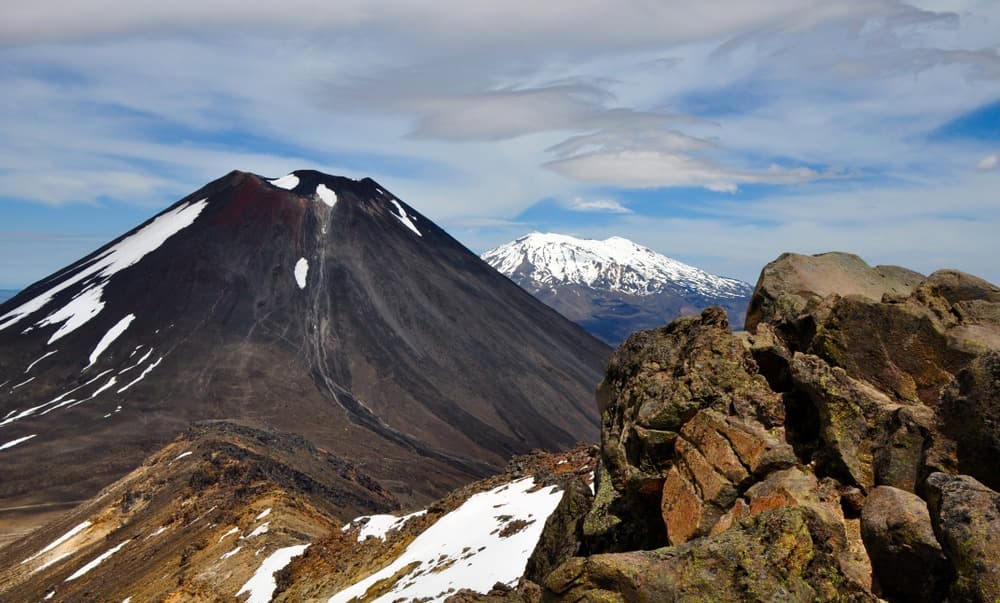
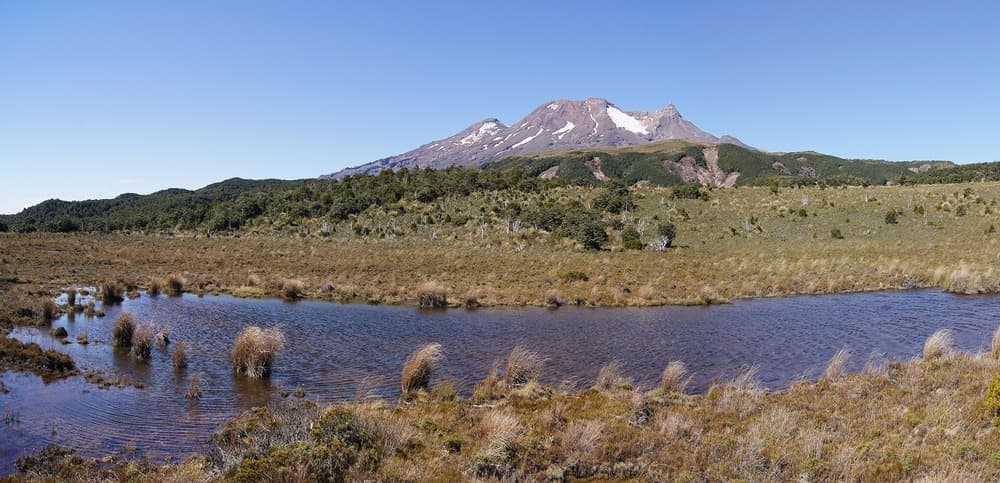
The volcanic plateau occupies the centre of the North Island, between the southern shores of Lake Taupo and the Bay of Plenty. Our team describes it as a tectonic corridor: the Pacific Plate plunges beneath the Australian Plate, and the consequences are visible everywhere—geysers, mud pools, and still-active cones of Ruapehu (2,797 m), Ngauruhoe (2,291 m) and Tongariro (1,978 m). The air smells of sulphur as soon as you enter Rotorua, especially around Kuirau Park where the municipal hot pools are free.
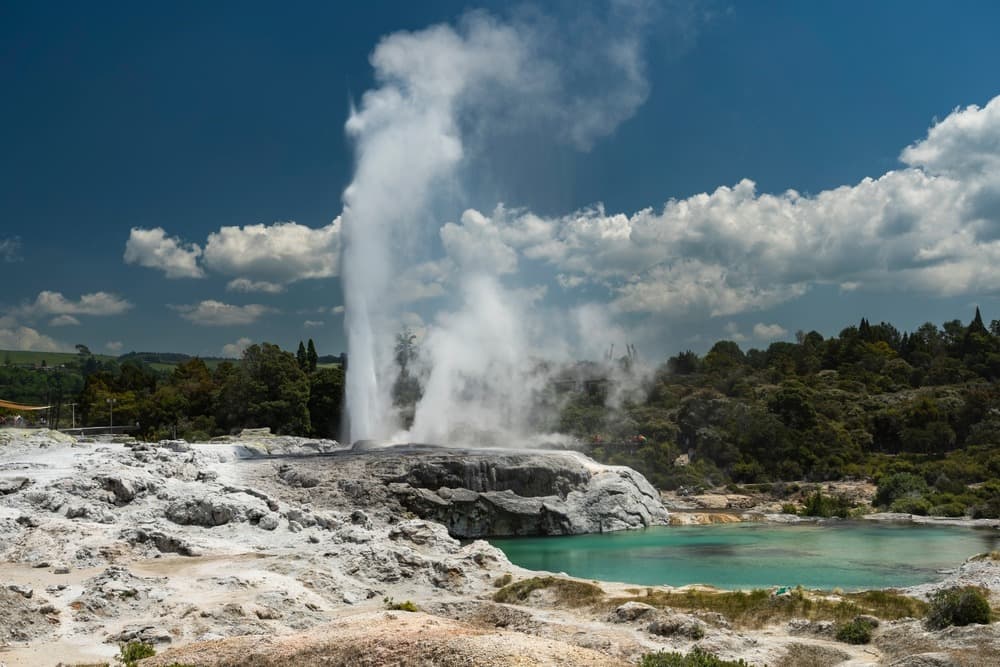
Rotorua, with 75,000 residents, is also a living Maori centre. Nearly a third of the population is of Te Arawa descent, and the marae of Ohinemutu, on the lake's shores, are in daily use. At Whakarewarewa, families still cook corn and sweet potatoes in 100 °C hot springs. Hangi, a meal steamed in a buried earth oven, is served in the evening at several cultural villages, notably Tamaki and Mitai. We often direct travellers to Te Puia to combine the Pohutu geyser (reaching up to 30 m high, 1 to 2 times per hour) with wood and jade carving schools.
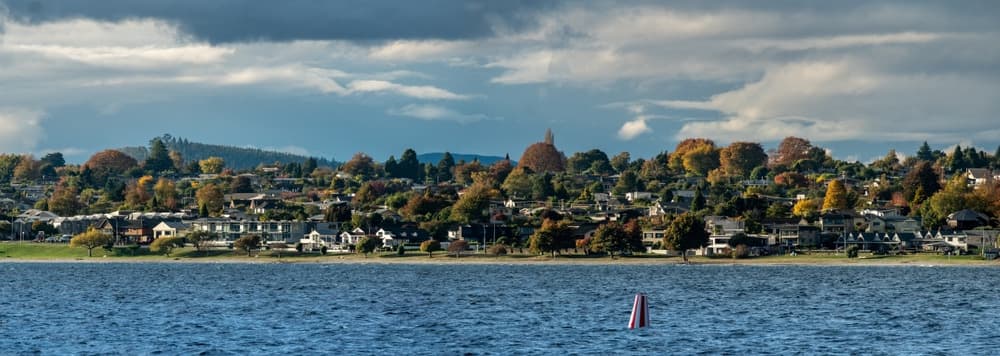
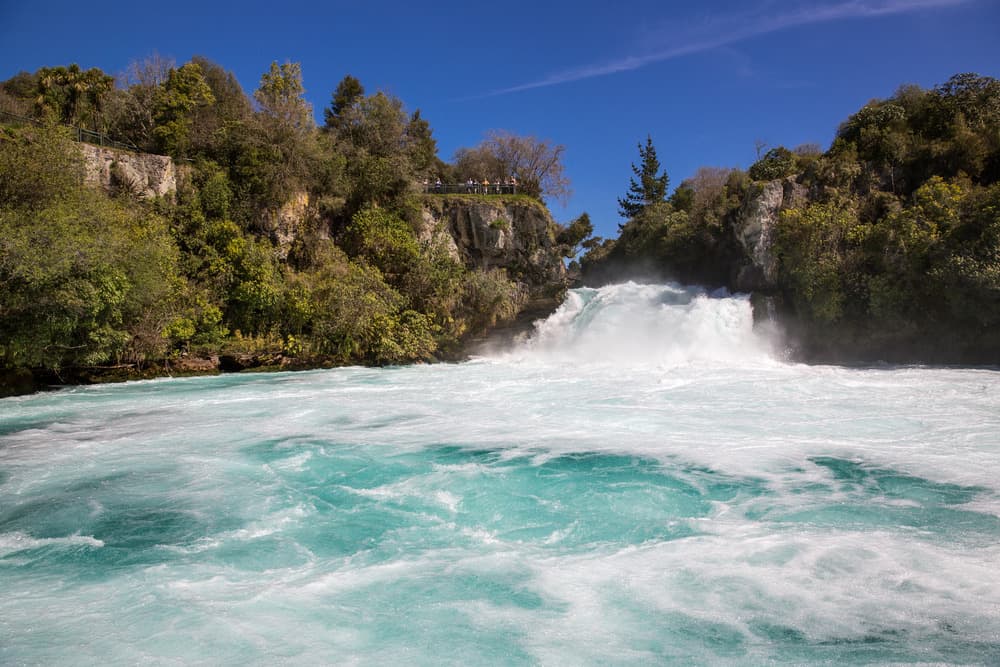
An hour to the south, Lake Taupo spans 616 km², roughly the size of Singapore. It is the caldera of an eruption dated to 232 AD, one of the most violent of the past two millennia. The town of Taupo, on the northeastern shore, thrives on rainbow trout fishing (introduced from California in 1887) and active tourism. The Huka Falls, 5 km downstream, see 220,000 litres per second pass through a 15 m-wide gorge. More low-key, the village of Turangi, south of the lake, serves as a base for fly fishers on the Tongariro River.
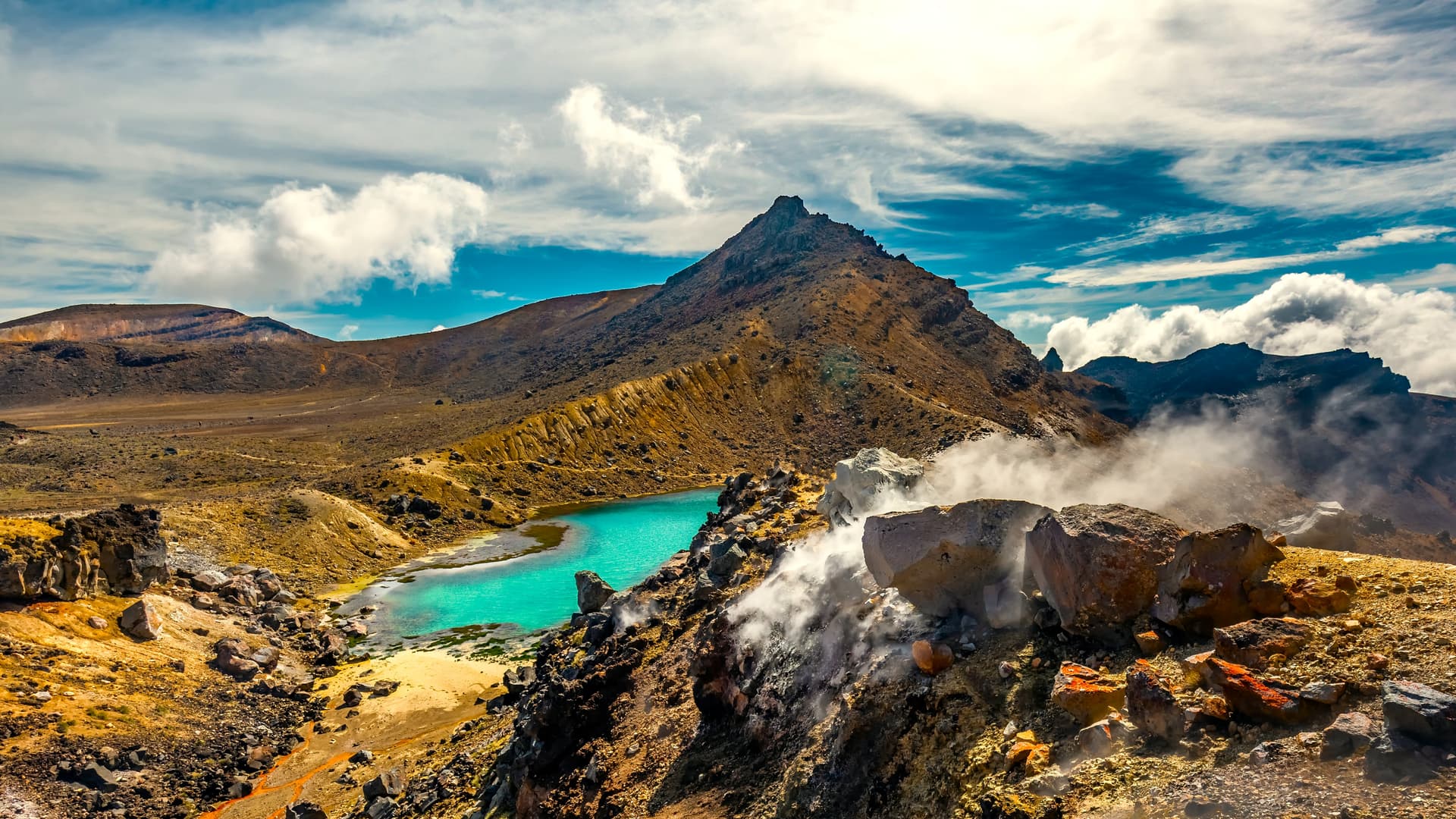
Tongariro National Park, established in 1887, is New Zealand's first national park and one of the rare UNESCO sites classified as mixed (nature and culture). The three peaks were gifted to the Crown by chief Te Heuheu Tukino IV to protect them from land speculation. The Tongariro Alpine Crossing remains the country's most-walked day hike: 19.4 km, 7 to 8 hours, 765 m elevation gain, a pass at 1,886 m via the Red Crater, then descent to the Emerald Lakes coloured by dissolved minerals. In peak season (December–February), 2,000 to 3,000 hikers cross daily, which justifies an early 7 am start.
The local economy rests on forestry (radiata pine forests cover much of the plateau), geothermal energy (the Wairakei power station, commissioned in 1958, was the world's second after Larderello in Italy), and tourism. Beyond the well-known sites, we regularly take travellers to Orakei Korako, a geothermal valley accessible only by ferry across Lake Ohakuri, or to Tarawera Falls, where the river disappears into the cliff face.
The climate is cooler than one might expect: at 600 m mean altitude, Taupo sees mornings of 2 °C in July, and the Tongariro peaks can receive snow as late as November. It is a region to approach with a fleece in your pack, even in high summer.
Must-see
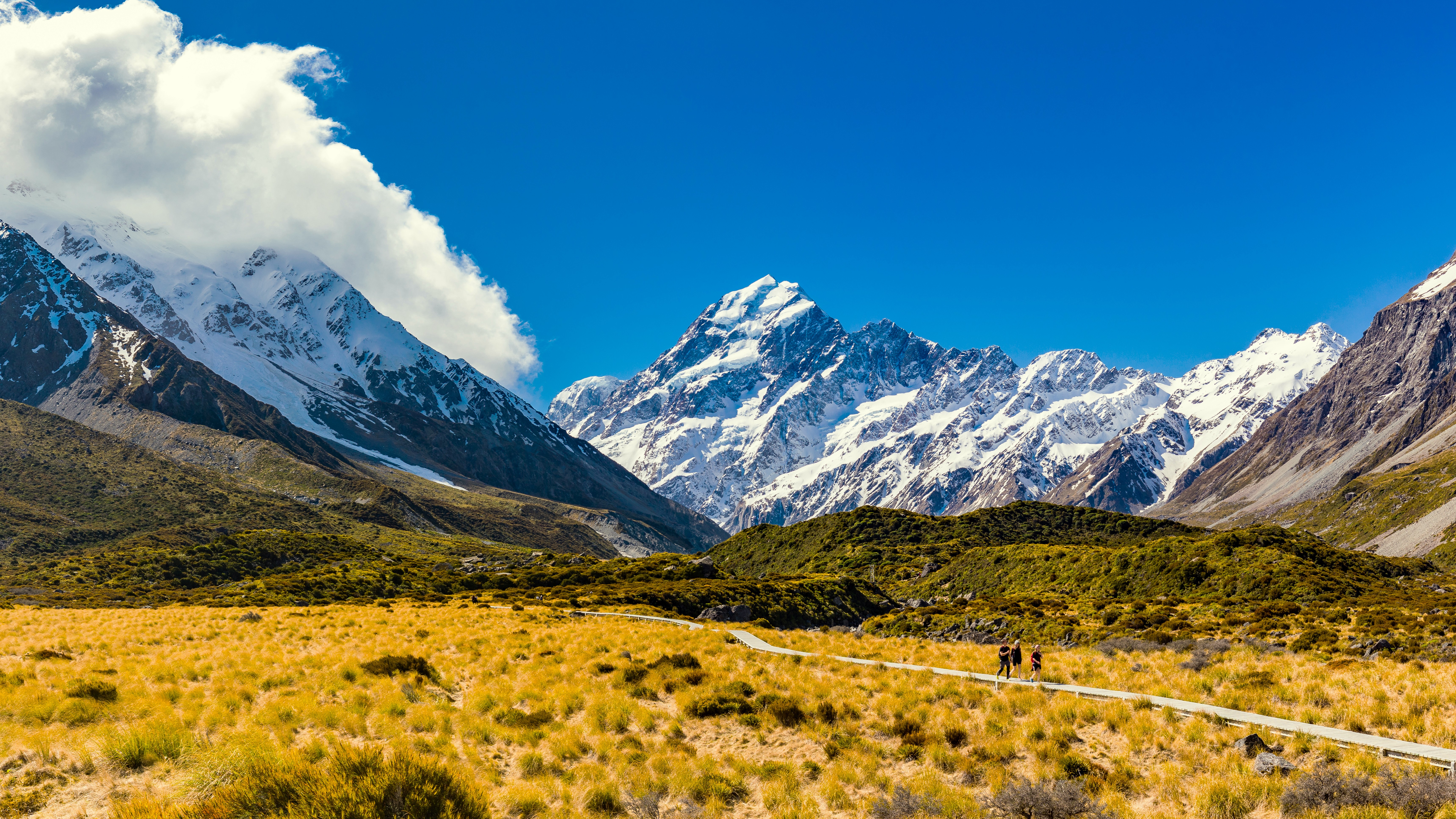
Tongariro Alpine Crossing. 19.4 km of hiking between smoking craters and emerald lakes, at the foot of Ngauruhoe. Allow 7 to 8 hours, shuttle required between trailhead and finish, weather conditions to be checked the morning of.
Pohutu Geyser and hangi evening. At Te Puia, Pohutu Geyser erupts to 30 m one to two times per hour. In the evening, a meal steamed in geothermal heat at a neighbouring marae, preceded by a welcoming haka.
Wai-O-Tapu and its coloured pools. The Champagne Pool at 65 m diameter, edged in orange by antimony deposits, and Lady Knox Geyser triggered daily at 10:15 am by soap addition, a relic of a 1901 prisoner practice.
Huka Falls and fishing on the Tongariro. Jet-boat rush at 80 km/h beneath the falls, then upstream towards Turangi for a half-day of guided fly-fishing on one of the country's finest trout streams.
Orakei Korako, hidden valley. A geothermal site accessible only by a 3-minute ferry across Lake Ohakuri. Silica terraces, Aladdin's cave with its underground hot lake, attracting one-fifth the visitors of Wai-O-Tapu.
When to go
The hiking season runs from November to April, with peak weather stability in February and March. At Rotorua and Taupo, summer temperatures swing between 12 °C at night and 23–25 °C by day. At altitude on the Tongariro Crossing, subtract 8 to 10 °C: a 5 °C start at the carpark is not uncommon in December, and wind at the Red Crater often exceeds 40 km/h. Annual rainfall reaches 1,400 mm at Rotorua, spread throughout the year with no marked dry season.
From June to September, Ruapehu hosts two ski fields (Whakapapa and Turoa), but the Crossing becomes an alpine traverse requiring crampons, ice axe and guide. We advise against it for hikers without winter experience. July and August, however, offer particularly rewarding thermal pools, the gap between freezing air and 38 °C water amplifying the pleasure. Avoid New Zealand school holidays (final two weeks of December, first of January) for trail crowds and lodge availability.
Practical advice
We recommend 4 to 5 days on the volcanic plateau to combine Rotorua (2 nights), a day on the Tongariro Crossing with accommodation at National Park Village or Whakapapa, and one night at Taupo. Cutting to 3 days means sacrificing either the Crossing or Maori cultural immersion, which would be a shame. Access is by car from Auckland (3 hours to Rotorua, 280 km) or from Wellington (4.5 hours to Taupo, 375 km). Rotorua's regional airport receives domestic flights from Auckland, Wellington and Christchurch.
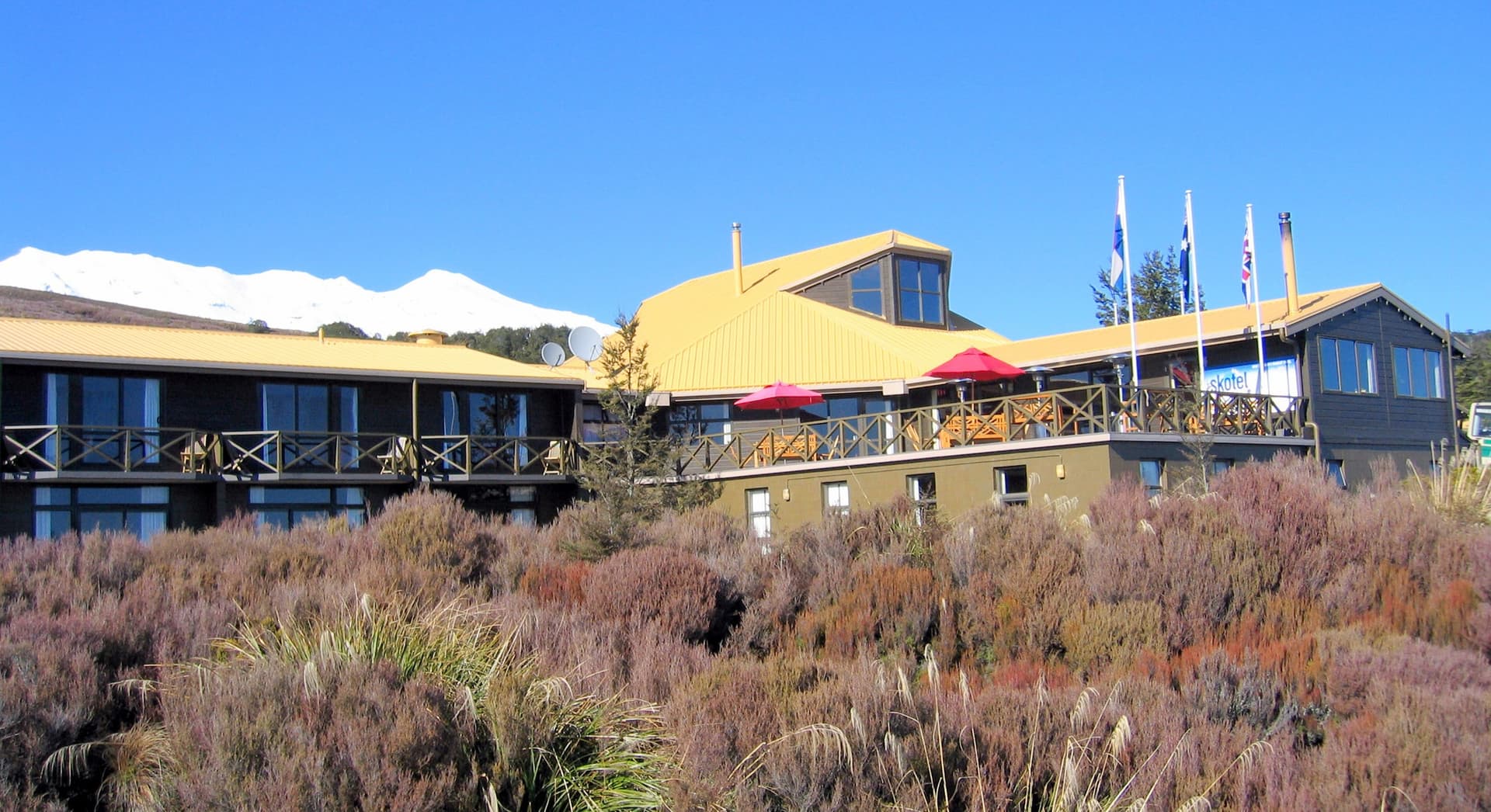
The region connects logically with Wellington and Wairarapa to the south, either via the Desert Road (State Highway 1) crossing the military plateau desert, or by the eastern coast via Napier and its Art Deco buildings. North, onward to Northland runs through Auckland. Accommodation ranges from decent to excellent: lakeside lodges at Taupo, family motels in Rotorua, rustier DOC huts near trails. The region suits serious trampers and families with children alike, thanks to short activities (Skyline luge, Agrodome farm, Polynesian Spa baths). The contemplative will find their peace on the quieter shores of Lake Taupo, towards Kinloch or Kuratau.