Otago and Canterbury
From rebuilt Christchurch to the turquoise lakes of Mackenzie and the albatrosses of the Otago Peninsula, the diverse heart of New Zealand's South Island.
Otago and Canterbury together cover the eastern half of the South Island, from Cook Strait in the north to the edges of Fiordland in the south. The two regions share the same geographical logic: to the west, the Southern Alps barrier rising above 3,000 metres; in the centre, glacial lake basins (Wakatipu, Wanaka, Pukaki, Tekapo) with turquoise waters caused by glacial flour; to the east, agricultural plains descending to a jagged Pacific coast dotted with volcanic peninsulas. This diversity within a 400-kilometre radius explains why our team structures most South Island itineraries around these two regions.
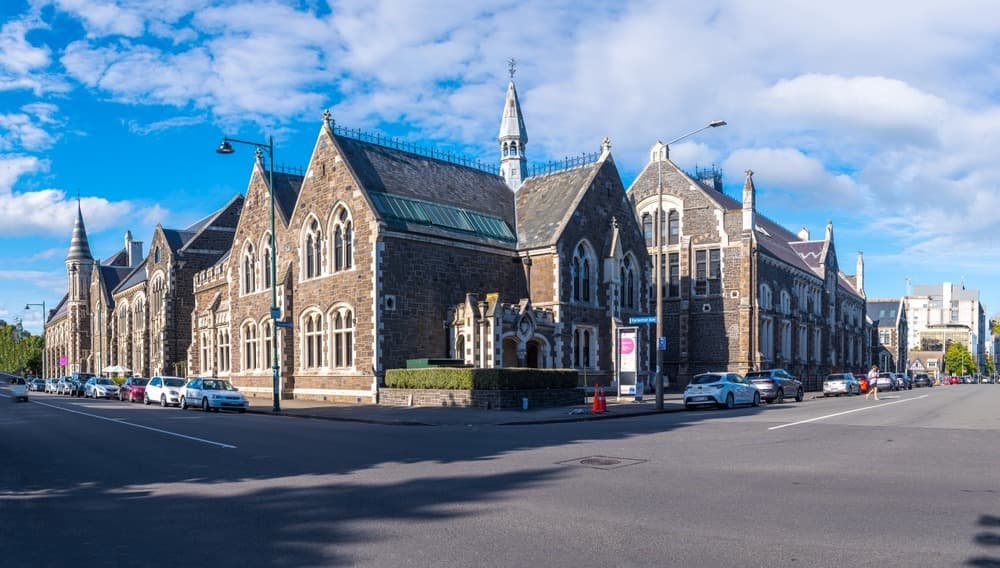
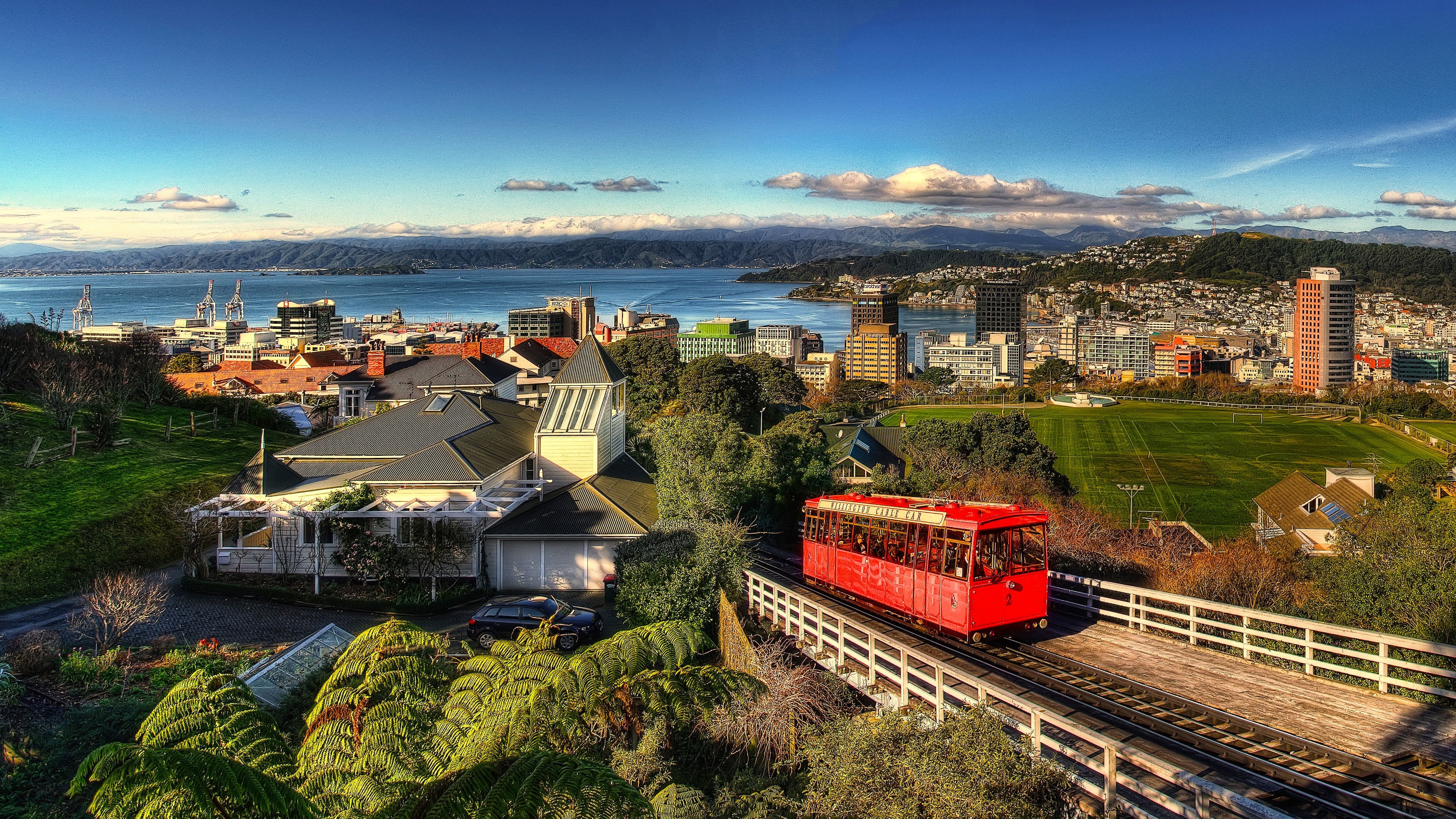
Christchurch, the main air gateway to the south, still bears the marks of the February 2011 earthquake. The Anglican cathedral remains partially collapsed, but the city centre has rebuilt around the Re:START container mall and the Arts Quarter along the Avon River. The historic tramway runs again, and the Quake City museum documents the city's seismic memory. Ninety minutes' drive away, the Banks Peninsula and its port of Akaroa, a former French trading post from 1840, retains street names like rue Lavaud and rue Jolie, and is home to an endemic colony of Hector's dolphins.
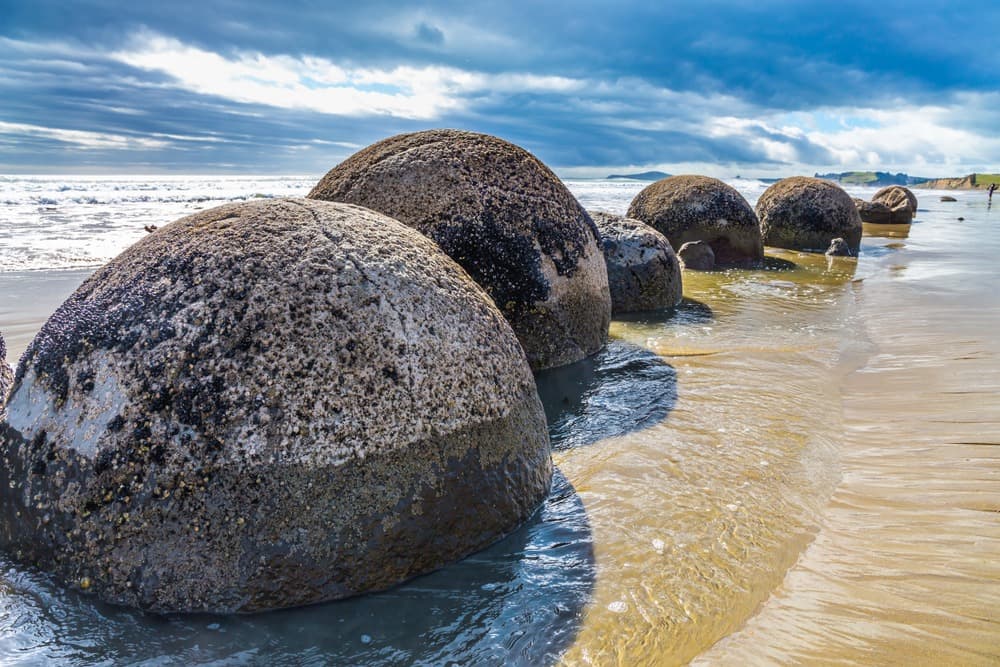
Heading south along State Highway 1, Oamaru lines its white limestone buildings in Victorian neoclassical style, a legacy of the dairy boom of the 1880s. The historic quarter now hosts an active steampunk scene, and each evening at dusk little blue penguins, the world's smallest at 30 cm, return to their burrows from the port. Thirty kilometres further on, the Moeraki Boulders—2-metre-diameter calcite spheres formed 60 million years ago—emerge from the sand at low tide.
Dunedin retains a Scottish character inherited from its 1848 founding by the Free Church of Scotland: the Edwardian railway station, Baldwin Street (the world's steepest at 35 per cent gradient), the Speight's distillery, and a university that imprints a student rhythm on the city. The Otago Peninsula is home to the only mainland breeding colony of royal albatrosses, at Taiaroa Head, as well as yellow-eyed penguins (hoiho), an endangered species best observed from hides in late afternoon.
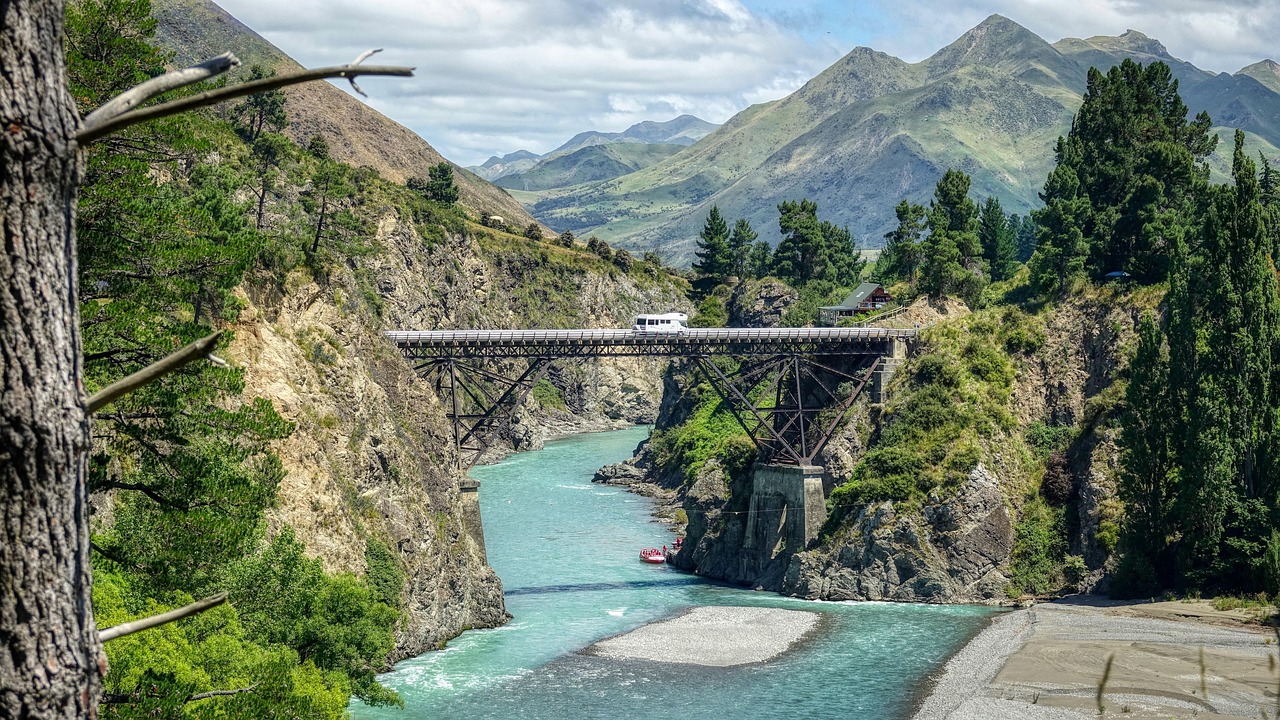
Central Otago's interior, around Alexandra, Cromwell and Clyde, is an arid, continental region, the site of a gold rush in the 1860s. The apricot and cherry orchards of Roxburgh, the pinot noir vineyards of Bannockburn, and the Otago Central Rail Trail cycle path (152 km on a former railway line) structure the local economy. Queenstown, on the shores of Lake Wakatipu and at the foot of the Remarkables, has concentrated adventure sports since the 1970s: bungee jumping invented here by AJ Hackett in 1988 at Kawarau Bridge, jet boating on the Shotover, paragliding, mountain biking at Skippers Canyon. Wanaka, 70 km away, offers a quieter atmosphere and access to Mount Aspiring National Park.
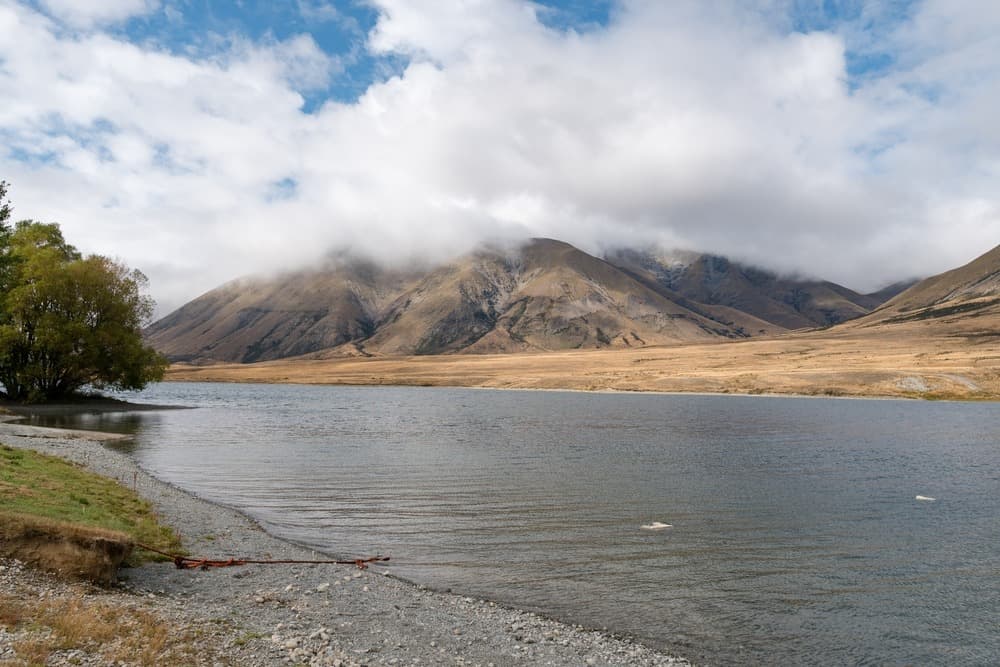
In inland Canterbury, the Mackenzie basin around Tekapo and Pukaki has been designated an Aoraki Mackenzie International Dark Sky Reserve since 2012, one of the world's largest. Mount John Observatory exploits this preserved darkness. Further north, Aoraki/Mount Cook (3,724 m) dominates the national park of the same name, accessible via SH80 from Lake Pukaki. Regional cuisine centres on Canterbury lamb, farmed salmon in glacial channels at Twizel, and Otago cherries in December–January.
To discover
Aoraki/Mount Cook and the Mackenzie basin. Walk the Hooker Valley Track (10 km return, flat) to a glacial lake studded with icebergs, at the foot of the country's highest peak. In the evening, observe the southern sky from Tekapo, with no light pollution.
Otago Peninsula and marine wildlife. Royal albatrosses gliding over Taiaroa Head, yellow-eyed penguins on Sandfly Bay beaches, fur seals on rocks. Allow a full day from Dunedin.
Akaroa and Banks Peninsula. An eroded volcanic caldera forming a deep bay, a former French colonial village where boat trips observe the endemic Hector's dolphins, found only in the South Island and measuring just 1.40 m long.
Otago Central Rail Trail. 152 km of cycle path on a former 1907 railway line, through the desert landscapes of the interior, its schist gorges and mining village pubs. Four to five days of cycling, accessible level.
Queenstown and Lake Wakatipu. A logistical base for bungee jumping at Kawarau Bridge, scenic flights to Milford Sound, or simply the TSS Earnslaw, a coal-fired steamer from 1912 that crosses the lake to the Walter Peak station.
When to go
The climate is continental, drier than the west coast thanks to the föhn effect of the Southern Alps. The austral summer, from December to February, brings 20 to 28 °C daytime temperatures in Christchurch and Queenstown, with cool nights at altitude (8 to 12 °C at Lake Tekapo, 1,000 m). It's the season for Otago cherries, hikes on the Routeburn Track, and long daylight until 21:30. Spring (October–November) and autumn (March–April) are our preferred seasons for light, colours (golden poplars around Arrowtown in April) and fewer crowds, with temperatures of 12 to 20 °C.
Winter, from June to September, transforms the region: alpine skiing at Cardrona, Treble Cone, Coronet Peak and The Remarkables, sub-zero nights (-5 to -10 °C in the Mackenzie), and persistent frost-laden fog in central Otago basins. Mountain roads (Lindis Pass, Crown Range at 1,076 m) may occasionally close after snowfall. The Otago Peninsula remains accessible year-round but winds are sharper from July to September.
Practical advice
We recommend a minimum of 8 to 10 days in Otago and Canterbury to do justice to the region. Entry is via Christchurch or Queenstown international airport depending on your flight, both served from Auckland or Sydney. A classic itinerary connects Christchurch to Queenstown via Tekapo, Mount Cook and Wanaka (roughly 600 km, 4 days minimum), but adding the Otago Peninsula, Dunedin and the Catlins coast requires 4 additional days. Distances look short on the map, but mountain roads and photo stops extend actual travel times.
The region logically combines with the West Coast and Southern Alps via Arthur Pass or Haast Pass, and with Fiordland and Southland from Queenstown (1hr 45 mins to Te Anau). To link the North Island, the Picton–Wellington ferry departing from Marlborough is the smoothest option. Hospitality ranges from lakeside lodges to rural B&Bs and boutique hotels in Queenstown. This destination suits contemplatives (Mackenzie, Banks Peninsula) as well as families with teenagers (Queenstown), hikers and wine enthusiasts. Drive on the left; self-drive car rental is essential.