Coromandel Peninsula
Coromandel Peninsula
Secret beaches, giant kauri trees, hot springs and a road trip just 2 hours from Auckland: everything you need to know to explore the Coromandel Peninsula.
Just two hours from Auckland, the Coromandel Peninsula stands as one of the gems of New Zealand's North Island. With its 85 kilometres of contrasting landscapes, it unfolds wild nature blending forest-covered mountains, white sand beaches edged by secret coves and laid-back coastal villages. A true corner of paradise, the Coromandel Peninsula captivates hikers seeking spectacular panoramas as much as those in search of relaxation, surfing or unique discoveries.
Where is the Coromandel Peninsula located in New Zealand?
Situated north of the Waikato region on New Zealand's North Island, the Coromandel Peninsula stretches approximately 85 km long and 40 km wide. Bordered by the Hauraki Gulf and the Firth of Thames to the west (west coast), and by the Bay of Plenty to the east, it juts into the waters of the South Pacific like a natural barrier.
This territory, part of the Thames-Coromandel District, is the maritime extension of the Coromandel mountain range, of volcanic origin, whose tip meets Great Barrier Island.
History
The Coromandel Peninsula takes its English name from the HMS Coromandel, a Royal Navy vessel that dropped anchor in the harbour in 1820 to procure kauri timber for masts. This ship, previously called HMS Malabar, had been named after the Coromandel Coast in India.
On the Māori side, the peninsula is known as Te Tara-o-te-Ika-a-Māui, literally "the backbone of Māui's fish". This name echoes the famous legend of the demigod Māui, who is said to have hauled the North Island from the Pacific Ocean using his magical fish hook. In Hauraki tradition, the fish is likened to a ray: the Wellington region would form its head, the Northland Peninsula its tail, and Coromandel its dorsal spine.
Moreover, long before European arrival, the region was already being exploited by Māori, particularly through the quarries of Tahanga in Opito Bay. The basalt extracted from these sites was used to manufacture stone tools, such as adzes, particularly during the archaic period (1300-1500).
Furthermore, in the nineteenth century, the peninsula became a major centre for gold mining. Remnants of this era, marked by the gold rush and mining boom, can still be discovered today in emblematic places such as the Coromandel Goldfields Centre or Thames School of Mines. The old machinery recalls the principal extraction sites of the gold mining era.
What to Visit and Do on the Coromandel Peninsula?
Hot Water Beach
Undoubtedly the most original site on the Coromandel Peninsula. Hot Water Beach is located in Mercury Bay, approximately 30 minutes from the town of Whitianga and an hour from the village of Coromandel. At low tide, you can dig a hole in the sand and enjoy naturally warm water that springs from underground, sometimes reaching up to 65°C. The experience is fun and attracts crowds during the season. It's best to arrive early or in the evening. Don't forget to bring a spade or rent one on site to avoid burning your hands.
Cathedral Cove
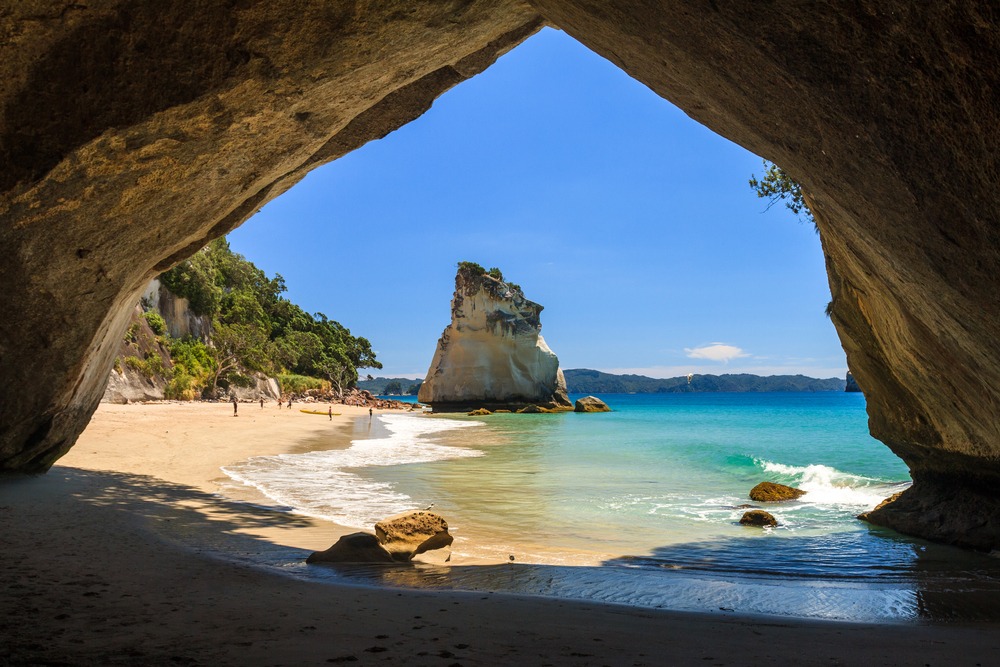
About ten kilometres from Hot Water Beach, Cathedral Cove is Coromandel's other icon. Accessible on foot (30 minutes' walk, or around an hour return) from Hahei, by kayak or boat, it stands out for its monumental arch carved into the cliff face and its turquoise waters.
The beach is very touristy, but it remains stunning: white sand, limestone cliffs, photogenic little islands. The site became famous after filming of The Chronicles of Narnia. To enjoy it to the fullest, favour the shoulder season or winter.
New Chums Beach
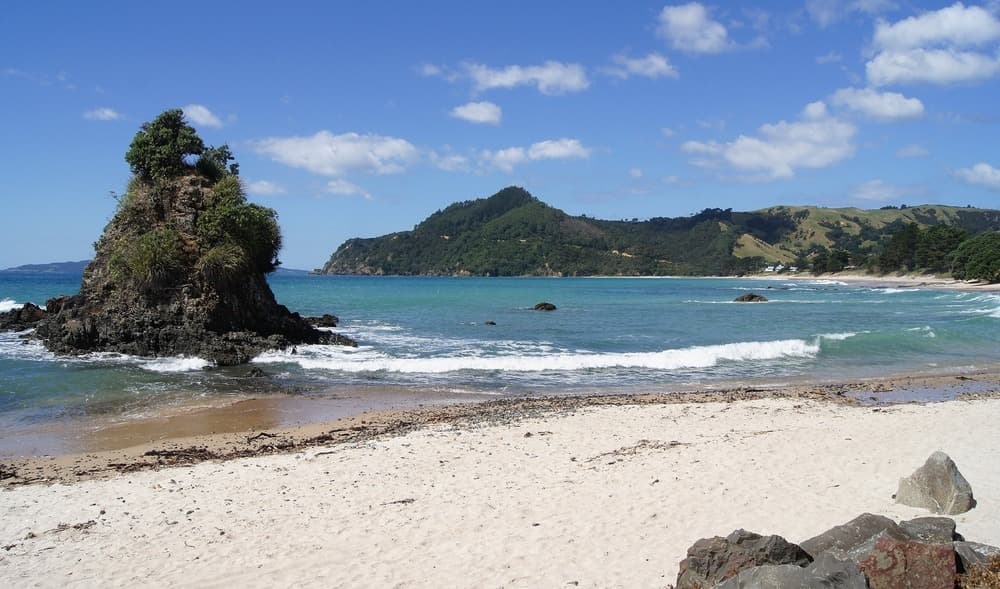
Located just north of Whangapoua, New Chums Beach is one of the country's most pristine white sand beaches. No road access: you must walk approximately 30 minutes through lush vegetation and along the coastline. A short forest walk leads to this wild beach, ideal for enjoying peace and quiet.
Other remarkable beaches
Beyond these essentials, the Coromandel Peninsula hides other coastal treasures. Among them:
- Opoutere, perfect for swimming and bird watching.
- Cooks Beach, a wide, family-friendly beach, with Shakespeare Cliff lookout offering an incredible view over Mercury Bay and the discreet Lonely Bay.
- Tairua and Mount Paku, an easy short climb revealing a 360° panorama.
- Whangamatā, a lively beach resort, known for surfing and access to Donut Island (Whenuakura Wildlife Sanctuary).
Donut Island
Facing Whangamatā lies Whenuakura Wildlife Sanctuary, better known as Donut Island. Long kept secret by locals, this site is now highly prized. Access is by kayak or paddleboard only. The interior of the island, with its steep cliffs, shelters a lagoon of turquoise water with surreal colours. It's a protected sanctuary: landing is prohibited, you must remain on your vessel. The excursion lasts two to three hours and is one of the ideal spots for travellers seeking extraordinary landscapes.
Hiking and nature trails
The peninsula is a hiker's paradise, with varied trails. Here are the most iconic:
- The Pinnacles Walk (Kanueranga Valley): flagship hike of 7 to 9 hours, passing through former kauri dams and mining remnants. The summit (759 m) offers an incredible view. Possibility of staying in unique accommodation like Pinnacles Hut refuge.
- Karangahake Gorge: a historic gold mining site, combining natural spaces and old machinery. The Windows Walk traverses old tunnels with gorge views, while the main loop leads to Owharoa Falls.
- Wentworth Falls Track: an easy stroll to lovely waterfalls near Whangamata.
- Waiau Kauri Grove: a short walk among giant kauri trees, with the possibility of swimming at Waiau Falls.
- Castle Rock: a climb of about an hour's walk to an extinct volcano offering an incredible view over the entire Coromandel Peninsula and, on clear days, as far as Auckland.
Roads and unusual excursions
For road trip enthusiasts, Route 309 is essential. This gravel track connects Coromandel Town to the town of Whitianga (22 km) and offers several original stops:
- The Waterworks
- Kauri Grove and Waiau Falls
- Castle Rock
- The tropical gardens of Rapaura Watergardens.
Marine activities and wildlife viewing
The Coromandel Peninsula is an adventure playground for ocean enthusiasts. Among the major points of interest:
- Sea kayaking from Hahei, with guided excursions to Cathedral Cove, its caves and tunnels, sometimes at sunrise
- Snorkelling and diving around Mercury and Aldermen Islands
- Coastal cruises, skirting cliffs and coves
- Dolphin and whale watching (southern right, Bryde's, humpback).
Original attractions
To complement a stay, the peninsula also offers unique experiences:
- Driving Creek Railway: an artisanal train leading to a viewpoint with an incredible view. On site, pottery workshops and a bird sanctuary.
- The Lost Spring, a thermal complex offering hot water pools and spa, perfect for a relaxation weekend.
The Coromandel Peninsula is approximately 2 to 2.5 hours' drive from Auckland: allow 1.5 hours to reach the south (Waihi Beach) and nearly 3 hours to reach the north (190 km). The journey itself is worthwhile, between verdant hills and beautiful Waikato scenery, before arriving at Thames, the southern gateway.
Car hire remains the most practical way to explore the Coromandel Peninsula. You can rent a vehicle directly from Auckland Airport: some roads are sealed, but others, like the famous Route 309, remain gravel and are sometimes off-limits by certain car rental agencies. The towns on the peninsula are connected by State Highways 25 and 25A, which form a loop.
For variety, a foot ferry connects Ferry Landing to the town of Whitianga in just 5 minutes, compared to 40 to 45 minutes by road, facilitating access to several points of interest. The region is just over an hour from Rotorua or Hobbiton, making it easy to combine in a broader travel guide.
When to visit the Coromandel Peninsula?
The Coromandel Peninsula enjoys a mild climate year-round, with warm, dry summers from December to March and cool but rarely harsh winters. It's a region highly favoured by New Zealanders, especially during end-of-year holidays and school holidays. Indeed, during these periods, beaches and attractions are often crowded and accommodation difficult to find.
To enjoy the sunshine while avoiding the crowds, favour the months of November, February and March, which offer fine weather in a more peaceful atmosphere. Between April and September, autumn and winter bring greater tranquillity. Temperatures remain mild, ideal for hiking in natural spaces, even if the mountain interior receives more rain and activities such as kayaking or cruises are reduced.
Want to discover this destination?
Our local advisors design your tailor-made trip.