Mangaweka
Mangaweka
Between white cliffs of the Rangitīkei and a DC-3 plane perched in the heart of the village, Mangaweka reveals a rural, artistic and timeless New Zealand.
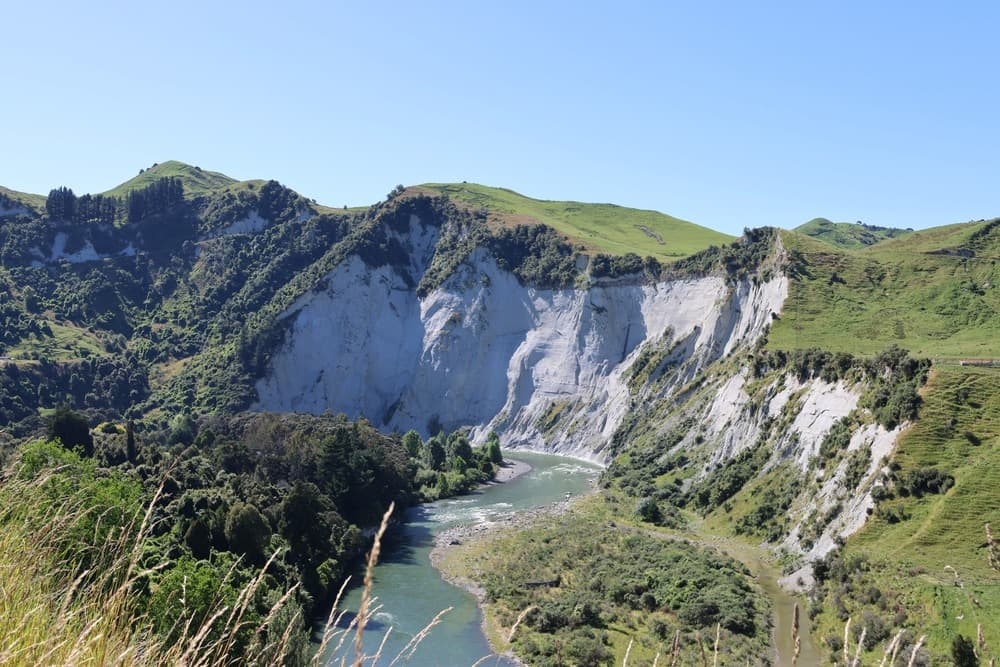
Nestled between white cliffs and the peaceful meanders of the Rangitīkei River, Mangaweka seems suspended in time. With its façades from another era, its buildings frozen in quaint charm and its singular atmosphere, this small locality on the North Island embodies an overlooked yet profoundly authentic face of rural New Zealand. Far from crowds and well-trodden routes, it offers a setting that is both peaceful and intriguing. In Mangaweka, travel takes on another dimension—more contemplative, more human, like a detour out of time.
Where is Mangaweka Located?
Situated on the North Island of New Zealand, Mangaweka is a characterful small locality nestled in the Manawatū-Whanganui region, more precisely in the Rangitīkei district. Installed beside the Rangitīkei River, it lies along State Highway 1, between the towns of Taihape to the north and Hunterville to the south, making it an ideal stopping point between Taupō and Wellington.
This peaceful village is far more than a simple roadside stop: Mangaweka offers a natural setting conducive to adventure and relaxation, notably thanks to its proximity to Ruahine Forest Park and just 1.5 hours from Tongariro National Park. It is also the northern starting point of the Manawatū Scenic Route and the Manawatū Cycleway, two emblematic routes that are part of the New Zealand Cycle Trail.
The History of Mangaweka
The village of Mangaweka traces its origins to the late nineteenth century, in the context of the development of the great North Island Main Trunk railway line, intended to connect the north and south of New Zealand's North Island. At the time, the region was still largely forested, and the first clearings were undertaken to allow for the construction of the railway. A rudimentary shelter called Three Log Whare was established there, marking the beginnings of human settlement. By 1894, the site already benefited from regular postal links with the nearby locality of Ohingaiti, evidence of its gradual integration into regional communication networks.
It was not until 1902, with the official arrival of the railway, that the village experienced genuine growth. Renamed Mangaweka, a name derived from the Māori language (manga meaning stream and weka referring to a flightless forest bird endemic to New Zealand), the village became a strategic point for the transport of passengers and goods across the North Island. It was even one of the first localities along this railway line to be equipped with electricity, thanks to an ambitious hydroelectric power station project launched in 1911, whose initial site was intended to serve as a water reservoir.
However, the following decades saw the village centre gradually decline. From the late 1970s onward, State Highway 1 was diverted, bypassing Mangaweka's main street. This change, while helping to preserve the village's original character—freezing its buildings in an atmosphere from another era—also led to the closure of many structures, today left vacant. Paradoxically, this geographical marginalization has contributed to preserving Mangaweka's historic charm, which captivates visitors through its authenticity and heritage frozen in the past.
The DC-3 Plane of Mangaweka
Mangaweka would not quite be the same without its emblematic Douglas DC-3 plane, a genuine roadside curiosity that has attracted the eye of travellers along State Highway 1 for decades. This 1945 model, originally built for the American military, was later integrated into the Royal New Zealand Airforce (40th Squadron) where it flew for approximately 700 hours.
In 1947, the aircraft changed hands to join the New Zealand National Airways Corporation, where it operated under the registration ZK-APK and the name Poaka. In the 1960s, it was modified to join the Skyliner fleet with new portholes, and continued to operate commercial flights until 1969, before being converted for agricultural spraying. When it was retired from service in 1981, it had logged more than 42,700 flight hours.
In 1984, this relic of New Zealand's aeronautical history was installed high above, in the very centre of Mangaweka village, just above a tea room adjoining a service station. It thus became at once a visual symbol, a tourist attraction and a promotional tool for a river adventure business based in this locality. Since then, the plane has overlooked the heart of the village, serving as a landmark for all those traversing this stretch of road.
More than a mere object, the DC-3 stands as the village's icon, reflecting its off-the-beaten-path spirit, its retro originality and its affirmed artistic character. Despite periods of uncertainty (notably in 2018, when its future seemed compromised), the plane underwent restoration in Shannon in 2021, before being put up for sale in 2023. Today, it still embodies Mangaweka's singularity, a place that knows how to marry heritage, creativity and offbeat atmosphere.
What to Do and See in Mangaweka?
Whitewater Sports and Fishing in Spectacular Settings
Rafting, kayaking, swimming and fishing are the local stars. Whether you are a thrill-seeker or simply a nature enthusiast, the Rangitīkei River offers exceptional terrain for play. Several local guides and companies offer rafting descents, kayaking trips or fly-fishing excursions. Brown and rainbow trout abound in its waters, with average catches around 1 to 2 kg. Some anglers even opt for helicopter or rafting expeditions to access the best spots.
Exceptional Hiking Trails
The Department of Conservation (DOC) has developed several hiking trails around Mangaweka, crossing native forests, running alongside the Rangitīkei River or following old sections of railway abandoned since the 1980s. These circuits allow you to discover lush nature, as well as elements of railway heritage such as disused tunnels and old viaducts, some of which rank among the highest in the country.
Among the recommended hikes:
- Mangaweka Scenic Reserve Track: a peaceful 30-minute walk through a lush native forest populated by rimu, totara and mataī trees, with the songs of tūī and kererū in the background.
- Ngahere Walk: an easy loop just after Mangaweka Bridge, ideal for a relaxing afternoon.
- Whitecliffs Boulders: a geological curiosity, a garden of mysteriously shaped mudstone boulders, accessible on foot or by river descent.
- Ruahine Forest Park: nearby, this natural park offers long hikes through wild nature.
A Valley for Adrenaline Enthusiasts
Beyond classic activities, the surroundings of Mangaweka also host the highest zip-line in the southern hemisphere and an 80-metre bungee jump above the gorges. Adventure is omnipresent here, at the crossroads between adrenaline and nature.
A Vibrant Artistic Scene
Mangaweka's town centre, once the village's main artery, has transformed into a genuine open-air artistic quarter. In an atmosphere frozen since the 1980s, several galleries and cafés showcase works inspired by rural life and the natural environment of the surrounding area.
Among these venues, the old church from the early twentieth century, now converted into a gallery, showcases the creations of acclaimed New Zealand artist Richard Aslett, as well as those of other local talents. Mangaweka has inspired many artists throughout the country, including the celebrated Robin White and poet Sam Hunt, seduced by the tranquility and raw beauty of the village.
This artistic dynamism is reinforced every two years by the "Fakes & Forgeries" festival, an event that is both humorous and provocative, illustrating the creative spirit of the community. This festival, sometimes controversial, pays homage to Karl Sim (alias Carl Feodor Goldie), a renowned forger and local son, who returned in 2007 to celebrate his art within this singular place. The Forgeries art exhibition thus forms an integral part of Mangaweka's cultural identity, at the intersection of art, satire and heritage.
Mangaweka Today
Despite its small size and many buildings now unoccupied, Mangaweka maintains an authentic and dynamic local life. The village still houses a primary school, a library, a hotel as well as some shops and art galleries. Several local businesses have turned towards adventure tourism, taking advantage of the natural appeal of the Rangitīkei River gorges.
FAQ
Where is the Mangaweka Plane Located?
The Mangaweka plane, an emblematic Douglas DC-3, was moved to Shannon in 2021 for restoration after standing long in the centre of the village.
Why is Mangaweka Famous?
Mangaweka is famous for its unique retro atmosphere, its emblematic DC-3 plane, its dynamic artistic scene and its proximity to the spectacular Rangitīkei River, conducive to adventure sports.
Want to discover this destination?
Our local advisors design your tailor-made trip.