Blenheim
Blenheim
Capital of New Zealand sauvignon blanc, Blenheim combines vineyards, aviation museums and direct access to the Marlborough Sounds. Complete guide.
Nestled in the northeast of New Zealand's South Island, Blenheim, or Waiharakeke in Māori, is far more than a simple stopover. It's an invitation to savour the very essence of the Marlborough region, the beating heart of New Zealand's wine industry. Bathed in sunshine year-round and surrounded by verdant landscapes, this charming small town embodies a peaceful way of life, oriented towards nature, gastronomy and the art of wine. Recognised worldwide for its wines, particularly its exceptional sauvignon blanc, Blenheim seduces both wine enthusiasts and travellers seeking authenticity.
The History of Blenheim in New Zealand
Blenheim boasts a rich history marked by complex founding events. Its name derives from the Battle of Blenheim (1704), a decisive victory by the Duke of Marlborough against French and Bavarian armies during the War of Spanish Succession.
Before the arrival of European settlers, Māori had lived in the region since the 12th century, cultivating kumara in particular. The Māori name for the town, Waiharakeke, means "flax stream". The arrival of British settlers began in 1841, shortly after the signing of the Treaty of Waitangi, which recognised Māori as subjects of the Crown. However, colonisation is marked by abuses: land is repurchased at low prices, often without respecting agreed conditions. This tension culminated in 1843 during the "Wairau Incident", a bloody confrontation between settlers and Ngāti Toa Māori, triggered by an illegal attempt at expulsion.
The incident, in which several English were killed despite their surrender, provoked a political crisis in London. The investigation by Robert Fitzroy's government, which sided with the Māori, temporarily eased tensions and prevented a wider uprising, although compensation for the Māori only came a century later, in 1940.
Moreover, the town of Blenheim truly took shape in the 1850s under the name "The Beaver", a nickname given due to frequent flooding. The powerful earthquake of 1855 altered the local geography by making the Opawa River navigable, which stimulated commerce. Two pioneers, James Wynen and James Sinclair, established their businesses there, the latter speculating on land divided into parcels.
Blenheim replaced Picton as the regional capital of Marlborough in 1865, becoming a municipality in 1869. Its growth accelerated following a gold rush that same year, then it specialised in sheep farming, before becoming a major wine centre.
Climate
Blenheim enjoys one of New Zealand's driest and sunniest climates, with approximately 2,400 hours of sunshine per year. Protected by surrounding mountain ranges, the town escapes the heavy rainfall of the west coast thanks to a rain shadow effect. Summers are warm and dry, often exceeding 30°C in February and March, whilst winters remain cool but moderate, with temperatures ranging between 2.9°C at night and 13°C during the day. Snowfall is rare, and annual precipitation, relatively low (approximately 700 mm), is concentrated between June and October.
Capital of Sauvignon Blanc and Wine Pleasures
It's impossible to discuss Blenheim without talking about wine: the town is the vibrant heart of the Marlborough wine region, which produces nearly 75% of New Zealand wine. Nestled in the midst of sun-drenched vineyards, Blenheim is recognised worldwide for its sauvignon blanc. This emblematic varietal seduces with its freshness, citrus aromas and herbaceous notes, making each tasting an unforgettable experience.
With over 150 wine domains in the surrounding area, some thirty of which are accessible within minutes of the centre, the possibilities for wine discoveries are endless. Among the outstanding local wine producers are:
- Cloudy Bay, a pioneer and benchmark of local sauvignon
- Saint Clair, renowned for its wines and award-winning vintages
- Wither Hills, offering spectacular panoramic views of the surrounding hills.
- Allan Scott Family Winemakers, offering a more intimate and warm atmosphere.
Blenheim Palace
If Blenheim today evokes exceptional wines and New Zealand landscapes, its roots lie far away, in the verdant countryside of Oxfordshire, England. It is there, in Woodstock in Oxfordshire, that the majestic Blenheim Palace stands, a masterpiece of English Baroque style, inscribed on the UNESCO World Heritage List.
Commissioned in 1705 by a grateful nation, Blenheim Palace was granted to John Churchill, 1st Duke of Marlborough, in thanks for his victory against the Franco-Bavarians at the Battle of Blenheim. This military triumph left a lasting imprint as far as the antipodes, giving its name to the New Zealand town developed in the 19th century.
Blenheim Palace was designed by Sir John Vanbrugh and Nicolas Hawksmoor, two emblematic figures of British architecture. It features sublime state rooms, adorned with grandiose frescoes by Louis Laguerre, and English gardens designed with meticulous attention worthy of Versailles. It is also the birthplace of Sir Winston Churchill, a descendant of the Duke.
Today, James Spencer-Churchill, 12th Duke of Marlborough, is the current owner of Blenheim Palace. He oversees the design and modification of the premises in respect of the heritage, whilst opening them to the public. One can attend concerts, gastronomic festivals (Fond Festival), exhibitions, or stroll along the River Glyme, through areas of exceptional natural beauty protected by Nature England as a site of scientific interest.
Thus, whether one wanders through the Marlborough vineyards or beneath the painted ceilings of Blenheim Palace, it is the same shared history that unfolds, between European heritage and New Zealand identity. Two worlds, two Blenheims, but the same grandeur.
What to See in Blenheim?
Much more than a world-renowned wine centre, Blenheim seduces with the richness of its history, the diversity of its landscapes and the vibrancy of its cultural scene. Among the must-sees, the Omaka Aviation Centre is a genuine gem for history enthusiasts. This unique museum stages with striking realism aircraft and historical objects from the two world wars. Through immersive settings, visitors discover the behind-the-scenes of military aviation, the "Knights of the Sky" collection and the one dedicated to heroines of the skies. The most intrepid can even take flight in a vintage aircraft.
Not far away, the Marlborough Museum, housed in the Brayshaw heritage park, traces the major stages of local history, from Māori traditions to the beginnings of European colonisation, through to the rise of viticulture. The Te Pokohiwi-Wairau Bar exhibition immerses visitors in the life of the earliest Māori, present in the region from the 12th and 13th centuries.
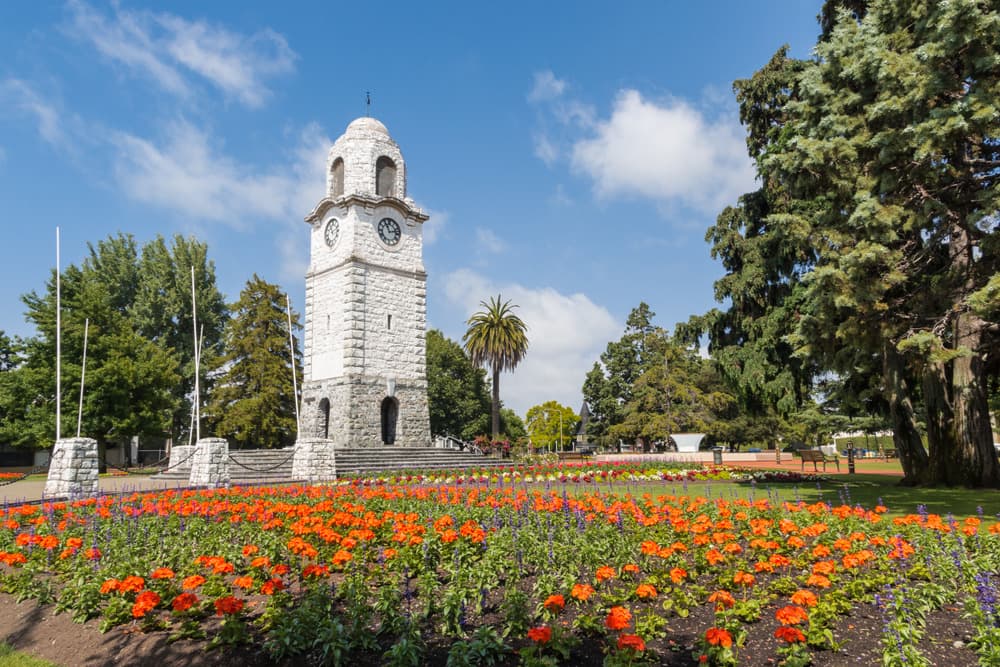
For a more peaceful break, head to Pollard Park, a verdant public garden with woods, rose garden, streams and even a golf course. Garden enthusiasts will also appreciate Harling Park, with Japanese influences, or Riverside Park, ideal for a waterside walk. Seymour Square, in the city centre, brings together fountains, a clock tower and war memorial in an elegant setting.
Every Saturday, the Marlborough Farmer's Market, New Zealand's oldest farmer's market, brings together local producers and food enthusiasts in search of freshness and quality.
What to Do in Blenheim?
A town of human scale, Blenheim is an ideal starting point for discovering wine culture while enjoying outdoor activities.
Cycling Through the Vineyards
Perhaps the best way to immerse yourself in local living is to explore the vineyards by bike. Perfectly maintained cycle paths connect the most renowned estates, offering visitors the opportunity to combine wine tastings, gourmet stops and bucolic rides. Guided circuits such as Wine Tours by Bike allow complete immersion, with stops at wineries, olive groves, artisanal breweries and even local distilleries.
Nature and Outdoor Relaxation
Just a few kilometres away, the Marlborough Sounds offer an exceptional natural setting of fjords, secluded bays and lush forests. It's the ideal place for kayaking, hiking or simply sailing through calm waters in a still-wild landscape.
Wither Hills Farm Park offers vast hiking terrain through hills and pastures. From the heights of Mount Vernon, enjoy panoramic views over Wairau Valley, Cloudy Bay and the surrounding mountain ranges. It's a haven for hikers, cyclists and outdoor enthusiasts.
FAQ
Why is Blenheim Famous?
Blenheim is famous for its renowned vineyards, particularly those producing sauvignon blanc, making Marlborough the country's leading wine region.
It is possible to reach Blenheim by taking a domestic flight to the town's airport (Woodbourne Airport), or by car from Picton or Nelson.
Accommodation in Blenheim
Want to discover this destination?
Our local advisors design your tailor-made trip.