Katikati Village
Katikati Village
Katikati, a small town in the Bay of Plenty, brings together striking street murals, Irish colonial heritage, kiwifruit and avocado orchards, and trails through the Kaimai Mamaku ranges.
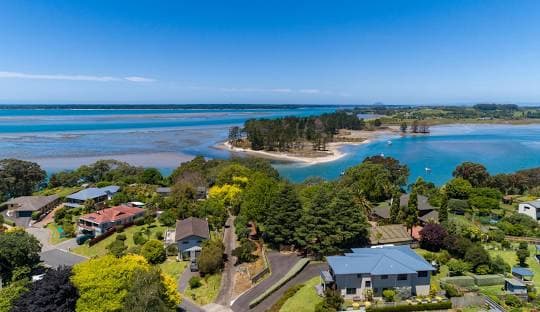
Katikati is a small rural town on New Zealand's North Island, situated between the foothills of the Kaimai Mamaku ranges and the waters of Tauranga Harbour. Dubbed the "town of murals," it boasts an open-air art gallery, distinctive Irish colonial heritage, and an agricultural economy centered on kiwifruit and avocados.
Why visit Katikati
Katikati owes its reputation to a community art project launched in the 1990s: the progressive decoration of downtown facades with murals, sculptures, mosaics, and tapestries. The town was recognized in 2005 as "Most Beautiful Small Town" by Keep New Zealand Beautiful. It also claims the marketing title of "Capital of New Zealand for avocados," reflecting its leading fruit production.
The appeal of this stop lies in its compact format: you can explore the heart of town on foot in just a few hours before venturing out to the Kaimai Mamaku Forest Park trails, Bay of Plenty beaches, and nearby hot springs.
History and origins
Before European colonization, the territory was occupied by the Ngāi Te Rangi tribe, descendants of the waka Mataatua. The name "Katikati" is of Maori origin, though its precise meaning remains debated.
European colonization began in 1875 with George Vesey Stewart, an Irish Protestant from County Tyrone, who established an experimental settlement. He organized two waves of migration aboard the Carisbrook Castle (1875) and the Lady Jocelyn (1878). The settlers, drawn from the Orange Institution, were divided between tenant farmers and "ornamentals"—wealthier individuals. The land had been confiscated from Maori following the New Zealand Wars before being allocated to newcomers.
The town was planned in 1879 on the south bank of the Uretara River. By the late 19th century, kauri gum trade supplemented emerging agriculture. Writer and journalist Alan Edward Mulgan, with ties to the region, would later help establish Katikati's place in New Zealand's literary memory.
What to see and do in Katikati
Mural art
Around 75 works adorn downtown walls: paintings, sculptures, mosaics, engravings, and tapestries depicting local history, Ulster pioneers, Maori communities, and residents who served in international conflicts. A map of the murals is available at The Arts Junction, the visitor information centre, and each work is accompanied by a QR code providing access to the story that inspired it. Every two years, the town hosts a national mural and art festival.
Haïku Pathway
This trail follows Uretara Creek and is lined with stones engraved with haikus, short Japanese poems. The walk, punctuated by bridges and play areas, also features the sculpture of Humphrey the sea lion, a beloved local figure.
Western Bay Museum
Located in the former fire station, recognizable by its bright red facade, the museum traces the history of Maori communities and Ulster settlers through objects, photographs, and interactive displays, including a vintage telephone switchboard and a working Morse telegraph key.
Diggelmann Park and Bushman's Shanty
In the town center, Diggelmann Park combines green spaces and play areas. Here you'll find The Bushman's Shanty, a 19th-century loggers' cabin preserved as a testament to the region's forestry industry.
Katikati Bird Gardens
This 4-hectare waterfront garden features lily ponds, lush vegetation, rare birds, an art gallery, a café, and a gift shop. Allow one to two hours for a visit.
Nature, cycling, and hot springs
- Hiking trails in the Kaimai Mamaku Forest Park, which covers the mountain range to the west.
- Around 20 km of cycling trails threading through local orchards.
- Hot springs at Sapphire Springs and Athenree, to the south, with family pools.
- Waihi Beach nearby for swimming and surfing.
- Leveret Estate winery, about ten minutes south, featuring Cape Dutch-inspired architecture.
Practical information
- Location: Western Bay of Plenty district, North Island, along Uretara Creek.
- Duration of visit: half a day for the center and murals; one to two days if including the surrounding area (park, beaches, hot springs, vineyard).
- Budget: moderate. The mural walk and Haïku Pathway are free; the Western Bay Museum and hot springs charge admission.
- Information point: The Arts Junction, which provides maps, brochures, and QR codes.
When to visit
Katikati can be visited year-round thanks to the Bay of Plenty's mild climate. Southern summer (December to February) is ideal for combining murals, nearby beaches, and cycling trails. Autumn (March–May) coincides with kiwifruit and avocado harvest, particularly visible in surrounding orchards. Spring (September–November) offers lush vegetation for Kaimai Mamaku trails. Even or odd years featuring the mural festival are especially worthwhile for urban art enthusiasts.
How to get there
Katikati is crossed by State Highway SH2, making it highly accessible:
- About 40 km northwest of Tauranga, less than an hour's drive away.
- About 28 km south of Waihi.
- From Auckland, allow approximately two and a half to three hours' drive via SH2.
A rental car remains the most practical way to explore orchards, beaches, and hot springs. Regional bus services also connect Katikati with Tauranga and Auckland.
Nearby attractions
- Waihi Beach and the mining town of Waihi to the north.
- Tauranga and Mount Maunganui to the southeast.
- Coromandel Peninsula, including Cathedral Cove, accessible by continuing north.
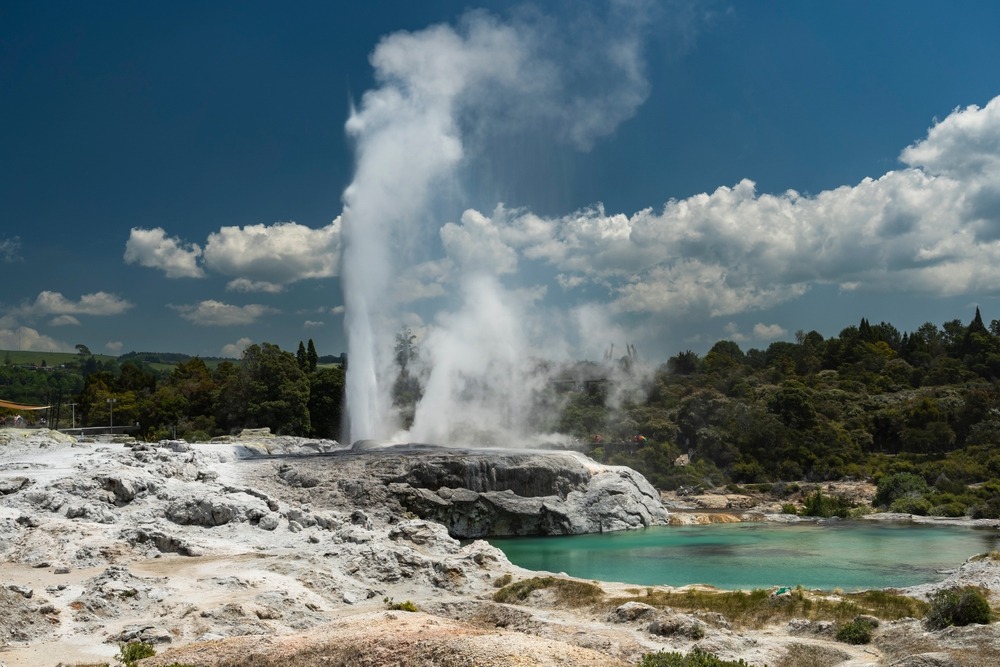
- Geothermal and cultural sites around Rotorua, about two hours' drive away, including Te Puia, Government Gardens, Redwoods Whakarewarewa Forest, and the National Kiwi Hatchery.
Frequently asked questions
Frequently asked questions
Half a day is sufficient to explore the downtown murals, Haïku Pathway, and Western Bay Museum. Allow a full day if you're adding the Bird Gardens, Leveret Estate vineyard, or hot springs.
Pick up a trail map at The Arts Junction, the visitor information centre. Each mural is linked to a QR code detailing its history and creators.
You can explore the town center on foot, but a car is recommended for reaching Waihi Beach, hot springs, orchards, or the vineyard. Regional buses connect Tauranga and Auckland.
Yes, the National Mural and Art Festival is held every two years and brings together artists, workshops, and exhibitions celebrating the town's mural identity.
Southern autumn (March to May) coincides with kiwifruit and avocado harvest, making cycling trails through the orchards particularly rewarding.
Plan your trip
Katikati fits easily into an itinerary linking Auckland, Coromandel Peninsula, and Rotorua. To build a bespoke journey combining the Bay of Plenty, geothermal sites, and stunning landscapes, explore our New Zealand tours.
Interested in this visit?
We can include it in your personalised itinerary.