Marlborough Sounds
Marlborough Sounds
A labyrinth of fjords in the north of the South Island, the Marlborough Sounds offer hiking, kayaking, endemic wildlife and Māori heritage from Picton.
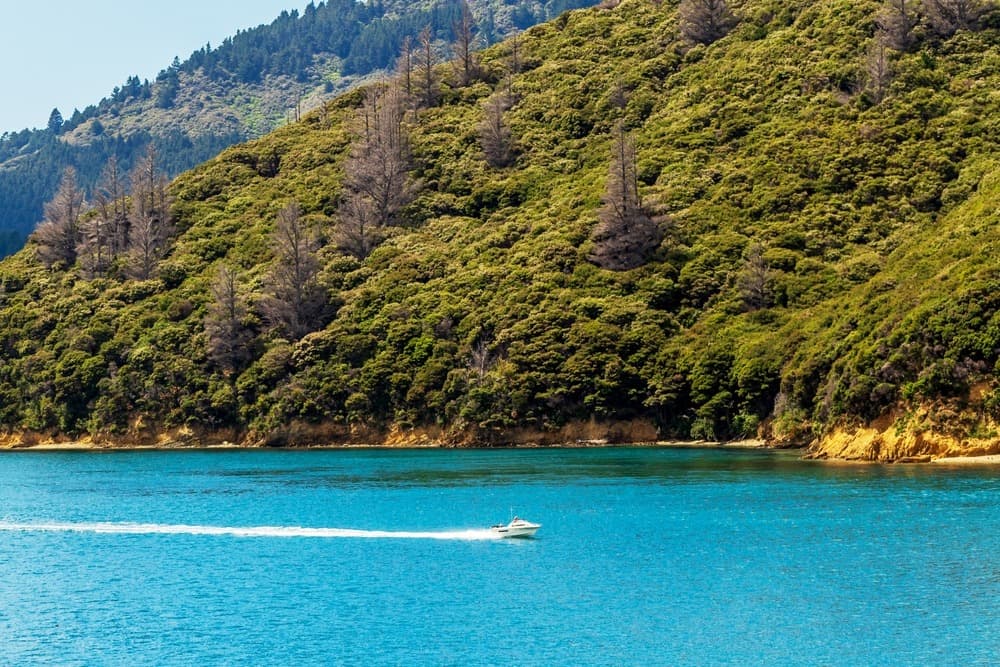
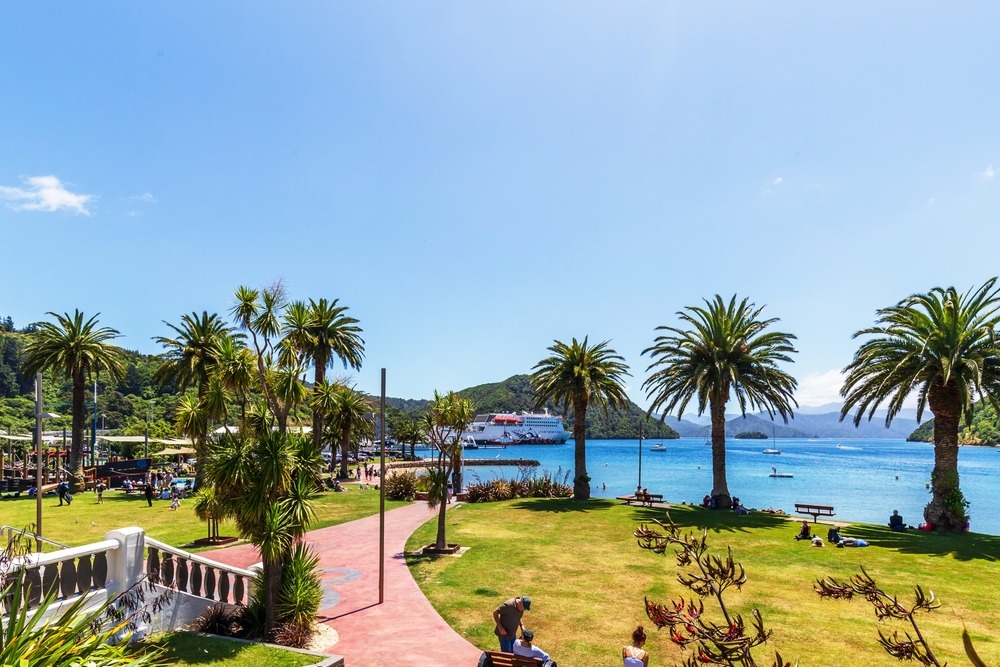
At the north-east tip of New Zealand's South Island, the Marlborough Sounds form a labyrinth of fjords, islands and forested hills. These river valleys submerged by rising waters create approximately 4,000 km of coastline—nearly one-fifth of New Zealand's entire shoreline. Picton, terminus for ferries from Wellington, serves as the main gateway to this region, much of which is accessible only by boat.
Why visit the Marlborough Sounds
The region brings together several points of interest rarely found in a single place: a coastal landscape sculpted by tectonic subsidence, rich Māori and colonial history, endemic wildlife protected by over 50 nature reserves managed by the Department of Conservation, and renowned aquaculture (king salmon, green-shell mussels). Tourism remains moderate compared to Fiordland or the southern lakes, making it a tranquil destination ideal for hiking, sea kayaking and cruising through secluded bays.
Three main fjords structure the region:
- Queen Charlotte Sound / Tōtaranui: the most accessible from Picton, traversed by the famous Queen Charlotte Track.
- Pelorus Sound / Te Hoiere: the largest, 55 km long with 380 km of shoreline, with Havelock as its main port.
- Kenepuru Sound: secondary fjord of Pelorus, parallel to Queen Charlotte.
Mount Stokes, the highest point at 1,203 metres, dominates the peninsula separating Queen Charlotte from Pelorus. Havelock is moreover considered the world capital of green-shell mussels.
History of the Marlborough Sounds
The Sounds hold significant importance in Māori cosmology. According to oral traditions, they correspond to the broken prow of Aoraki's waka, or result from Kupe's battle against the giant octopus Te Wheke-a-Muturangi. Place names such as Arapaoa and Kura Te Au preserve the memory of these narratives.
Māori settlement dates back to the 14th century. Communities lived from fishing, hunting—which contributed to the local extinction of certain bird species—and practised slash-and-burn agriculture. Several defensive pā were constructed. In the early 19th century, chief Te Rauparaha led raids throughout the region.
James Cook anchored at Ship Cove / Meretoto in 1770. Here he identified an anti-scorbutic plant known as Cook's scurvy grass and proclaimed British sovereignty at Motuara Island, naming several locations after his ships and officers. Agriculture, forestry, livestock farming and whaling followed: between 1911 and 1964, approximately 5,000 humpback whales were killed in Cook Strait.
Two gold rushes accelerated deforestation: Wakamarina in 1864, then Cullen Creek and Waikakaho in 1888. During World War I, defensive gun emplacements were installed on Blumine Island and Maud Island to protect Picton from potential naval threat.
Aquaculture (king salmon, green-shell mussels) became a key sector from the 1960s onwards. In the 1990s, the introduction of fast ferries caused erosion and damage to farms: the Guardians of the Sounds collective eventually secured a speed reduction to 18 knots, then opposed scallop dredging in 2007.
What to see and do
Cruises and mail boat
From Picton, several operators offer day cruises and the famous mail boat, which serves isolated bays by delivering mail to residents. Itineraries often include a stop at Ship Cove / Meretoto and Motuara Island, an ornithological sanctuary home to kiwis, wekas and tūī.
Sea kayaking
Kayaking allows exploration of coves and beaches inaccessible by other means. Guided or independent outings, ranging from half-day to multi-day trips with camping, are organised from Picton, Anakiwa or Havelock.
Queen Charlotte Track
Stretching 73 km, this hiking trail winds through native forests, panoramic ridges and bays. It typically takes three to five days on foot, with accommodation in lodges or campsites, and mountain biking is permitted on five sections. Single-day walks are accessible from Picton via water taxis. Several shorter walks complement the offer: Snout Track, Kaipupu, Blumine Island, Long Island and Allports.
Historic sites
- Ship Cove / Meretoto: Cook's base during his Pacific voyages.
- Pickersgill Island / Matapara: named after an officer from the expedition.
- Hippa Island: former Māori pā.
- Cannibal Cove / Anaho: site where human remains were unearthed.
- Blumine and Maud Island: remnants of World War I defensive gun emplacements.
Wildlife and biodiversity
On predator-free sanctuary islands (Motuara, Blumine, Long Island, Chetwode), you can observe Owen's kiwi, weka, kererū, tūī, kākāriki, kārearea falcon and tuatara. At sea: common dolphins, Hector's dolphins, little blue penguins, seals, orcas and, more rarely, southern right whales. The Sounds are home to the entire breeding population of Chatham Island shag (rock cormorant).
Local produce
Havelock exports green-shell mussels, and the protected waters produce king salmon and oysters. The Marlborough region, immediately adjacent, is one of New Zealand's major wine regions, renowned for its sauvignon blanc and pinot noir.
When to visit
The Sounds have a temperate climate and are particularly sunny. The most favourable period extends from November to May. The southern summer (December-February) suits swimming, kayaking and long hikes, but is also peak season. Spring and autumn offer greater tranquility and suit wildlife observation. Winter (June-August) remains feasible for short visits, with cooler but often bright days.
How to get there
The most common way is by inter-island ferry from Wellington to Picton (approximately 3.5 hours crossing Cook Strait). Picton is also connected by train (Coastal Pacific) and road to Blenheim and Nelson. On arrival, most travel to the bays is by water taxi from Picton or Havelock. The Kenepuru Road, the only sealed road penetrating deeply into the Sounds, serves certain lodges at the start of the Queen Charlotte Track; allow time: its winding course significantly slows progress.
Practical information
- Recommended duration: 1 to 4 days depending on activities, up to a week to combine hiking, kayaking and cruising.
- Accommodation: isolated lodges accessible by boat, hostels and hotels in Picton and Havelock, DOC campsites for hikers.
- Reservations: water taxis, lodges and Queen Charlotte Track stages fill quickly in high season; book several weeks in advance.
- Equipment: bring waterproof clothing, sunscreen (high UV levels) and sandfly repellent.
Nearby
- Picton: port town, ferry arrival point and ideal logistical base.
- Blenheim and Marlborough vineyards: 30 minutes from Picton, national wine heartland.
- Cape Foulwind: on the west coast of the South Island, seal colony and coastal trail.
- Franz Josef: iconic glacier further south, classic stop on South Island itineraries.
Frequently asked questions
Frequently asked questions
Interislander and Bluebridge ferries connect Wellington to Picton daily in approximately 3.5 hours. The crossing concludes with navigation through Queen Charlotte Sound, considered one of New Zealand's finest maritime approaches.
The trail measures 73 km and typically takes three to five days on foot, or two to three days by mountain bike on permitted sections. Single-day walks are accessible with a water taxi from Picton.
November to May for optimal conditions. The southern summer (December-February) remains peak season; March-April offers a good balance between pleasant weather and fewer crowds.
Partially. The Kenepuru Road serves certain points of the Queen Charlotte Track, and several trails start from Picton or Anakiwa. However, the vast majority of bays, lodges and islands are only accessible by water taxi or kayak.
Sandflies are frequent near beaches and rivers: bring repellent. UV levels are high even on overcast days. On the Queen Charlotte Track, anticipate weather changes and report your itinerary if planning a multi-day trip.
Planning your journey
The Marlborough Sounds naturally fit into an itinerary combining Cook Strait, Marlborough vineyards and the west coast of the South Island. To plan a bespoke journey including this region, consult our New Zealand trips.
Interested in this visit?
We can include it in your personalised itinerary.