Hot Water Beach in New Zealand
Hot Water Beach in New Zealand
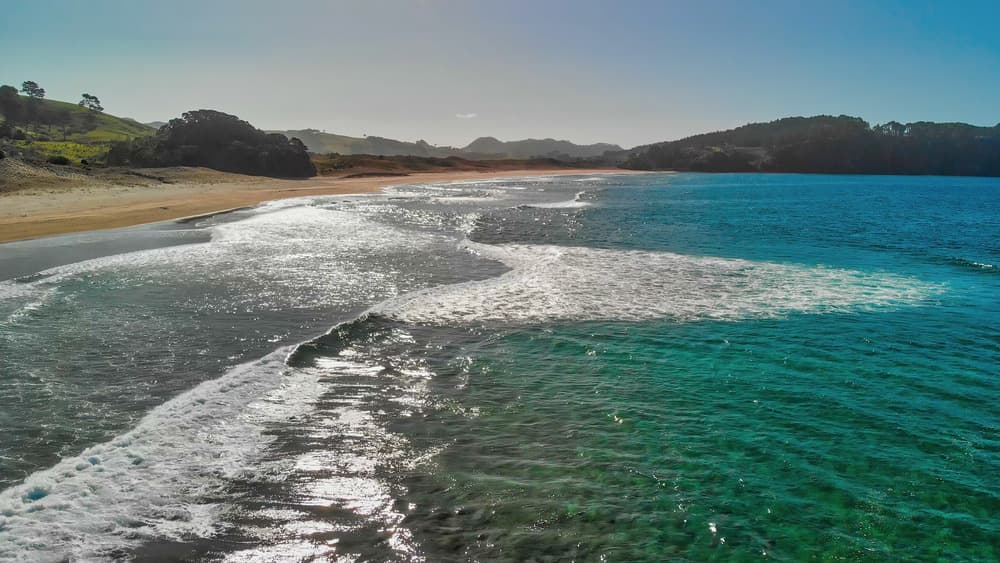
On the Coromandel Peninsula, Hot Water Beach lets you dig your own hot spring bath in the sand at low tide, facing the Pacific Ocean.
Hot Water Beach is a beach on the Coromandel Peninsula, on the east coast of New Zealand's North Island. Its distinctive feature: at low tide, geothermal springs emerge beneath the sand, allowing visitors to dig their own basin of hot water just metres from the Pacific waves. The site is located near the village of Hahei, just south of Mercury Bay, approximately 12 km from Whitianga.
Why visit Hot Water Beach
The phenomenon is rare: few beaches in the world combine ocean swimming and natural hot spring bathing on the same stretch of sand. A magma chamber situated nearly 2 km beneath the surface heats the groundwater, which then rises through two underground geothermal fissures. Recorded temperatures can reach 64 °C at the hottest point, making it essential to test the water before settling in.
The experience is as much social as it is unusual: at low tide, visitors gather on a zone approximately 20 metres wide, spade in hand, to shape their own pool in the sand. The characteristic sulphurous smell, reminiscent of boiled eggs, is all part of the experience.
What to do on site
Digging your thermal bath
The main activity involves digging a hole in the active geothermal zone, near the rocks in the centre of the beach. Hot water rises rapidly and mixes with seawater, allowing you to adjust the temperature by widening or blocking your basin. Bring a sturdy spade: rental is possible from nearby shops, but availability diminishes during peak season.
Surfing and swimming
The northern end of the beach is known to surfers for its "A-frame" waves that form on the sandbank. Return currents are strong and submerged rocks dot the area: swimming is inadvisable outside the flagged zones. More sheltered sections are suitable for a quick dip and relaxation.
Geothermal cooking and village break
Some visitors take advantage of the sand's heat to cook eggs or warm a meal. The nearby village houses a few cafés, art galleries and useful shops to visit before or after your geothermal session.
Practical information
- Access to the hot sand: only within the 2-hour window before and 2 hours after low tide.
- Safety: volunteer lifeguards present on weekends from October to April, professional supervision in summer. Swim between the flags and stay more than 50 m away from rocks.
- Facilities: secure paid parking open 24/7, outdoor toilets and cold showers to rinse off.
- What to bring: spade, swimwear, towel, water, sunscreen and sandals (sand can be very hot in places).
- Precaution: always test the temperature with your hand before settling in, geothermal flow can occasionally be very intense.
When to go
Hot Water Beach is accessible year-round, but the right window depends on tides rather than season. Check local tide times before you travel: only a low tide passage allows access to the springs. The Southern summer (December to February) offers milder temperatures and the longest supervision, but the beach is also most crowded during these dates. Out of season, the site is quieter, ocean water cooler, and the warmth of the bath all the more enjoyable. An early morning or late afternoon visit, when the tide cooperates, helps you avoid the bulk of visitors.
How to get there
From Auckland, expect around 175 km by road, approximately 2.5 to 3 hours of driving depending on traffic and chosen route (via State Highway 25 through Thames). A car remains the most practical option: the Coromandel Peninsula is poorly served by public transport. From Whitianga, the beach is around ten kilometres by road, about twenty minutes away. Paid parking is available at the site entrance.
What to see nearby
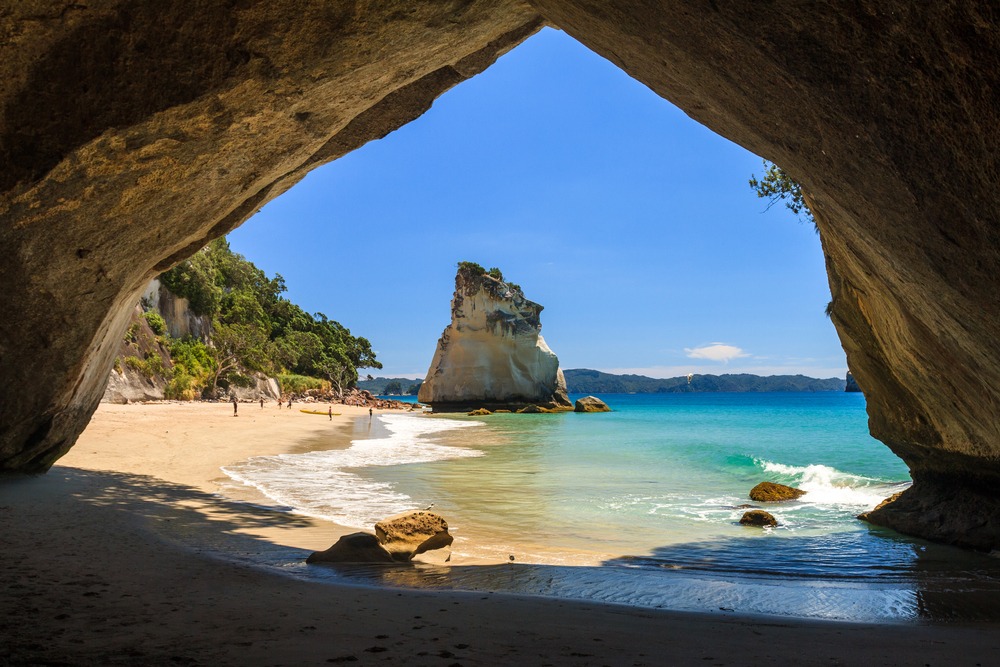
The Coromandel Peninsula concentrates several natural sites accessible from Hot Water Beach. Cathedral Cove, famous for its limestone arch and white cliffs, is minutes away by car, near Hahei. Whitianga, the main town in Mercury Bay, houses restaurants, accommodation and boat excursions. More broadly, the North Island and South Island offer varied landscapes, from the Museum of New Zealand Te Papa Tongarewa in Wellington to the alpine scenery of Arthur's Pass National Park, including the spherical rocks of Moeraki and the erratic boulders of Kura Tawhiti.
FAQ
Frequently asked questions
The active zone is located in the centre of the beach, near the rocks, across a band approximately 20 metres wide. It is only accessible at low tide, within the 2-hour window before and after it.
The site is open year-round. The determining factor remains the tide: you need to aim for a daytime low tide. The Southern summer (December-February) is warmer and better supervised, but also more crowded; other seasons offer a quieter experience.
Times vary each day. Consult a New Zealand tide specialist website or ask your accommodation the day before your visit.
The beach is known for its return currents, powerful waves and submerged rocks. Swim only between the flags when lifeguards are present and stay more than 50 m away from the rocks near the hot springs.
Yes, it's ideal. Equipment rental is available from nearby shops, but stock can be limited during peak season. A sturdy spade gives better results than a child's tool.
Preparing your trip
Hot Water Beach fits easily into an itinerary combining the Coromandel Peninsula and the rest of the North Island. To build a tailor-made stay including this site and other natural highlights, explore our travels to New Zealand.
Interested in this visit?
We can include it in your personalised itinerary.