Cathedral Cove
Cathedral Cove
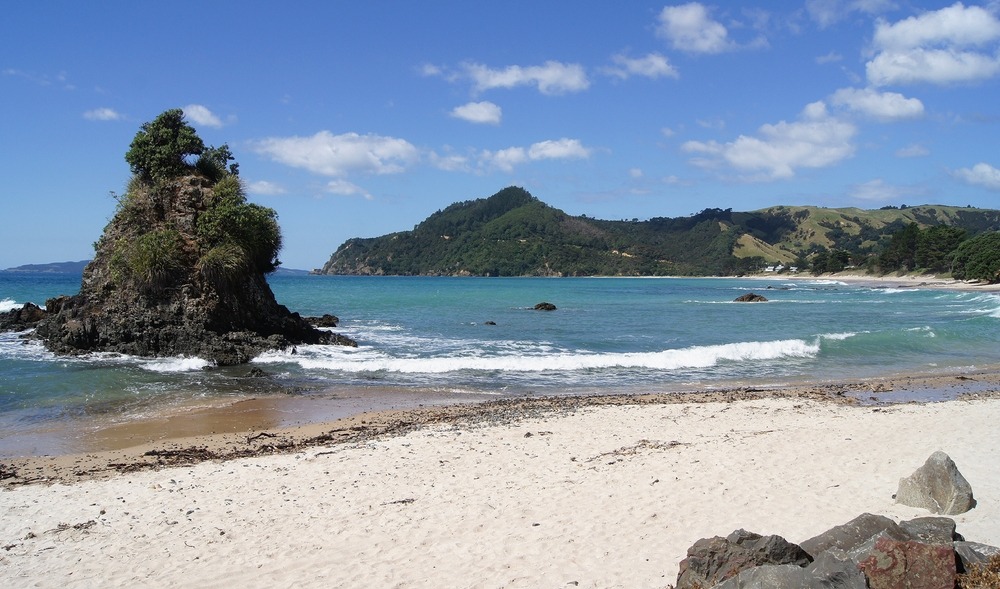
A limestone arch beach on the Coromandel Peninsula, Cathedral Cove is reached from Hahei via a marked trail, seasonal shuttle, or by sea.
Cathedral Cove, or Te Whanganui-a-Hei in Māori, is a beach on the Coromandel Peninsula distinguished by its limestone arch connecting two coves. The site is part of a protected marine reserve and is reached on foot from the village of Hahei, on the east coast of the North Island.
Why visit Cathedral Cove
The site brings together several rare elements on a single beach: a natural arch that can be crossed at low tide, white limestone cliffs, clear water ideal for snorkeling, and a protected marine environment. The beach is accessible only on foot, by seasonal shuttle, or by sea, which limits crowds and preserves a relatively peaceful atmosphere despite the location's popularity.
The backdrop served as the setting for the film The Chronicles of Narnia: Prince Caspian (2008), directed by New Zealander Andrew Adamson. Aside from the castle added in post-production, the landscape on screen faithfully matches reality.
Te Whanganui-a-Hei: Māori name and site history
The Māori name Te Whanganui-a-Hei means "the great bay of Hei," referring to the ancestor Hei, an explorer who arrived with the canoe Te Arawa and is said to have claimed this stretch of coast for his descendants.
The marine area surrounding the beach was designated a marine reserve in 1992. It ranks among New Zealand's earliest marine reserves and covers approximately 8 km² between Hahei to the south and Cook Bluff to the north. Fishing is prohibited, allowing marine life (reef fish, rays, and occasional dolphins) to recover.
The English name Cathedral Cove comes from the shape of the limestone arch, whose vault resembles a cathedral nave. Marine erosion carved this passage between two coves over millennia.
What to see and do
The arch and main beach
The limestone arch is the site's focal point. At low tide, you can walk through the tunnel to pass from Mare's Leg Cove to the main cove. A small waterfall drops onto the beach, often serving as a natural shower in summer. The rock structure is unstable: it is inadvisable to sit at the base of the cliffs or under the arch.
Snorkeling and swimming
The marine reserve is well suited for snorkeling, particularly around Gemstone Bay where a marked underwater trail allows you to observe reef species. The beach is unpatrolled and currents may be present: exercise caution with children.
Nearby beaches
Several coves are accessible via the trail network: Stingray Beach, Gemstone Bay, and Mare's Leg Cove, all quieter than the main beach.
Cathedral Cove Walk: the access trail
The marked trail is the most commonly used access route. The full walk from the Cathedral Cove car park is approximately 2.5 km return, taking around 1h30 depending on pace. A shorter 1.5 km section (about 45 minutes one way) leads directly to the beach. The terrain is undulating but accessible to most walkers; a wooden staircase descends to the sand.
Cyclone Gabrielle (2023) damaged sections of the trail and coast. Before your visit, check the opening status on the Department of Conservation (DOC) website, which manages the site and publishes temporary closures due to landslips or adverse weather.
How to get to Cathedral Cove
The site is approximately 175 km from Auckland by road. Allow roughly 2h15 to 2h30 for travel depending on route and traffic, and slightly over 2 hours from Hamilton. Two routes lead to the peninsula:
- Route 25A, more direct, suitable for a day trip;
- Route 25 coastal route, longer, serving Thames, Coromandel, and Whitianga.
Public transport stops at Coromandel or Whitianga; you'll then need local transfer to Hahei, making a car by far the most practical option.
In high season, approximately 1 October to 30 April, vehicle access to the Cathedral Cove car park is closed. You must then park at the Hahei visitor car park (Pā Road) and use the seasonal shuttle, or walk to the trail start.
By sea, the water-taxi Cathedral Cove Gateway connects Hahei Beach to the beach with a stop on site. Local operators also offer kayaking excursions and coastal cruises.
When to visit
October through April represents New Zealand's tourist season: pleasant temperatures, warmer water for swimming, but large crowds and direct car park closure. December and January are the busiest months.
May to September (Southern Hemisphere winter) sees far fewer visitors; the Cathedral Cove car park is generally accessible by car, but the water is cold and weather conditions more unstable.
Regardless of season, two factors matter more than timing:
- Tides: the arch can only be crossed at low tide. Check tide times for your visit day.
- Light: early morning sees light passing through the arch and fewer visitors. This is the preferred window for photographers.
Practical information
The beach has no facilities: no toilets, no water, no shops. Restrooms are available at the trail entrance and in Hahei village, where you'll find cafés and basic shops. Bring:
- sufficient water, snacks, and sunscreen;
- hiking shoes for the trail;
- swimwear and towel in season;
- an extra layer for the coastal breeze.
Safety: keep distance from cliffs and arch (falling rocks possible), leave the beach before rising tide to avoid being trapped by submerged passages, and watch for currents if swimming.
Nearby attractions
The Coromandel Peninsula offers several other sites accessible from Hahei. To further explore the region, you can consult guides for Elephant Rocks, Ashburton Lakes, Rotorua's Government Gardens, Canterbury Museum in Christchurch, or Gué de Bruinen.
FAQ
Frequently asked questions
For its natural limestone arch connecting two coves, its white sand beach within a protected marine reserve, and its appearance in the film The Chronicles of Narnia: Prince Caspian (2008) as a passage between two worlds.
On foot via the Cathedral Cove Walk (1.5 km direct, or 2.5 km return from the Cathedral Cove car park), by water-taxi from Hahei Beach, by kayak, or via a cruise. In high season (1 October – 30 April), the direct car park is closed and the shuttle from Hahei is the recommended option.
Yes, but only at low tide. Check tide times before your visit and don't linger under the vault, as the rock is naturally unstable.
Allow approximately half a day in total: 1h30 to 2 hours for the round-trip walk and 1 to 2 hours on the beach depending on activities (swimming, snorkeling, photography).
Not necessarily. The trail was affected by Cyclone Gabrielle and remains vulnerable to landslips. Check the opening status on the Department of Conservation (DOC) website before you go.
Plan your trip
Cathedral Cove fits easily into an itinerary combining Auckland, the Coromandel Peninsula, and the Bay of Plenty. To build a customized journey, explore our New Zealand travel ideas.
Interested in this visit?
We can include it in your personalised itinerary.