Abel Tasman National Park in New Zealand
Abel Tasman National Park in New Zealand
New Zealand's smallest national park, Abel Tasman combines golden beaches, coastal forests and sea kayaking, just an hour from Nelson.
Abel Tasman National Park occupies the northwestern tip of the South Island, in the sunny Nelson Tasman region. At approximately 237 km², it is the smallest of New Zealand's national parks, yet ranks among the most visited in the country. Its main entrance is located at Marahau, roughly 20 km from Motueka and an hour's drive from Nelson.
Why visit Abel Tasman National Park
The park concentrates along its compact coastline a succession of golden sand beaches, turquoise waters, granite cliffs and coastal forests. This density of landscapes, combined with one of New Zealand's driest climates, makes it an accessible destination year-round, equally suited to hiking, sea kayaking or family stays.
The absence of roads crossing the park reinforces its unspoilt character: travel here is by foot, kayak or water taxi, which sets the experience apart from most major New Zealand sites.
Park history
The park was established in 1942 to commemorate the 300th anniversary of Abel Tasman's voyage, the Dutch navigator and first European to sight New Zealand's coastline in December 1642. The first encounter with Māori resulted in the death of four crew members, an episode that marked the beginning of European presence in the South Pacific.
The project was driven largely by ornithologist and conservation advocate Perrine Moncrieff, who played a key role in the park's founding. Originally covering 152 km², it gradually expanded to its current 237 km². The acquisition of Awaroa Beach in 2016, funded by public appeal, illustrates New Zealanders' attachment to this site.
Management is overseen by the Department of Conservation (DOC). In parallel, Project Janszoon, launched in 2012, aims to regenerate the ecosystem by 2042, marking both the 400th anniversary of Abel Tasman's passage and the park's centenary.
Wildlife, flora and landscapes
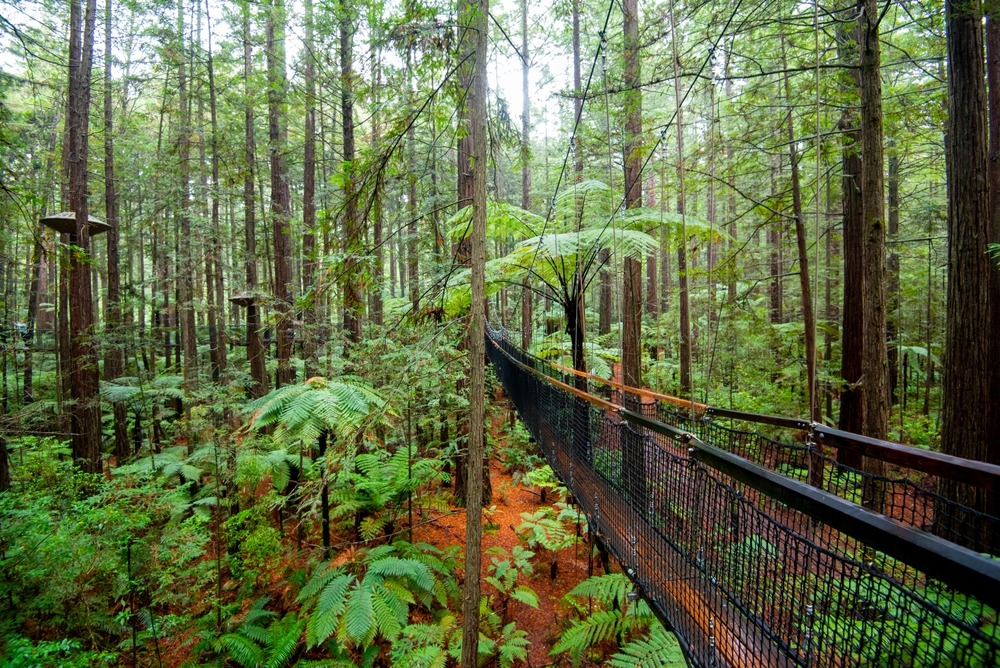
Coastal forests are dominated by mānuka, kānuka and several species of tree ferns. More than 70 bird species are recorded here, including:
- the tui, recognisable by its complex song;
- the kererū, a large pigeon with iridescent plumage;
- the weka, a curious ground bird often encountered on trails.
On the marine side, New Zealand fur seals are visible year-round on rocks, particularly around Tonga Island. Kayakers occasionally spot dolphins and, more rarely, little penguins, the world's smallest penguins. Waterways shelter around fifteen fish species, including the New Zealand longfin eel and galaxias postvectis, a threatened endemic species.
What to see and do at Abel Tasman
Hiking: the Abel Tasman Coast Track
The park's iconic trail is the Abel Tasman Coast Track, ranked among New Zealand's Great Walks. At 60 km long, it hugs the coastline between beaches, forests and granite cliffs, and can be completed in 3 to 5 days using DOC accommodation (huts and campsites requiring advance booking). The main beach stopover points are Anchorage, Bark Bay and Awaroa. Water taxis also allow you to walk just a section in a day.
Alternative trails
The Abel Tasman Inland Track, less frequented, traverses the forested interior and passes near Harwoods Hole, a karst chasm among the country's deepest. For shorter walks, the Pitt Head Loop Track and Pukatea Walk provide access to traces of Māori occupation and fine beech forests.
Sea kayaking
Kayaking remains the best way to explore coves inaccessible on foot and approach the fur seal colony at Tonga Island. Several operators based in Marahau, including Kahu Kayaks and Abel Tasman Kayaks, offer free rentals and guided tours, often combined with walking and return by water taxi.
Scenic flights and boat cruises
Flights by plane or helicopter soar over the jagged coastline to Farewell Spit, at the northern tip of the South Island. Boat rental, with or without a skipper, also allows you to navigate between beaches at your own pace.
When to visit
Abel Tasman benefits from a drier and sunnier microclimate than much of the South Island. The warmest and most stable season runs from December to March: this is the preferred period for swimming, kayaking and multi-day hiking. Spring (October-November) and autumn (April) often offer pleasant conditions with fewer crowds. Winter remains viable for walking, provided you accept shorter days and occasional rainfall.
How to get there
The most common access is via State Highway 60 from Nelson, passing through Motueka to Kaiteriteri then Marahau. Marahau concentrates tourist services: accommodation, kayak rental, shuttles and water taxis. Kaiteriteri, just before, also has facilities, but its car park regularly fills mid-morning during peak season.
Northern park access goes via Takaka, Pohara, Tata Beach, Wainui Bay and Totaranui, which are more remote and far less busy. Buses connect Nelson to Motueka and, seasonally, to Marahau. Water taxis serve all year round the main beaches (Torrent Bay, Anchorage, Bark Bay, Totaranui, Awaroa), allowing flexible itineraries. For cyclists, the Great Taste Trail connects Nelson to Kaiteriteri, bordering the park.
What to see in the surrounding area
The park is part of a region rich in complementary sites: Golden Bay with its wilder atmosphere to the north, Farewell Spit and its long sand spit, or the Marlborough Sounds to the east, renowned for their sea-filled valleys. Further south on the island, many extend their journey to sites like Kura Tawhiti (Castle Hill), the spherical rocks of Moeraki or the Elephant Rocks. For hot springs and Māori culture, the Government Gardens in Rotorua offer an interesting contrast with Abel Tasman's coastal ambiance.
Frequently asked questions
Frequently asked questions
A day suffices for a hike or kayak outing from Marahau, using water taxis for the return. To walk the Abel Tasman Coast Track in full, allow 3 to 5 days depending on your pace.
Yes. DOC huts and campsites on the Coast Track fill quickly, particularly from December to February. Booking is done online on the Department of Conservation website, several months in advance during peak season.
Awaroa, Bark Bay and Anchorage rank among the most popular for their golden sand and clear waters. Awaroa, more secluded, also hosts the Awaroa Lodge. Tonga Island, accessible by kayak, draws visitors for its fur seal colony.
Yes, buses connect Nelson and Motueka to Kaiteriteri and Marahau, with reduced frequencies outside peak season. Many visitors combine these services with water taxis to reach the interior beaches.
Yes, the park remains open year-round. Winters here are relatively mild for the South Island, but days are shorter and some services (water taxis, kayak rentals) run at reduced capacity. Check conditions with DOC before departure.
Plan your trip
To integrate Abel Tasman into a complete South and North Island itinerary, consult our suggestions for travel in New Zealand and build a route tailored to your pace with our advisors.
Interested in this visit?
We can include it in your personalised itinerary.